Key facts: Meridian-Kessler
- Meridian-Kessler saw its most rapid development during the 1920s and 1930s [4].
- Large period-revival houses stand west of College Avenue and bungalows east of it, with foursquares common south of 44th Street [4].
- Homes of that era were commonly connected with vitrified clay laterals, whose joints let roots in [5].
- Repairs, lining and replacement of a lateral need a Citizens Energy Group permit; routine root cutting does not [1].
Covered area
Meridian-Kessler streets on this page
This page covers the Meridian-Kessler neighborhood on the north side of Indianapolis, bounded by 38th Street, Meridian Street, Kessler Boulevard and the former Monon Railroad corridor [4], which spans parts of ZIP codes 46205, 46208 and 46220. Calls from these addresses are connected with an independent contractor who works on laterals in this part of the city.
Neighboring areas such as Butler-Tarkington to the west and Broad Ripple to the north are covered too, along with the rest of the ZIP codes on the areas page.
The houses
Meridian-Kessler's housing and what it sits on
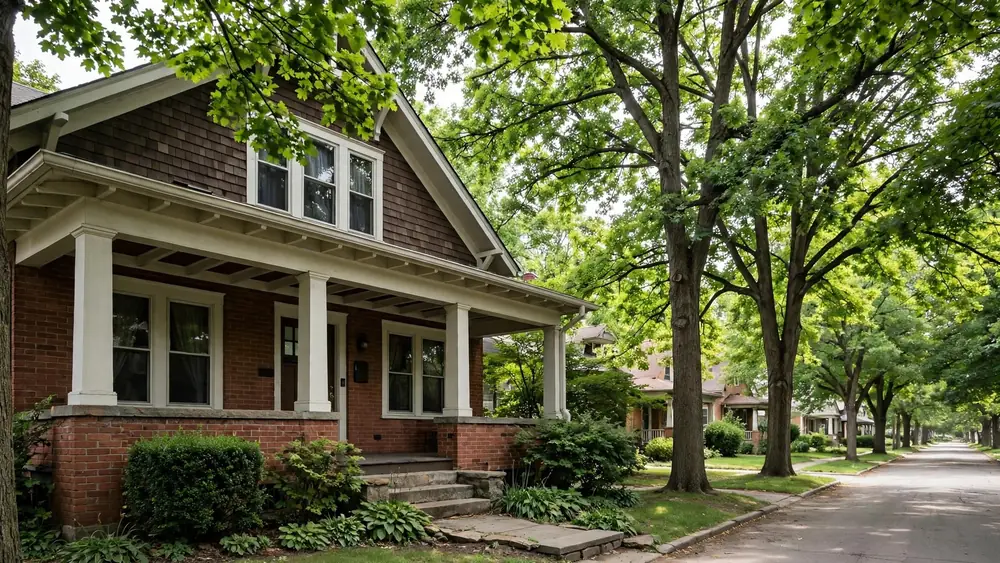
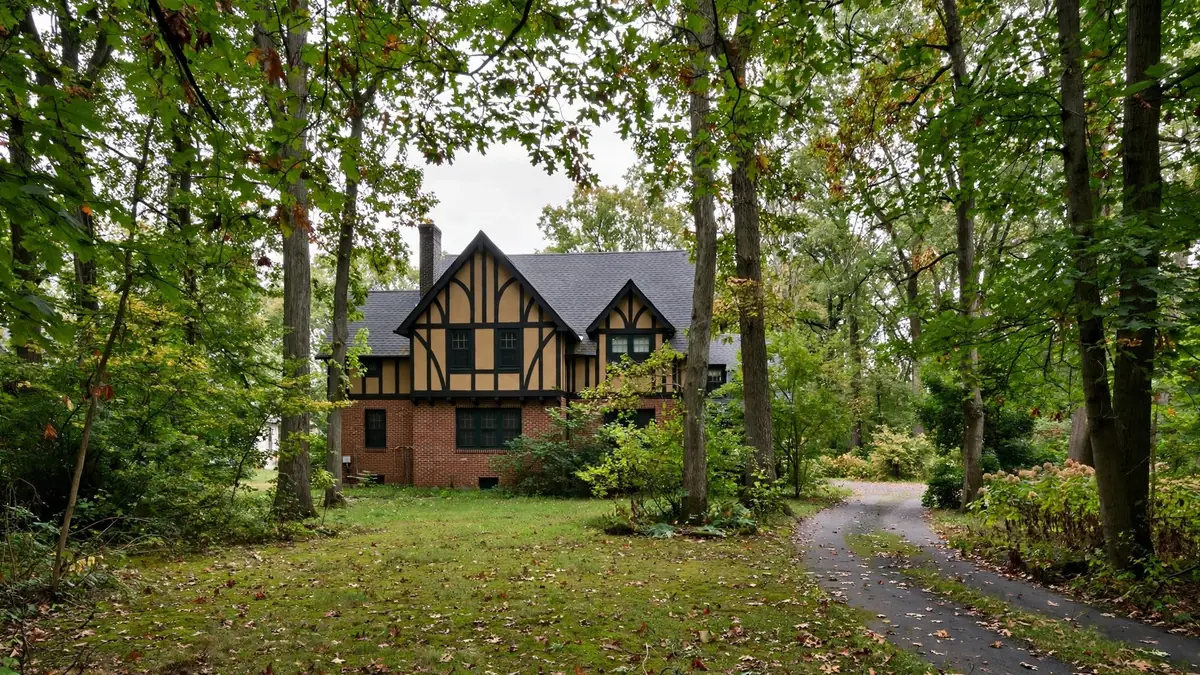
Land in Meridian-Kessler had been subdivided by the 1920s, but it filled in mostly during the 1920s and 1930s, when the neighborhood became one of the city's sought-after addresses [3][4]. The housing reflects the fashions of those decades: Colonial Revival, Tudor Revival and Classical Revival houses, many individually designed, and a wide range of sizes [4]. Large period-revival houses dominate west of College Avenue, bungalows line the streets east of it, and classic foursquares are common south of 44th Street [4]. The neighborhood is known for its leafy boulevards.
Almost all of those houses have basements, and many basements have been finished over the years into family rooms, offices and guest suites. Below the floor runs a cast iron building drain, which leaves through the foundation and joins a lateral to the street. In houses of this era the lateral is commonly vitrified clay laid in short sections [5]. Some have been replaced, but many are original.
Large lots and generous setbacks mean the lateral on the western side of the neighborhood can be long, sometimes much longer than on a typical city lot. A long clay line has more joints, and more joints mean more places for roots to enter.
Common calls
What brings Meridian-Kessler homeowners to the phone
Roots under big front-yard trees
Mature oaks, maples and sycamores over long clay laterals mean recurring root intrusion.
Backups into finished basements
A floor drain that overflows into a finished room can damage carpet, drywall and furniture.
Long laterals with many joints
Deep setbacks mean more pipe and more joints between the house and the main.
Cast iron under the slab
Corroded building drains under basement floors, often found when the camera enters the house.
Old repairs on old pipe
Earlier spot repairs that fixed one joint while others kept aging.
Preserving landscaping
Owners who want the lateral fixed without disturbing mature trees, walls or gardens.
Trees
Meridian-Kessler's canopy and its effect on laterals
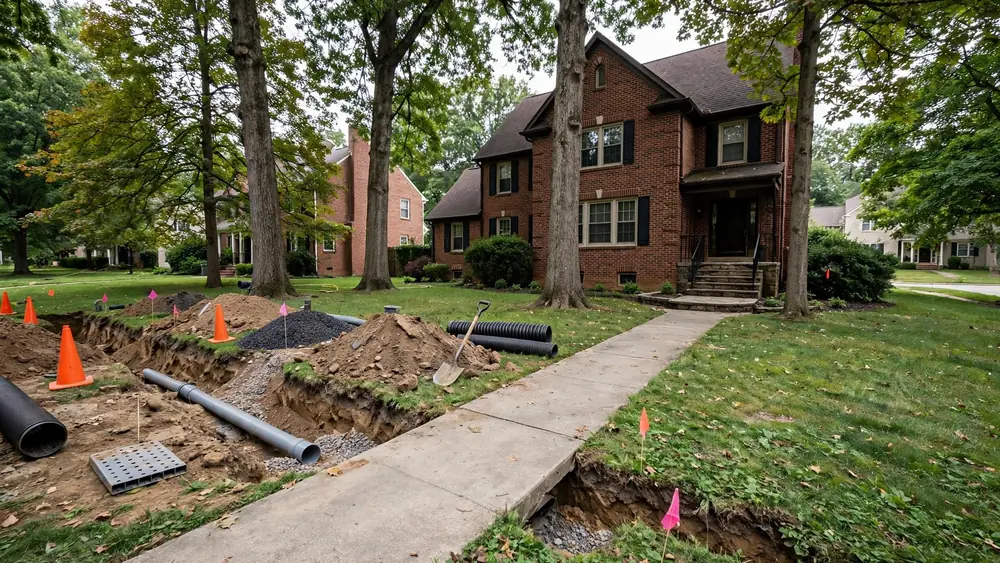
Many Meridian-Kessler streets are lined with trees that have been growing since the houses were built. Their roots extend well beyond the drip line and are most active in the top few feet of soil, which is where a lateral often runs as it approaches the street. Clay joints sealed with mortar decades ago crack and shrink, leak a little moisture, and draw fine roots inside the pipe.
Because the trees are such a valued part of the neighborhood, how a lateral is repaired matters. A trench across the front yard can sever major roots and harm a tree. That is a strong reason to look first at trenchless methods: CIPP lining seals the pipe from inside, and pipe bursting replaces it from two pits. If a dig near a significant tree is unavoidable, an arborist's advice is worth getting.
Finished basements
Protecting a finished basement in Meridian-Kessler
A sewer backup into an unfinished basement is unpleasant; one into a finished basement is a renovation project. Carpet and padding soaked by sewage generally cannot be saved, and drywall and insulation below the water line usually have to be cut out [6]. Many Meridian-Kessler basements have been finished, so the stakes of a blocked lateral are higher than in a house with bare concrete.
That changes how homeowners here tend to think about maintenance. Filming the lateral every few years, clearing roots before they block the line, and fixing the joints that let them in all cause far less disruption than tearing out a finished room. If storm backups have ever happened, a backwater valve can protect basement fixtures from flow pushed back from the street.
Keep valuables, documents and electronics off the basement floor, and know where the cleanout is. If a backup starts, stop all water use immediately; every flush upstairs adds water to the basement.
A typical job
How a sewer repair typically unfolds in Meridian-Kessler
- 1
Access through the basement
The contractor opens the main cleanout near the front foundation wall, protecting finished floors along the way.
- 2
Clear and film the long run
The camera needs enough cable to reach the main across a deep front yard.
- 3
Locate defects and depth
Problem joints are marked on the lawn, often close to particular trees.
- 4
Discuss tree-friendly options
Lining or bursting where the pipe allows; targeted excavation only where needed.
- 5
Permit and utility marks before excavation
Citizens permit and Indiana 811 locate before any excavation [1][2].
- 6
Record the finished line for the file
The finished line is filmed and inspected before backfill.
By house type
Meridian-Kessler house types and their sewer patterns
| House type | Usual layout | Common sewer issue |
|---|---|---|
| Large revival-style house on a wooded lot | Deep setback, long clay lateral | Roots at many joints; long camera runs |
| Bungalow on the eastern side | Shorter lot, basement or partial basement | Roots and cracked joints near the street |
| House with finished basement | Floor drain in or near finished space | High damage risk from backups |
| House with past spot repair | Mixed clay and newer pipe | Remaining original joints still failing |
| Renovated or expanded house | New bathrooms adding load | Old lateral struggling with more flow |
Before the visit
Preparing a Meridian-Kessler home for a sewer call
- Find the basement cleanout and clear a protected path to it through finished areas.
- Lay down drop cloths or point out floors you want protected.
- Note which trees stand over or near the line, and their size.
- Mention the length of your front yard; it tells the contractor how much camera cable to bring.
- Have records of past root clearing or repairs ready.
- Tell the contractor if you want to avoid digging near particular trees or plantings.
- If water has come up in a finished area, photograph it before cleanup for insurance.
Permits
Citizens Energy Group rules for Meridian-Kessler laterals
The rules here are the same as across Indianapolis. Citizens Energy Group says the property owner maintains the sanitary lateral from the home to the connection at the main, that only a licensed contractor or plumber may work on it, and that repairs, replacements, cleanouts and lining require a permit while routine cleaning and root removal do not [1]. The contractor applies online and calls for an inspection once the work is done; the excavation stays open until it passes [1].
Before digging, the contractor requests a locate through Indiana 811 so buried gas, electric, water and communication lines are marked [2]. On older streets, gas and water services often run close to the sewer, which affects where pits can safely go.
Choosing a repair
Matching a repair to a Meridian-Kessler lateral
For a round clay lateral with roots at many joints, full-length lining is often the first option: it seals every joint, needs little or no digging, and leaves the trees and walks in place. For a lateral with deformed or broken sections, bursting can replace it from two pits. For a line with a sag, that section usually has to be dug and relaid.
Because laterals here can be long, it is worth asking exactly where a liner or new pipe will start and stop, and what condition any remaining pipe is in. A job that fixes the front half of a line but leaves an original clay section near the street may not end the root problem.
The trenchless sewer repair page explains the methods in more depth.
Prevention
Keeping a Meridian-Kessler lateral clear
- Film the lateral every few years if it is original clay, and keep the videos.
- Clear roots before spring growth if the line has a history of them.
- Plan any new tree plantings away from the sewer route.
- Keep grease and wipes out of the drains.
- Keep basement valuables off the floor and away from the floor drain.
- Consider a backwater valve if storms have pushed water up the floor drain.
Nearby
Neighborhoods next to Meridian-Kessler
Butler-Tarkington across Meridian Street has similar-era homes and the Central Canal on its northern edge. Broad Ripple to the north mixes older cottages with a busy commercial strip.
East of College
Bungalow blocks east of College Avenue
East of College Avenue, Meridian-Kessler's streets are lined with bungalows on narrower lots [4]. The houses are smaller and closer to the street, so their laterals are usually shorter than those under the big period houses to the west, but they are of a similar age and material. Many still run through original clay, and the front-yard and tree-lawn trees on these blocks are just as capable of finding a leaking joint.
Bungalows often have a basement or partial basement with the main cleanout near the front wall, and some have had the front porch enclosed or rebuilt over the years. A porch built over the lateral's route is a common reason homeowners here prefer lining or bursting to a trench. Shorter runs also make full-length lining a straightforward option when the pipe is round.
If you live on one of these blocks, your neighbors' experience is a useful guide. Houses built at the same time by the same builders often had laterals laid the same way, and if several houses on your street have had their lines lined or replaced, yours may be due for a look.
West of College
Period-revival houses west of College Avenue
West of College Avenue the houses get larger: Tudor, Colonial and Classical Revival homes, many individually designed in the 1920s and 1930s [4]. Larger houses tend to have more bathrooms, and over the decades many have added more, along with laundry rooms and basement baths. All of that drains into a lateral originally sized and built for a smaller load.
These properties often have deep front lawns, mature trees, stone or brick walks and retaining walls, and sometimes formal landscaping, all of which make an open trench especially disruptive. The lateral can also be deep near the street, particularly where the house sits above street level. A careful camera survey that records depth along the whole route helps the contractor plan pits or lining access that avoid the features you most want to keep.
Along the stretch of Meridian Street that divides Meridian-Kessler from Butler-Tarkington, houses are part of a National Register listing [4]. As elsewhere, the sewer itself is underground; what is worth protecting is the visible fabric around it.
On the call
Details that help with a Meridian-Kessler sewer call
- Which side of College you are onIt hints at house size, lot depth and likely lateral length.
- Basement finishWhether the floor drain is in a finished room changes how urgent and careful the job is.
- Trees and features over the lineLarge trees, walls, walks and porches that you want protected.
- HistoryPast backups, root clearing, repairs, and any video from a purchase inspection.
- Added bathroomsNew fixtures added over the years increase the load on an old lateral.
Alleys and mains
Where the main runs on Meridian-Kessler blocks
On many Meridian-Kessler blocks the public sewer runs under the street in front, so the lateral heads out under the front yard. On some blocks with alleys, it may run to the rear instead. You cannot always tell from the surface, and assuming the wrong direction can lead a contractor to dig in the wrong place. A camera with a locating transmitter answers it quickly: follow the sonde from the cleanout to the main and mark the route. That map is worth keeping for the life of the house.
Buying
Sewer due diligence when buying in Meridian-Kessler
Homes here are often bought for their character, and the lateral is rarely mentioned in a listing. Ask the seller for any sewer records, whether there have been backups, and whether the basement floor drain has ever overflowed. Then consider a sewer scope during the inspection period, recorded all the way to the main. If the line is original clay under large trees, you will want to know before you finish the basement or plan a new landscape.
Storms
Heavy rain and Meridian-Kessler basements
Most Meridian-Kessler backups trace to the private lateral, but intense summer storms can also fill neighborhood sewers. Older parts of the city were built with combined sewers that carry rain and wastewater together, which is what Citizens Energy Group's DigIndy tunnels were built to relieve [7]. If your floor drain only rises during downpours, and especially if neighbors see the same thing, note the dates and report it to Citizens. A backwater valve is the household-level protection for that situation.
Clear water at the floor drain during heavy rain is a different matter. It may come from foundation drainage, downspouts or groundwater rather than the sewer. A contractor can help tell the difference by looking at where the water enters and whether it carries sewage.
Remodels
Planning a basement remodel around the sewer
If you are about to finish or refinish a Meridian-Kessler basement, deal with the drains first. Film the lateral and the cast iron under the slab, fix what needs fixing, and decide whether the floor drain and any new basement bathroom need backflow protection. Locating cleanouts so they stay accessible after the finishes go in is just as important. A cleanout hidden behind new drywall turns the next routine clearing into a demolition job, and a basement finished over a failing lateral is the most frustrating kind of backup to clean up.
Records
A sewer file for a Meridian-Kessler house
Keep a single folder for the lateral: route photos, permit numbers, invoices and every camera video. In a neighborhood where houses change hands for their character and age, a documented, relined or replaced sewer is a genuine selling point, and an undocumented original line is the first thing a careful buyer will ask about. The folder also saves the next contractor time, because they can compare today's video with the last one and see exactly what has changed.
Timing
When to schedule Meridian-Kessler sewer work
If the line still drains, plan lining or excavation for late summer or fall, after the spring root push and before frozen ground. Lawns and plantings recover before winter, and a fresh video taken then gives you a clear baseline before the next growing season.
FAQ
Meridian-Kessler sewer questions
Why do Meridian-Kessler sewer lines get so many roots?
Many houses still have original clay laterals from the 1920s and 1930s, often running under large mature trees. Roots enter through cracked joints and fill the pipe.
Can my lateral be fixed without harming the big tree out front?
Often yes. Lining from the cleanout or pipe bursting between two pits avoids a trench through the root zone. If digging near a major tree is needed, ask an arborist for advice.
How long is a typical Meridian-Kessler sewer lateral?
Lateral length varies with the lot. Houses with deep front setbacks on the western side can have notably long laterals, while bungalow lots to the east are shorter. A camera run measures it exactly.
What should I do if sewage comes into my finished basement?
Stop all water use, keep people out, avoid electrical hazards, photograph the damage and call to have the line cleared. Carpet and drywall soaked by sewage usually need to be removed.
Do I need a permit to line my Meridian-Kessler sewer?
Yes. Lining, repairs, cleanouts and replacements need a Citizens Energy Group permit. Routine cleaning and root removal do not.
Which ZIP codes in Meridian-Kessler are covered?
The neighborhood spans parts of 46205, 46208 and 46220, all of which are covered. Calling is the quickest way to confirm your address.
Is a backwater valve worth it in Meridian-Kessler?
If your basement has backed up during heavy storms, especially if it is finished, a backwater valve can stop flow pushed back from the public sewer. It does not help with a blockage in your own lateral.
Should I scope the sewer before buying in Meridian-Kessler?
For most homes in the neighborhood it is a sensible step, since the lateral may be original pipe under large trees and a general home inspection usually does not include it.
Sources and citations
- [1]Citizens Energy Group — Connecting a sewer service line
- [2]Indiana 811 — Call before you dig
- [3]Wikipedia — Meridian-Kessler, Indianapolis
- [4]Encyclopedia of Indianapolis — Meridian-Kessler
- [5]Wikipedia — Vitrified clay pipe
- [6]U.S. EPA — Flooded homes: cleanup and indoor air
- [7]Citizens Energy Group — What is DigIndy?