
Key facts: Root Intrusion Removal in Meridian-Kessler
Why roots
Big trees over long clay lines
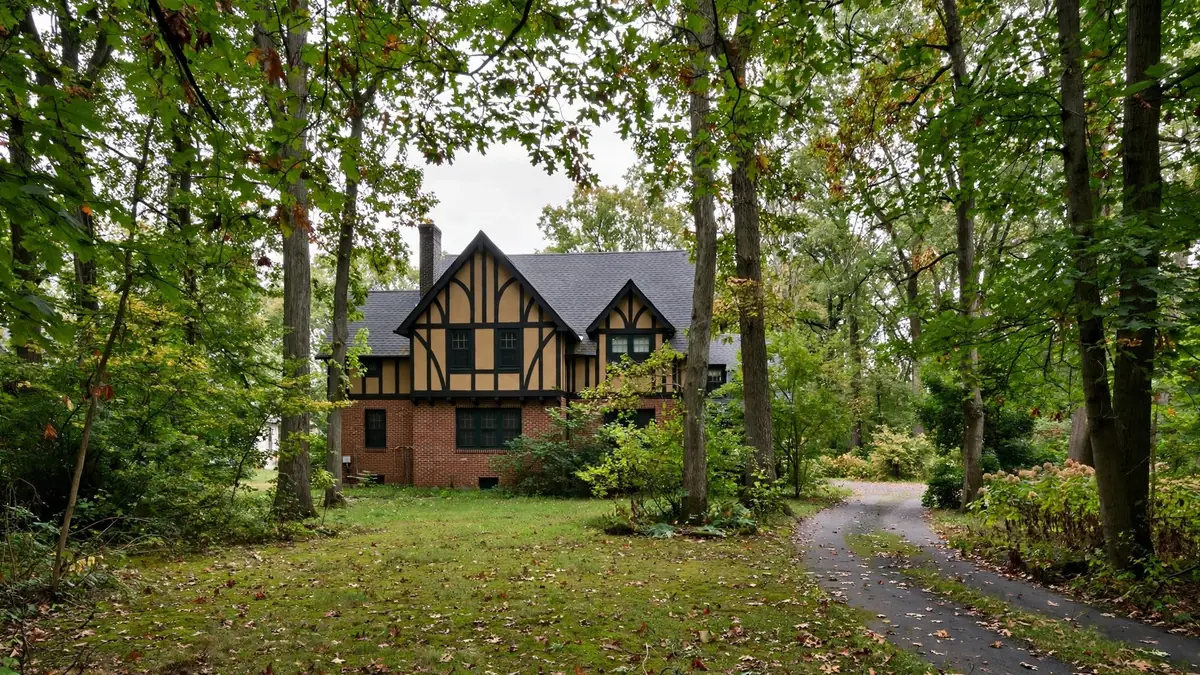
West of College Avenue, long laterals run under deep lawns shaded by mature oaks, maples and sycamores. East of College, bungalow laterals are shorter but pass right under tree-lawn trees. Either way, the clay joints of that era have cracked seals, and feeder roots follow the moisture in [3]. A long line simply has more joints for them to find.
The pattern is familiar: drains slow over weeks, a toilet gurgles, and the basement floor drain backs up after laundry, often in spring.
Clearing
Clearing roots from a Meridian-Kessler lateral
The contractor opens the basement cleanout, protecting any finished floor, and works a cutter or jetter with a root nozzle toward the main. On long runs this takes longer, and the cutter must reach the full length. A camera run afterwards shows how many joints let roots in and where, often near particular trees. That footage turns root intrusion removal into a decision about the long term.
Finished basements
Why roots are riskier with a finished basement
A root clog that sends water up a floor drain in a finished room damages carpet, drywall and furniture. Owners with finished basements usually find that scheduled clearing, or sealing the line, is well worth it compared with a single backup.
Permits
Permits and root work
In Meridian-Kessler, citizens Energy Group does not require a permit for routine cleaning or root removal [1]. Sealing the joints with a liner, or replacing the line, needs the permit and an inspection.
Seal it
When to seal a Meridian-Kessler line
If roots return every year or appear at most joints, seal the line. A CIPP liner protects trees and walks; broken pipe suits pipe bursting. See the Meridian-Kessler area page for more.
A typical case
A Meridian-Kessler root story
A family in a bungalow east of College has had the basement floor drain back up two springs running. A contractor clears roots and films the line, finding roots at most joints between the house and a large tree in the tree lawn. West of College, a neighbor with a long lateral under an oak has the same story, only with more joints affected. Both decide to line rather than keep clearing every spring, and both keep their trees.
Seasons
How the year affects Meridian-Kessler root clogs
- SpringNew roots push out as soil warms; old lines often block in April or May. This holds for Meridian-Kessler homes as well.
- Late summerDry spells send roots searching for water.
- WinterGrowth slows; a good time to film and plan.
- Before trouble seasonClearing a few weeks early avoids the overflow.
Records
Keeping a root log
Record each clearing, what came out on the cable and what the camera showed. Lines that return faster each year are the ones to seal. The log is also useful when selling, since buyers increasingly ask about the sewer.
Trees and neighbors
When the tree isn't yours
The tree may be a neighbor's or a street tree. The lateral is still yours to maintain, and the camera locate often shows which tree is involved, which helps in a conversation with a neighbor.
Clearing long runs
Making sure the cutter reaches the whole line
On the long laterals west of College Avenue, roots can be spread over a considerable distance, and a quick pass that only clears the first stretch leaves the rest to block again within weeks. Ask the contractor how far the cutter or jetter reached and whether the camera confirmed the line was open all the way to the main. Cut roots also need to be flushed well downstream, since a mass of fragments can lodge at an offset joint or at the connection.
If clearing a long line has become a twice-a-year event, the time and disruption usually favor sealing it, and a liner sized for the full length is the common choice.
Planting
Choosing new trees with the sewer in mind
Meridian-Kessler residents plant trees to keep the canopy going, which is good for the neighborhood. Use the camera locate to keep new trees well away from the lateral's route, and ask a nursery about species with less aggressive roots for spots near the line. A tree planted a few yards to one side today saves a root clog for the next generation of owners.
Finished basements
Why clearing on schedule beats waiting
In a house with a finished basement, one overflow can mean replacing carpet and drywall. Scheduling clearing a few weeks before your line's usual trouble season, or sealing the joints, avoids that risk entirely.
Records
Keeping a root log
Write down each clearing date, what came out on the cable and what the camera showed. After two or three entries, the log shows whether roots are returning faster, the clearest sign the joints need sealing.
Selling
Roots and home sales
For Meridian-Kessler owners: buyers increasingly scope the sewer. A line with roots at every joint can become a negotiating point; a sealed line with a final video usually does not.
FAQ
Root Intrusion Removal questions in Meridian-Kessler
Why do roots keep coming back in my Meridian-Kessler sewer?
The joints remain open after clearing, so roots regrow through them.
Do long laterals get more roots in Meridian-Kessler?
Short answer: they have more joints, so more places for roots to enter.
Is a permit needed for root removal in Meridian-Kessler?
No. Meridian-Kessler is no exception. Ask about it on the call for your Meridian-Kessler home.
Should I cut the tree's roots to protect the pipe in Meridian-Kessler?
No. Cutting big roots can destabilize a tree; seal the pipe instead.
Can root killer fix a Meridian-Kessler sewer?
It may slow regrowth but does not seal the joints.
How often should roots be cleared in Meridian-Kessler?
In Meridian-Kessler, often every one to two years in root-prone clay; more often suggests sealing.
Will lining stop roots in Meridian-Kessler?
Along the lined length, yes. This holds for Meridian-Kessler homes as well.
Is jetting or cutting better for roots in Meridian-Kessler?
For Meridian-Kessler owners: both work; jetting cleans the wall more thoroughly, a cutter opens a blocked line quickly.
Should I remove the tree in Meridian-Kessler?
Usually not; sealing the pipe is generally the better answer.
How do I know roots are the cause in Meridian-Kessler?
Roots on the cable after clearing, or seen at joints on camera, confirm it. Meridian-Kessler is no exception.
Do roots come back faster after cutting in Meridian-Kessler?
Not faster, but through the same open joints, often within one or two growing seasons.
Can root killer help in Meridian-Kessler?
In Meridian-Kessler, it may slow regrowth if used as directed, but it does not seal joints.
Should the whole line be lined or just one joint in Meridian-Kessler?
If roots are at most joints, the whole line; if only one, a sectional liner can work.
Can roots be cleared from outside in Meridian-Kessler?
Yes, if there is an outside cleanout. This holds for Meridian-Kessler homes as well.