Key facts: Sewer Backup Cleanup
- Sewer backups into homes can carry bacteria, viruses and other contaminants, so affected materials need cleaning and disinfection [2].
- Backups on dry days usually point to a blockage in the private lateral, which the owner is responsible for in Indianapolis [1].
- Backups only during heavy storms can come from a surcharged public sewer; a backwater valve is designed for that case.
- Porous items soaked by sewage, such as carpet and padding, generally cannot be saved [3].
How a backup happens
Why sewage comes up through the basement drain
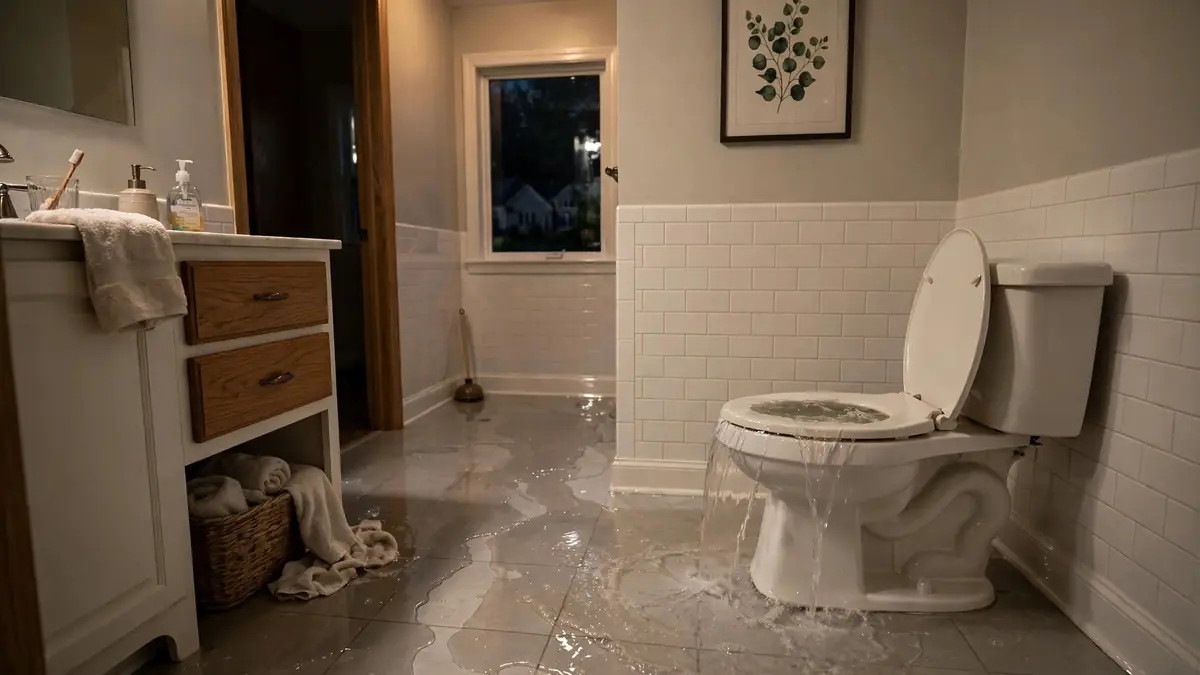
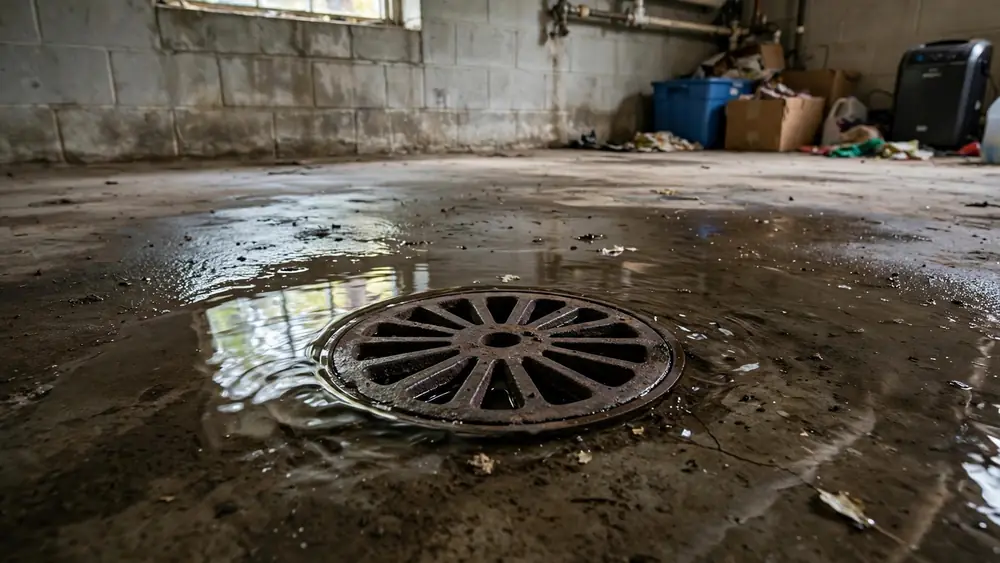
Every drain in a house flows into one pipe, the building drain, which leaves through the foundation as the lateral. If that pipe is blocked anywhere between the house and the main, water from the sinks, toilets, shower and washer has nowhere to go. It rises in the system until it finds the lowest opening, which in most Indianapolis houses with basements is the floor drain, a basement toilet or a laundry tub.
That is why a backup often appears when someone does laundry or takes a shower upstairs. A washing machine can pump out many gallons in a minute or two, and a partly blocked lateral cannot take it. The water comes up through the floor drain carrying whatever was in the line: wastewater, toilet paper, grease and solids.
Less often, the blockage is not on your property at all. In heavy rain, older combined and sanitary sewers can fill beyond capacity, and the pressure in the main can push flow back up into connected laterals [2]. Telling these two causes apart is the first job after the water stops rising, because the fixes are different.
Clues to the cause
Reading where the water came from
Backup on a dry day
No rain and water still came up: the blockage is almost always in your own lateral, often roots or grease.
Only during big storms
Backups that line up with intense rainfall suggest the public sewer is surcharging into your line.
Only when the washer drains
A partial blockage that copes with a sink but not a washer's surge of water.
Water clear, not dirty
Clear water at the floor drain in a storm may be groundwater or a footing drain problem rather than sewage.
Neighbors affected too
If several houses on the street back up at once, report it to Citizens Energy Group: the main may be involved.
Repeat backups
A second backup within months means the cause was not fixed; put a camera in the line.
First hour
What to do as soon as the drain starts backing up
- 1
Stop using water
No flushing, showers, laundry or dishwasher. Tell everyone in the house, including upstairs units in a double.
- 2
Keep the household away from the water
Sewage contains germs that cause illness [2]. Children and pets should stay out of the basement.
- 3
Watch for electrical hazards
Do not walk through water near outlets, extension cords or appliances. Shut power to the basement only from a dry spot.
- 4
Protect what you can reach safely
Lift boxes and items off the floor if you can do it without wading through sewage.
- 5
Take photos
Photograph the water level, the drain and damaged items before cleanup for your records and any insurance claim.
- 6
Call to get the line cleared
Cleanup cannot really start until the blockage is cleared and the water can drain away.
Clearing the line
Opening a blocked lateral during a backup
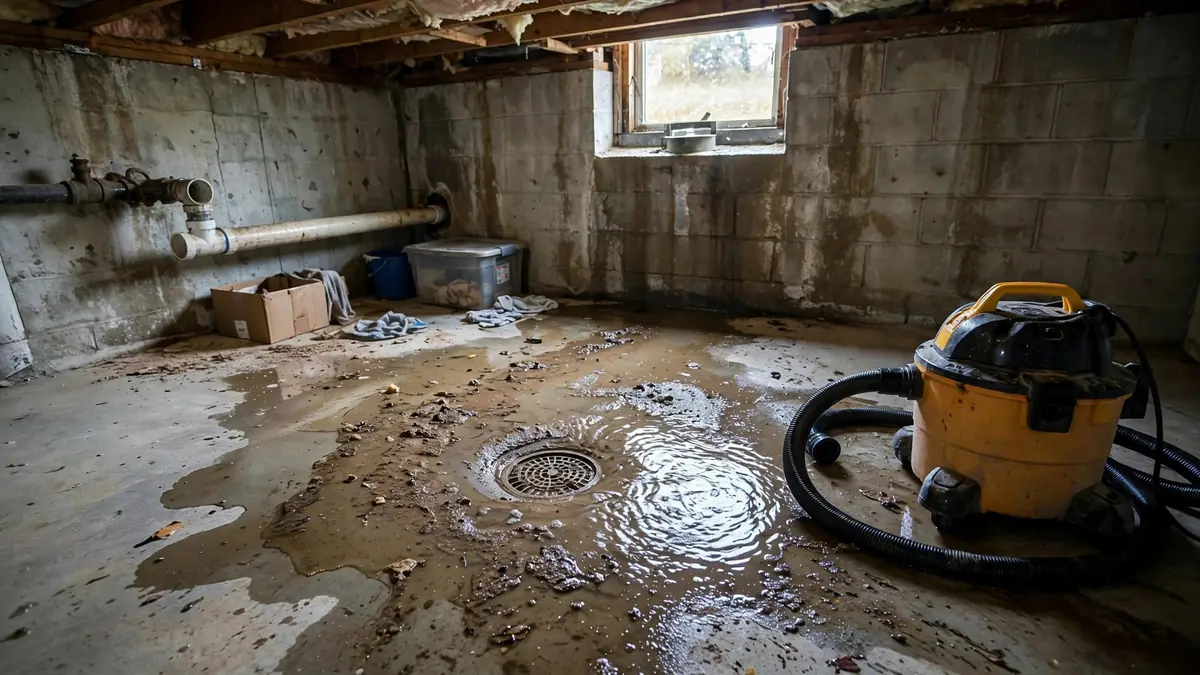
With water standing in the basement, the contractor's first task is to get the line flowing. That usually means opening the main cleanout, which on a full line releases a rush of water, so it is done slowly with buckets, a wet vac and tarps ready. A cable machine or a hydro jetter is then sent toward the street to break through the blockage. Once it opens, the water in the basement drains away through the floor drain fairly quickly.
Clearing the line is not the same as fixing it. Roots, grease, a broken section or a sag can all cause a backup, and a cable through the middle of the problem only buys time. That is why a camera inspection once the line is flowing is so valuable after a backup: it shows what caused it, and whether this was a one-off or a sign of more to come.
If the cable reaches the main without finding anything, or the backup happened during a storm and cleared on its own, the cause may be in the public sewer. Report it to Citizens Energy Group with the date and time, and ask your contractor about a backwater valve.
Diagnosis
Basement backup causes and how they're confirmed
| Cause | How it's confirmed | Typical fix |
|---|---|---|
| Root mat in a clay lateral | Roots on the cable; camera shows joints | Clear, then line or replace |
| Grease buildup | Greasy debris on the cable; coated pipe wall | Jetting and drain habits |
| Wipes and paper products | Mass of fibrous material at a sag or joint | Clearing; stop flushing wipes |
| Broken or collapsed pipe | Camera stops; soil in the line | Spot repair or replacement |
| Belly in the line | Standing water on camera | Excavate and relay the section |
| Surcharged public sewer | Backup only in heavy rain; line clear | Backwater valve; report to Citizens |
The cleanup
How a sewage-contaminated basement is cleaned
- 1
Remove standing water
Wet vacs or pumps remove remaining water once the line is open.
- 2
Discard porous items
Carpet, padding, upholstered furniture, mattresses, cardboard and soaked drywall are usually not salvageable after sewage contact [3].
- 3
Muck out solids
Debris is shoveled or scooped into heavy bags with protective gear on.
- 4
Clean hard surfaces
Concrete floors, walls and hard furniture are scrubbed with detergent and water to remove soil and residue.
- 5
Disinfect
After cleaning, surfaces are treated with a disinfectant suitable for the material, following the label.
- 6
Dry thoroughly
Fans and dehumidifiers bring the space back to normal humidity to prevent mold growth [3].
- 7
Check before rebuilding
Drywall, framing and insulation are dried and checked before any finishes go back.
What can be saved
Basement contents after sewage contact
| Item | Usually | Notes |
|---|---|---|
| Wall-to-wall carpet and pad | Discard | Absorbs contaminated water; very hard to disinfect |
| Drywall below the water line | Cut out and replace | Usually cut a margin above the wet line |
| Concrete floor and block walls | Clean and disinfect | Hard, non-porous; dry thoroughly |
| Metal and plastic shelving | Clean and disinfect | Inspect for rust after drying |
| Wood furniture | Case by case | Solid wood may be cleaned; particleboard usually swells |
| Paper, books, cardboard | Discard | Unless documents are critical; seek specialist help |
| Washer, dryer, water heater | Have checked | Electrical and gas components may need service |
DIY vs pro
Which parts of a backup homeowners can handle
- Small backups confined to a concrete floor can be cleaned by a healthy adult with gloves, boots, eye protection and good ventilation.
- Large volumes, finished basements, soaked drywall or carpet, or anyone in the household with a weak immune system are reasons to bring in a restoration company.
- Clearing a blocked lateral is a job for a sewer contractor; rental machines can lodge or break in old pipe.
- Keep receipts and photos of discarded items for insurance.
- Check whether your homeowners policy has sewer and drain backup coverage; it is often a separate endorsement.
- Do not use bleach together with ammonia-based cleaners; the combination releases toxic gas.
- Wash hands thoroughly and launder work clothes separately after cleanup.
- Any lateral repair afterwards needs a licensed contractor and a Citizens permit [1].
Local specifics
Indianapolis sewers, storms and basement backups
Older parts of Indianapolis are served by combined sewers, which carry stormwater and wastewater in the same pipes [5]. Historically, heavy rain overwhelmed them and sent overflow into local streams, including Fall Creek and the White River. Citizens Energy Group's DigIndy tunnel system, finished in 2025, now stores much of that overflow deep underground until treatment plants can take it [4].
DigIndy is aimed at protecting streams, and it does not change who is responsible for the pipe under your yard. Citizens states that the property owner maintains the lateral from the home to the main [1]. In practice, most basement backups in Indianapolis come from blockages in that private lateral, especially in older neighborhoods with clay pipe and big trees.
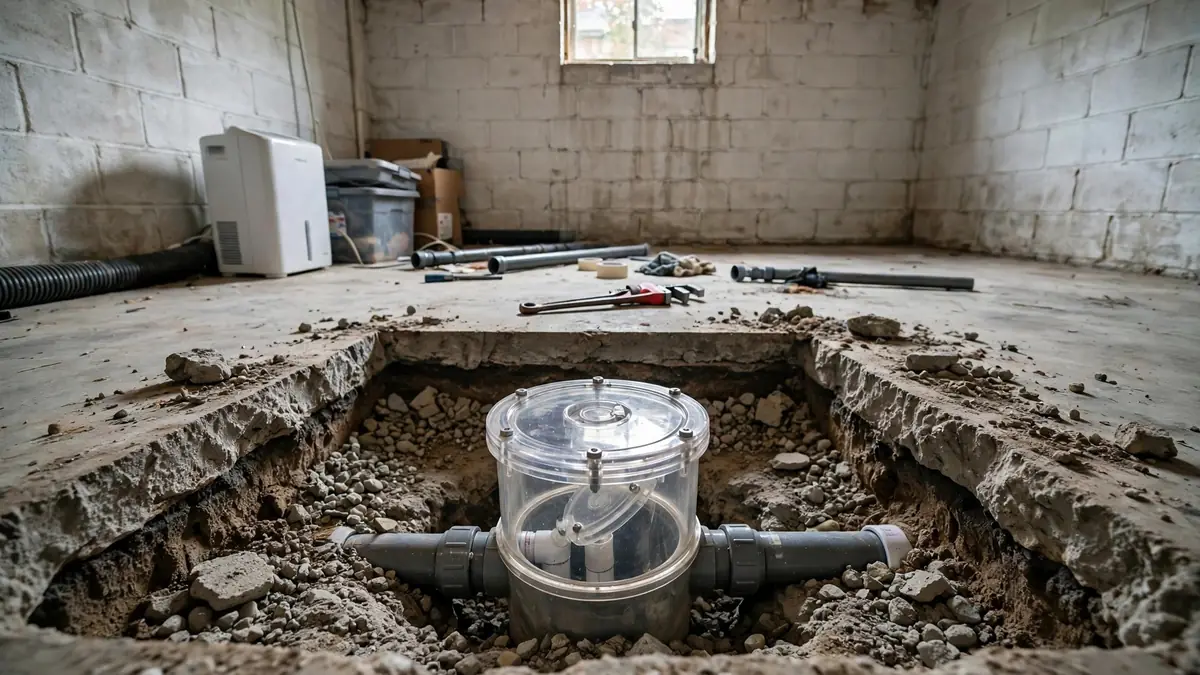
If your backups happen only during intense storms, and neighbors have the same problem, report it to Citizens with dates and photos so the utility knows about it. Then talk with a contractor about a backwater valve, which closes when flow reverses and protects the basement from sewage pushed back from the street.
Insurance and records
Documenting a backup for insurance
Many standard homeowners policies exclude sewer and drain backup unless a specific endorsement was added. Check your policy, call your agent early, and ask what documentation they need before you throw anything away. Photos of the water level, the floor drain, damaged items and the cleared line are all helpful.
Ask the contractor who clears the line for a written note of what caused the backup, ideally with the camera video. If the cause was a broken lateral, the insurer may treat the cleanup and the pipe repair differently, so having the cause in writing avoids confusion later. Keep everything together with dates.
Prevention
Preventing a repeat after cleanup
- Fix the cause the camera found: clear and seal root-prone joints, repair breaks, and correct sags.
- Install a backwater valve if storms have caused backups.
- Keep grease, wipes and paper towels out of every drain.
- Know where the main cleanout is and keep it accessible.
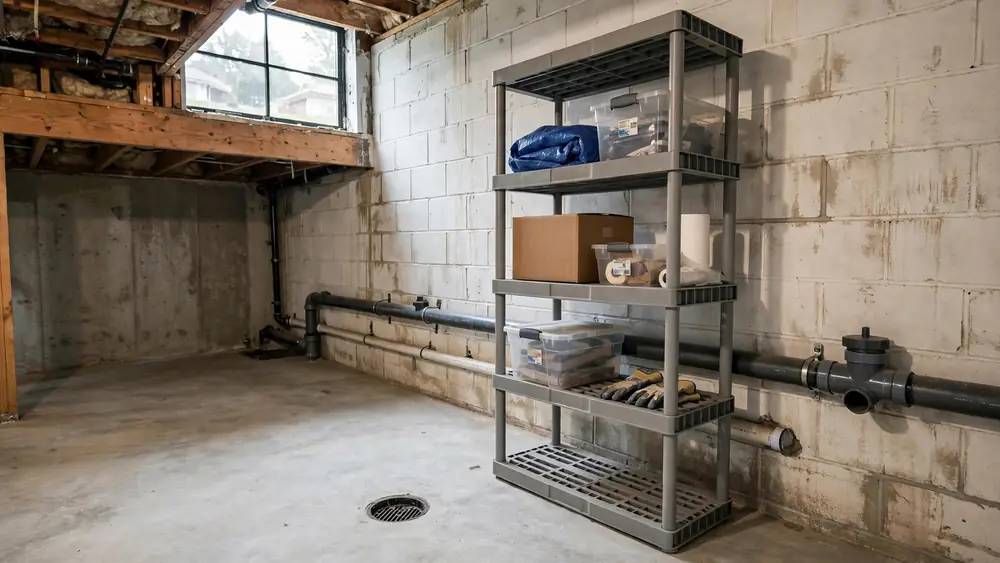
- Keep valuables and important papers off the basement floor, on shelves or in sealed bins.
- Schedule periodic clearing if the line has known roots, before the season it usually clogs.
Repair after cleanup
Fixing the line once the basement is clean
A backup is a symptom. If the camera shows roots at a few joints in a round clay line, clearing plus a trenchless repair to seal the joints is a common next step. If the pipe is broken, flattened or sagging, sewer line replacement may be the lasting fix.
Whatever the repair, it needs a Citizens Energy Group permit and inspection [1]. Waiting to repair after a backup has been cleaned up is understandable, but a lateral that backed up once will usually do it again, often at a worse moment.
Coordinating the work
The order of operations after a sewage backup
- 1
Clear the lateral
Nothing drains until the blockage is opened, so the sewer contractor comes first.
- 2
Film the line
While the contractor is there, a camera pass shows what caused the backup and whether a repair is needed.
- 3
Call the insurer
Report the loss, describe the cause and ask what documentation and inspections they want before items are discarded.
- 4
Start cleanup and drying
Either yourself for a small, contained backup or with a restoration company for anything larger.
- 5
Service affected appliances
A furnace, water heater, washer or dryer that sat in water should be checked by a qualified technician before use.
- 6
Schedule the repair
If the video showed a defect, plan the repair with the contractor, including the Citizens permit and inspection.
- 7
Add protection
Consider a backwater valve, an accessible cleanout and a maintenance schedule so the basement stays dry next time.
Odors afterwards
Getting rid of the sewage smell once the basement is clean
- Refill dry trapsFloor drains, laundry tubs and unused basement fixtures lose their water seal; pour water in to block sewer gas.
- Check the cleanout capA loose or missing cap after clearing lets sewer gas into the basement constantly.
- Remove hidden wet materialsOdor that lingers often comes from soaked drywall, insulation or stored items that were missed.
- Keep dryingRun dehumidifiers until moisture readings are back to normal; damp concrete holds odor.
- VentilateOpen windows and use fans when weather allows to move fresh air through the space.
- Get help if it persistsA smell that will not fade after cleaning may mean a cracked drain under the floor or a vent problem worth inspecting.
Finished basements
When the backup reaches a finished basement
Many Indianapolis basements have been finished over the years with carpet, drywall, built-in shelving and sometimes a bathroom. A backup into a finished space is a much larger job than one onto bare concrete, because sewage wicks into drywall, insulation, wood framing and flooring that cannot simply be hosed down. Restoration crews usually remove drywall and insulation to a set height above the wet line, pull carpet and pad, and dry the framing with air movers before anything is rebuilt.
A finished basement is also where a backwater valve or other protection earns its keep. Before putting the room back together, ask the sewer contractor whether the lateral itself needs repair and whether the floor drain and any basement fixtures should be protected. Rebuilding first and fixing the cause later risks paying twice for the same room.
Keep a record of the layout before demolition: photos of each wall, the flooring and anything built in. Insurers and contractors both find it easier to agree on what needs replacing when there are clear before pictures.
Before calling
A quick checklist while you wait for the line to be cleared
Write down when the backup started, what was running at the time, whether it rained and whether any neighbor has the same problem. Note where the cleanout is and whether anyone has opened it. Clear a path to it, move valuables you can reach without stepping in the water, and keep the household off the plumbing. Those few minutes of notes make the contractor's diagnosis faster and give you a record for the insurer.
Related problems
Problems connected to sewage in the basement
The step-by-step basement backup guide covers what to do in the moment. For the slow build-up that comes before many backups, read signs of a broken sewer line.
FAQ
Basement sewer backup questions in Indianapolis
Who pays for a sewer backup cleanup in Indianapolis?
If the cause is in the private lateral, the homeowner is responsible, because Citizens Energy Group places the lateral from the home to the main with the owner. Homeowners insurance may help if the policy includes sewer backup coverage.
Is it safe to clean up sewage myself?
A small backup on a bare concrete floor can be cleaned by a healthy adult with gloves, boots, eye protection and ventilation. Large backups, finished spaces or vulnerable household members call for professional restoration.
Can I use my toilet after a sewer backup?
Not until the line has been cleared and tested. Every flush adds water that has nowhere to go but back into the basement.
Why did my basement back up during heavy rain?
In older parts of the city, intense rain can surcharge the public sewer and push flow back into connected laterals. If that is the pattern, a backwater valve and a report to Citizens Energy Group are the usual responses.
Does carpet have to be thrown out after a sewage backup?
Generally yes. Carpet and padding soaked with sewage absorb contaminants and are very difficult to disinfect, so they are usually removed and replaced.
How long does a basement take to dry after a backup?
With fans and dehumidifiers running, many concrete basements dry in a few days. Drywall cavities, framing and insulation take longer and should be checked before closing anything up.
How do I stop sewer backups from happening again?
Find the cause with a camera and fix it, keep grease and wipes out of the drains, and consider a backwater valve if storms have caused the backups.
Should I report a sewer backup to Citizens Energy Group?
Report it if you think the public main is involved, such as when several neighbors back up at once or it happens only during heavy storms. Backups caused by the private lateral are handled by the owner's contractor.
Sources and citations
- [1]Citizens Energy Group — Connecting a sewer service line
- [2]U.S. EPA — Sanitary sewer overflows
- [3]U.S. EPA — Flooded homes: cleanup and indoor air
- [4]Citizens Energy Group — What is DigIndy?
- [5]U.S. EPA — Combined sewer overflows
- [6]Indiana Professional Licensing Agency — Plumbing Commission
- [7]Wikipedia — Hydrogen sulfide