Key facts: Trenchless vs excavation
- Cured-in-place lining builds a new pipe inside the old one; pipe bursting pulls new pipe through the old path [2][3].
- Neither lining nor bursting corrects a sag, because both follow the existing pipe's path.
- Open-trench excavation can fix sags, collapses and damaged connections directly.
- In Indianapolis, lining, repairs and replacement all need a Citizens Energy Group permit and inspection [1].
The methods
Three ways to fix a lateral
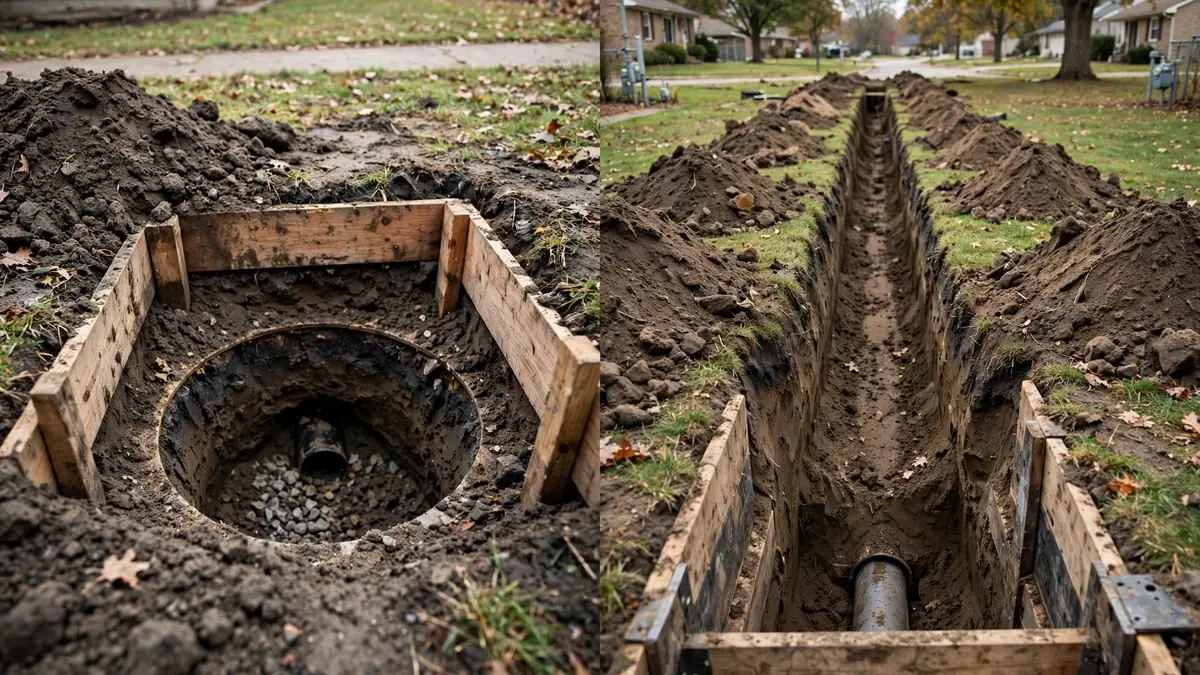
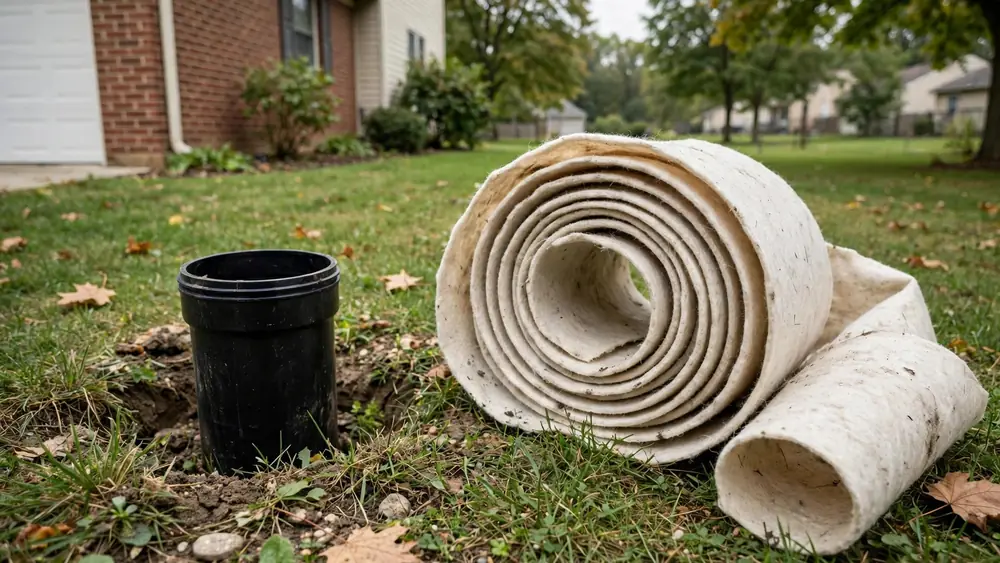
Lining, or cured-in-place pipe, inserts a resin-soaked tube into the cleaned old pipe and hardens it into a seamless new wall [2]. Pipe bursting pulls a cone-shaped head through the old pipe, breaking it outward while new polyethylene follows behind [3]. Excavation, or open trench, digs down to the pipe and replaces it directly, either for the full length or at one bad spot.
Lining and bursting are grouped as trenchless because they work through a cleanout or small pits. Excavation opens the ground along the part being replaced. Many real jobs combine them.
Side by side
Comparing trenchless and open-trench repair
| Factor | Lining (CIPP) | Pipe bursting | Open trench |
|---|---|---|---|
| Digging | Little or none | Two small pits | Along the repaired length |
| Fixes roots at joints | Yes | Yes | Yes |
| Fixes deformed or flattened pipe | Rarely | Yes | Yes |
| Fixes a sag | No | No | Yes |
| Fixes a collapse | No | Sometimes | Yes |
| Can increase pipe size | No; slightly smaller | Yes | Yes |
| Disturbs trees, walks and drives | Least | Little | Most |
| Shows bedding and joints directly | No | No | Yes |
Trenchless fits when
Situations that favor a trenchless repair
- The camera shows a round pipe with roots or cracks at the joints.
- A porch, steps, driveway, mature tree or landscaping sits over the line.
- The lateral is deep and a long trench would need shoring.
- Fiber pipe has deformed but a cable can still pass (bursting).
- You want the work done quickly with minimal yard restoration.
Digging fits when
Situations where excavation is the better tool
- There is a sag or belly holding water.
- A section has collapsed and nothing can pass through it.
- The connection at the main is broken or badly offset.
- The line is shallow and runs under plain lawn.
- The route is unknown or has sharp bends that a liner or head cannot follow.
Deciding
How to reach a decision with your contractor
- 1
Get the line cleaned and filmed
A camera inspection of the full length is the basis for any choice.
- 2
List each defect
Roots, cracks, offsets, sags and collapses, with footage and depth.
- 3
Match methods to defects
Lining or bursting for joint and crack problems; digging for sags, collapses and taps.
- 4
Consider what's on top
Trees, walks, steps and drives tilt the choice toward trenchless where the pipe allows.
- 5
Confirm the permit and inspection
Whatever the method, the contractor files the Citizens permit and schedules inspection [1].
Hybrid jobs
Why many repairs combine both
A common Indianapolis job looks like this: a clay lateral with roots at most joints, a short sag halfway down, and a sound tap at the main. The contractor digs at the sag and relays that section at the right slope, then lines the rest from the cleanout. The yard sees one small excavation instead of a trench, and every defect is addressed.
The pages on trenchless sewer repair and sewer line replacement explain each approach in depth.
On the day
What each method feels like at home
A lining job usually happens in a day: the line is cleaned and filmed, the liner is installed and cured, and branches are reopened. You lose the use of your plumbing for several hours, and equipment sits in front of the house, but the yard is barely touched. Pipe bursting is similar in length, with two pits instead of a trench and a run of new pipe laid out on the lawn before it is pulled in.
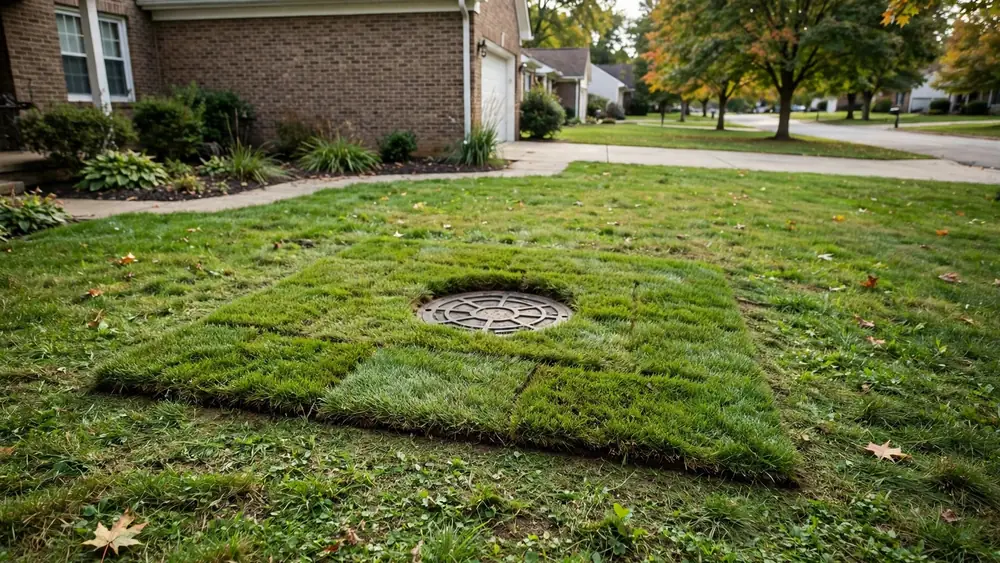
Open-trench work takes longer and is more visible. An excavator digs along the route, spoil piles sit on tarps, and the trench stays open until Citizens inspects the work [1]. Afterwards the strip of yard needs topsoil, seed or sod, and some settling is normal. If a driveway or walk was cut, those sections are replaced. None of that makes excavation the wrong choice; for a sag or a collapse it is often the only way to get a lasting result.
Questions to ask
Questions that clarify any proposal
- Which defects does this method fix?Ask the contractor to point to each one on the video.
- Which defects will remain?A sag or a damaged tap may need separate work.
- Where are the pits or trench?Ask to see them marked on the ground.
- What is restored afterwards?Lawn, walks, drives and plantings over the work.
- Who files the permit and schedules inspection?The contractor should handle both with Citizens.
Indianapolis lots
How Indianapolis lots tip the balance
Older Indianapolis neighborhoods often have big trees in the tree lawn, original walks and steps, and porches built over the lateral's route, which favors trenchless methods whenever the pipe allows. Newer suburban lots with plastic pipe under open lawn are more likely to suit a straightforward dig when something goes wrong. Your own lot, and the video of your own pipe, decide which applies to you.
Records
Keep the evidence from either method
Whichever method you choose, keep the before and after videos, the permit number and a photo of the route marks. They prove what was done, help any future contractor, and answer a buyer's questions when you sell.
Timing
How long each approach usually takes
Lining and bursting on a typical house lateral are often finished in a day once the permit is issued. Open-trench replacement commonly takes one to three days, plus time for the inspection before backfill and for the lawn to recover. Weather, depth and street work can stretch any of them.
FAQ
Trenchless vs excavation questions
Is trenchless sewer repair always better?
No. It avoids digging and protects what is above the pipe, but it cannot fix sags or most collapses. Excavation remains the right tool for those.
Does trenchless repair need a permit in Indianapolis?
Yes. Citizens Energy Group requires a permit for lining and replacement as well as dug repairs.
Which lasts longer, lining or new pipe?
Both are designed for long service lives. Lining depends on installation quality and the host pipe; new pipe depends on bedding and joints. Ask the contractor what each product is rated for.
Can I choose trenchless if my pipe is collapsed?
Usually not for the collapsed section. That part is typically excavated, and the rest of the line may still be lined or burst.
How do I know which method my line needs?
A camera inspection showing every defect, its location and depth, plus what sits above the line, is what decides it.