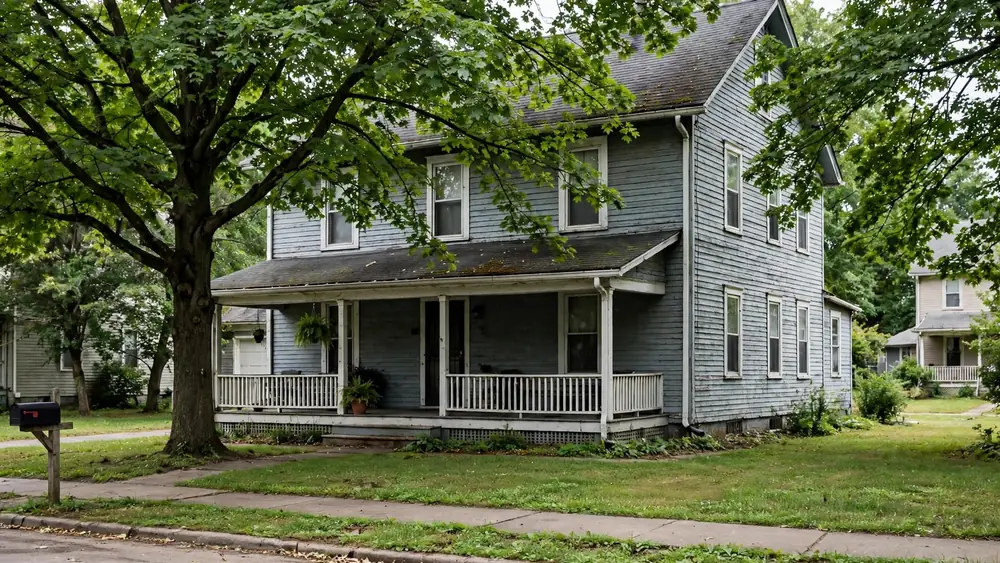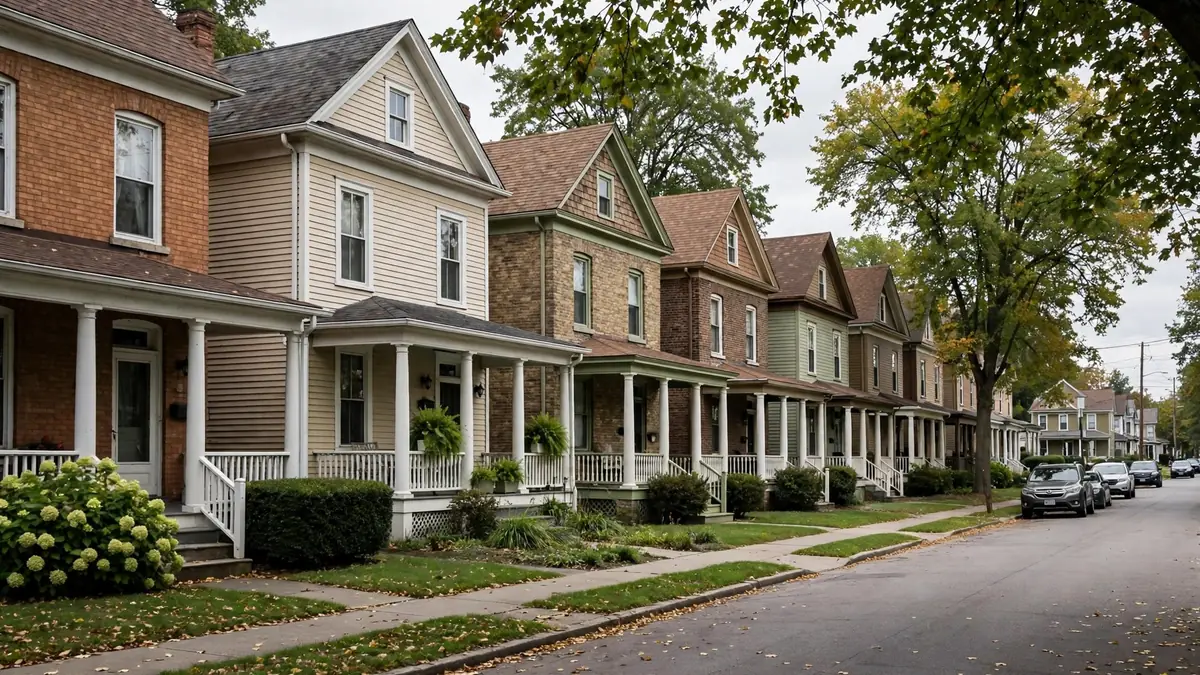
Key facts: Butler-Tarkington
- Butler-Tarkington runs from 38th Street and Crown Hill Cemetery up to the Central Canal, between Michigan Road and Meridian Street [3].
- Residential building boomed in the 1910s and 1920s, and the neighborhood was built out by the end of the Second World War [3].
- Butler University moved to the neighborhood's western side in 1928 [3].
- Owners maintain their lateral to the main; repairs, lining and replacement require a Citizens Energy Group permit [1].
Covered area
Butler-Tarkington addresses on this page
This page covers Butler-Tarkington on the north side of Indianapolis, in ZIP code 46208. Its edges are Meridian Street on the east, Michigan Road on the west, 38th Street and Crown Hill Cemetery along the southern side, and the Central Canal with Westfield Boulevard across the top [3]. Calls from addresses here are connected with an independent contractor who works on laterals in this part of the city.
Next door, Meridian-Kessler across Meridian Street and Broad Ripple to the northeast are covered as well. The full list is on the areas page.
History
From Mapleton to a built-out neighborhood
The area started as Mapleton, a farming settlement from the 1840s. Railway connections came in the 1860s and a streetcar line in 1890. Indianapolis annexed Mapleton in 1902 and most of the rest by 1906. Building boomed in the 1910s and 1920s, and by the end of the Second World War the neighborhood was essentially full [3].
In 1928 Butler University moved from Irvington to the former Fairview Park on the western side, and the neighborhood's name now combines the university with author Booth Tarkington, who lived there until his death in 1946 [3]. The largest homes line the western side of Meridian Street and parts of Illinois Street north of 40th, while most streets are filled with modest to substantial houses of the same era [3].
For sewers, that compressed building period is the key fact. Many houses on a given block were connected within a few years of each other, using the materials of the time, usually vitrified clay in short lengths [5]. Those laterals have aged together, and many are now reaching the point where roots, cracked joints and offsets cause regular trouble.
Common calls
Typical Butler-Tarkington sewer problems
Roots in century-old clay
Old joints and mature street trees make root intrusion the most common call.
Student and rental use
Houses rented near campus carry heavy loads and more wipes, which snag in old pipe.
Basement floor drain backups
Most houses have basements, and the floor drain is the first place water appears.
Large houses with added baths
Big homes along Meridian and Illinois often added bathrooms that strain original laterals.
Canal-side streets
Northern streets near the Central Canal have their own soil and grade conditions.
Aging cast iron inside
Building drains under basement floors corroding alongside the clay outside.
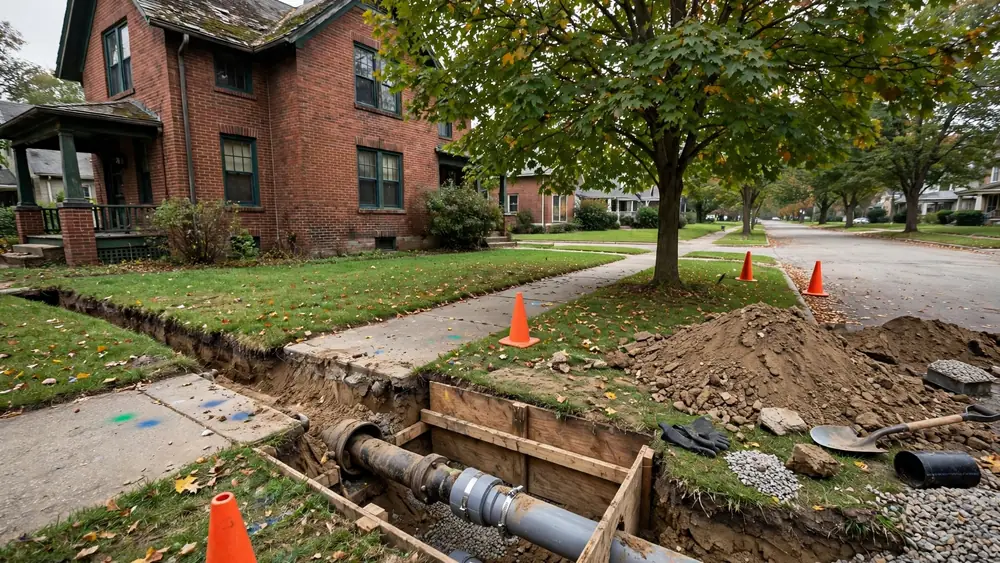
Near campus
Rental houses near Butler University
Butler University's presence means many houses on the western side of the neighborhood are rented, some to students. Rentals tend to see heavier, less careful use: more people per bathroom, more laundry, and more wipes, paper towels and other items flushed that should go in the bin. In an older clay lateral with roots catching at the joints, that combination leads to backups.
For landlords, the most useful habit is filming the lateral between tenancies, especially before the academic year begins. A video shows whether roots are building up and whether a repair is needed, and it can be done while the house is empty. Clearing or lining before move-in is far less disruptive than a backup in September.
Tenants should report slow drains early and in writing, and stop using water as soon as a floor drain starts to rise. Simple signs in bathrooms about what can and cannot be flushed make a real difference in shared houses.
Canal and soils
The Central Canal edge and Butler-Tarkington soils
The Central Canal forms part of the neighborhood's northern boundary [3]. Streets near the canal can have different soil and drainage than higher ground to the south, with moister soils in places. Moist soils support roots near the surface and can allow sections of an old lateral to settle, forming sags where water stands.
Elsewhere, central Indiana's clay-rich soils shrink when dry and swell when wet. Over a century, that seasonal movement works old clay joints loose. When the camera shows offsets and gaps at many joints, the soil has been at work as much as the roots.
A typical job
How a sewer repair tends to go in Butler-Tarkington
- 1
Enter at the basement cleanout
Most houses have a cleanout near the front foundation wall; the contractor opens it carefully if the line is full.
- 2
Clear the blockage
Roots are cut or jetted to open the line.
- 3
Camera to the main
The camera inspection records joints, roots, cracks and any sags.
- 4
Mark and measure
Problem spots and depths are marked on the yard.
- 5
Choose a method
Lining for round, root-prone clay; bursting or digging for deformed, broken or sagging sections.
- 6
Permit, work and inspection
The Citizens permit, an Indiana 811 locate and an inspection before backfill [1][2].
Property types
Butler-Tarkington homes and their sewer patterns
| Property | Usual setup | Watch for |
|---|---|---|
| Large house on Meridian or Illinois | Deep lot, long lateral, added baths | Roots at many joints; capacity strain |
| Typical 1910s to 1940s house | Basement, clay lateral to the street | Roots, cracked joints, floor drain backups |
| Rental near campus | Heavy use, many occupants | Wipes and grease catching on roots |
| House near the canal | Moister soils | Sags and settled sections |
| Double or converted house | Shared lateral | One blockage affecting two households |
Before the visit
Preparing for a sewer contractor in Butler-Tarkington
- Find the basement cleanout and clear the area around it.
- Landlords: arrange access with tenants and tell them not to run water during the visit.
- Note when backups have happened; a pattern around move-in or game days can be telling.
- Mention big trees near the front and the tree lawn.
- Share earlier camera videos or invoices.
- Point out any additions or added bathrooms.
- Plan parking, especially on streets near campus during the academic year.
Permits
Citizens Energy Group rules in Butler-Tarkington
Butler-Tarkington follows the same lateral rules as the rest of Indianapolis. Citizens Energy Group places responsibility for the sanitary lateral from the home to the main on the property owner, requires a licensed contractor or plumber for the work, and requires a permit for repairs, replacements, cleanouts and lining, though not for routine cleaning or root removal [1]. In Indianapolis, the contractor must also be registered with the City, with insurance and a bond in place [1].
Before digging, the contractor requests an Indiana 811 locate so buried gas, electric, water and communication lines are marked [2]. On older streets, those services often run close to the sewer, which influences where pits can go.
Choosing a repair
Repair choices for Butler-Tarkington laterals
Because so many laterals here are of the same age and material, the same few repairs come up again and again. For a round clay line with roots at the joints, full-length CIPP lining is often the first option discussed; it seals every joint without disturbing trees or walks. For pipe that is cracked, offset or deformed along its length, pipe bursting can pull in a new jointless pipe between two pits.
For a line with a sag, especially near the canal where soils may be softer, the sagging section usually needs to be excavated and relaid at the right slope. A combination, digging at the sag and lining the rest, is common.
For rentals, the choice is often between ongoing root clearing and a one-time lining or replacement. Landlords who have cleared the same line several times usually find the lasting repair worth the disruption.
Prevention
Prevention tips for Butler-Tarkington homes and rentals
- Film older laterals every few years, and before each new tenancy in rentals.
- Clear roots ahead of spring if the line has a history.
- Post simple flushing rules in shared bathrooms.
- Keep grease out of kitchen drains.
- Keep the cleanout accessible and the plug serviceable.
- Plan new trees away from the sewer route.
Nearby
Nearby neighborhoods to Butler-Tarkington
Across Meridian Street, Meridian-Kessler has similar-era houses and big trees. To the northeast, Broad Ripple shares the Central Canal and adds a busy commercial strip.
Storms
Heavy rain, combined sewers and Butler-Tarkington basements
Much of the older north side drains through combined sewers that carry stormwater and wastewater in one pipe. In heavy rain those pipes historically overflowed into streams such as Fall Creek, which runs not far to the east and south. Citizens Energy Group built the DigIndy tunnel system, finished in 2025, to store that overflow deep underground until it can be treated, with a particular target for the Fall Creek watershed [4].
DigIndy works at the scale of the whole city. It does not change what happens in a single lateral, and it does not guarantee that neighborhood pipes never fill during a cloudburst. If your basement floor drain rises only during intense storms, and nearby houses report the same, the public sewer may be surcharging into your line. Note the dates, report it to Citizens, and ask a contractor about a backwater valve.
If your floor drain backs up on dry days, the cause is almost always your own lateral: roots, a crack, a sag or a buildup of grease and wipes. That is the far more common pattern here.
Large houses
Big houses along Meridian and Illinois Streets
The largest Butler-Tarkington homes sit along the western side of Meridian Street and on parts of Illinois Street north of 40th Street [3]. Many have been updated with additional bathrooms, larger kitchens, laundry rooms and sometimes guest suites or finished lower levels. All of that drains into a lateral that may still be the clay pipe laid when the house was built.
These homes typically have deep front lawns, mature trees and features like stone walls, steps and formal walks. A long lateral with roots at many joints under that landscape is exactly where trenchless methods earn their place. The camera survey should record depth along the route, since the line can be deep near the street where the house sits above the road.
Owners of these properties often find that a single comprehensive repair, lining or replacing the full length and adding an outside cleanout, ends years of periodic root clearing.
Telling it apart
Is it the lateral or just one drain?
- One sink slowLikely that fixture's trap or branch drain, not the main line.
- Several fixtures slow togetherPoints to the main line or lateral.
- Toilet gurgles when the washer drainsAir pushed back through the system by a partial blockage downstream.
- Floor drain wet after showers upstairsWater rising at the lowest opening because the lateral can't take the flow.
- Problem returns months after clearingRoots or a structural defect; time for a camera run.
Crown Hill edge
Streets near Crown Hill on the southern edge
The neighborhood's southern edge runs along 38th Street and Crown Hill Cemetery [3]. Streets near this edge were among those built up in the same early twentieth-century boom, and their laterals typically head toward mains under the residential streets. Large trees are common here too. The same advice applies: if the line has needed clearing more than once, film it, find the joints letting roots in, and decide whether to seal them.
Buying
Buying a house in Butler-Tarkington: the sewer question
A home inspection here will cover the visible plumbing but usually not the lateral. Ask the seller about backups and past sewer work, request any video, and consider a separate sewer scope during your inspection period. If you are buying a rental, ask for the maintenance history; frequent root clearing is a strong hint that a lasting repair is due.
Same-age blocks
Why neighbors' sewer stories matter on Butler-Tarkington blocks
Because much of the neighborhood was built in a short burst during the 1910s and 1920s [3], the houses on a single block were often connected to the sewer within a few years of each other, probably by the same few contractors, using the same pipe. That makes the block's history unusually useful. If three houses on your street have had their laterals lined or replaced in the last decade, yours is likely facing the same conditions.
It also means problems tend to cluster. When one house on a block has its line filmed, the video often shows the same pattern of roots and joint movement that the neighbors are about to experience. Some neighbors compare notes and schedule work around the same time, which can make it easier to plan around shared trees, driveways and parking.
Your lateral is still your own responsibility, and its condition depends on its own route, depth, trees and use. But a neighbor's video is a good reason not to wait for your own backup before looking.
Basements
Basements, floor drains and finished space
Most Butler-Tarkington houses have basements with a floor drain near the center or by the laundry. As the lowest opening in the plumbing, that drain is where a blocked lateral overflows. In basements that have been finished, sewage can soak carpet, drywall and furniture, which generally have to be removed after contact. Keep storage off the floor near the drain, keep the trap filled, and know where the main cleanout is so it can be reached quickly. If a basement bathroom has been added, ask whether it needs protection from storm backflow as well.
Timing
Scheduling Butler-Tarkington sewer work around the year
For owner-occupied homes, late summer and fall are convenient for lining or excavation: soils are drier and lawns recover before winter. For rentals near campus, the gap between tenancies is often the best window. Either way, aim to finish before the spring root push, when old clay lines are most likely to block.
Records
Keeping track of a Butler-Tarkington lateral
Keep every invoice, permit number and camera video in one place, along with a photo of the route marks. For landlords with several houses in the neighborhood, a simple spreadsheet listing each property's lateral material, last inspection and last repair makes it obvious which line is due for attention next. For owner-occupiers, the same file becomes part of the house's story when you sell, and buyers increasingly ask for it.
Cleanouts
Adding an outside cleanout in Butler-Tarkington
Most houses here have only an interior cleanout in the basement. Adding a two-way cleanout outside near the foundation, usually during a repair, moves future clearing and camera work out of the house. It needs a Citizens permit [1], and in rentals it means a contractor can service the line without entering a tenant's space.
FAQ
Butler-Tarkington sewer questions
Why are sewer backups common in Butler-Tarkington?
The neighborhood was mostly built between the 1910s and 1940s, so many laterals are old clay pipe with joints that roots enter. Mature trees and heavy use in rentals add to the problem.
Who handles sewer repairs in a Butler-Tarkington rental?
Usually the owner, since the lateral from the house to the main is the property owner's responsibility under Citizens Energy Group's rules. Tenants should report problems promptly and in writing.
When is the best time to check a rental's sewer near Butler?
Between tenancies, especially before the academic year, when the house is empty and a camera inspection and any repair can be done without disrupting residents.
Do streets near the Central Canal have more sewer problems?
Streets near the canal can have moister soils, which may encourage roots and allow old pipe to settle into sags. A camera inspection shows whether that has happened on your line.
Do I need a permit for sewer lining in Butler-Tarkington?
Yes. Lining, repairs, cleanouts and replacements require a Citizens Energy Group permit. Cleaning and root removal do not.
Is Butler-Tarkington's ZIP code covered?
Yes, 46208 is covered, along with neighboring north-side ZIP codes. Calling is the quickest way to confirm your address.
Can I avoid digging up my front walk?
Often. Lining from the basement cleanout or bursting between two pits can replace the flow path without breaking the walk, if the pipe is suitable.
Should I scope the sewer before buying a house near Butler?
For most older homes in the neighborhood, yes. The lateral may be original, and a general home inspection does not usually include it.