Key facts: Backwater Valve Installation
- A backwater valve is a check valve that allows wastewater to flow out of a building and closes to block reverse flow [2].
- Backups that happen only in heavy rain often come from a surcharged public sewer rather than the private lateral [3].
- Installing a valve in the building drain is plumbing work for a licensed contractor; work on the lateral outside needs a Citizens permit [1].
- While the valve is closed, water used inside the house cannot leave, so fixtures must not be used during a surcharge.
How it works
A one-way gate in the building drain
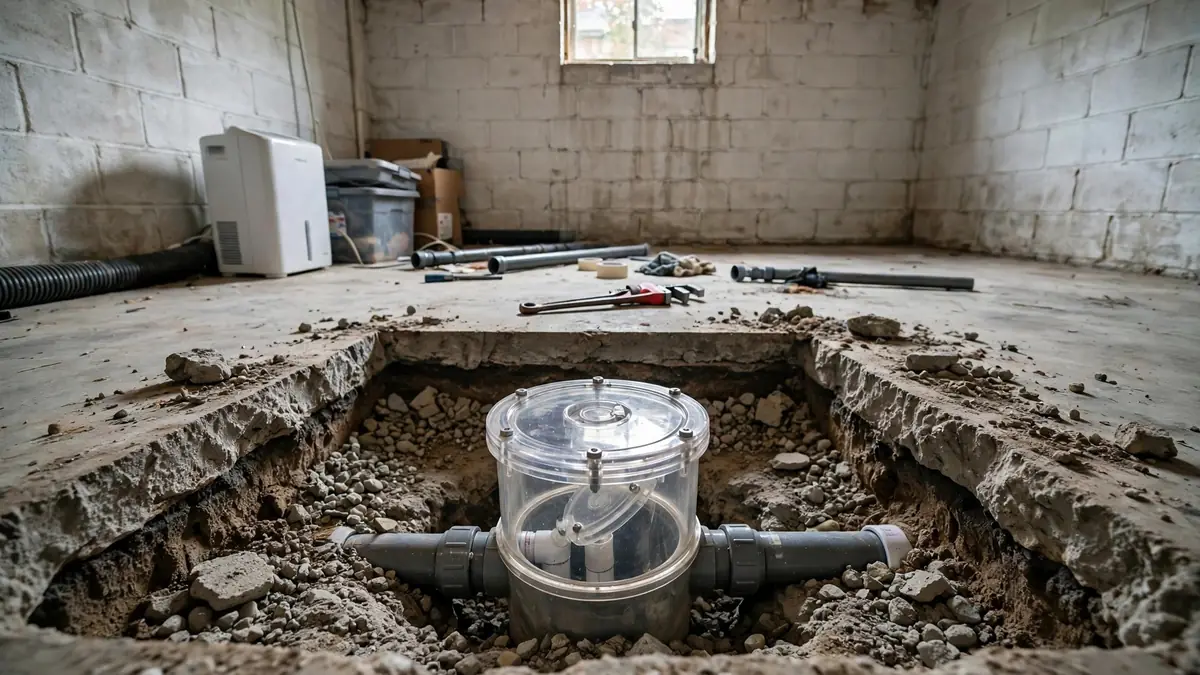
A backwater valve is a type of check valve installed in the main building drain, usually just inside the foundation under the basement floor or in a pit outside. Inside its body is a flap or gate that hangs open when wastewater flows normally toward the street. If the sewer beyond the valve fills up and water starts flowing the wrong way, the reverse flow pushes the flap shut against a seat and holds it closed [2].
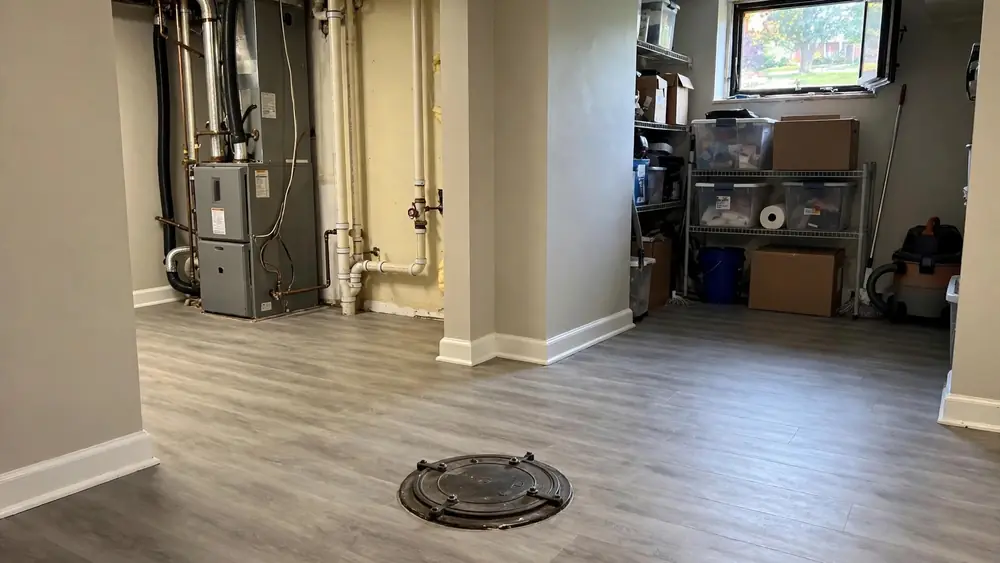
Most residential valves have a clear or removable cover on top, set at floor level or reached through an access box, so the homeowner and contractor can see the flap and clean it. Some designs keep the flap open by default and close it with a float; others are normally closed and swing open with outgoing flow. Both do the same job: keep the main's overflow out of your basement.
The valve protects whatever is downstream of it in the house, which is why placement matters. If it is installed where all the basement fixtures drain through it, the floor drain, basement toilet and laundry are protected. Fixtures upstairs usually drain through the same pipe, so during a surcharge they cannot drain either until the flap reopens.
Is it for you?
Signs a backwater valve is worth considering
Backups only in heavy rain
A basement that floods with sewage during big storms, but drains fine on dry days, fits a surcharging main [3].
Neighbors with the same problem
Several houses on a street backing up together points to the public system, not one lateral.
Clear lateral on camera
If a camera inspection shows your line is sound and open, the backflow is coming from beyond it.
Finished basement
A basement with carpet, drywall and furniture has much more to lose from one backup.
Low-lying street
Homes in dips or near creeks can be closer to the level the main rises to in a storm.
Repeat cleanups
If you have already had a sewer backup cleanup after a storm, a valve can prevent the next one.
Why storms cause backups
How a full sewer main pushes water into a basement
Every house lateral slopes down to the main, so in normal conditions everything flows downhill away from the house. In a severe storm, the public sewer can fill completely and become pressurized, a condition called surcharging. When that happens, the water level in the main rises up into each connected lateral. If it rises higher than your basement floor drain, sewage comes out of the drain [3].
Older parts of Indianapolis were built with combined sewers, which carry stormwater and wastewater in the same pipes. Combined systems are especially prone to filling during heavy rain [4]. Citizens Energy Group's DigIndy tunnel system now stores much of the overflow that used to spill into streams [5], but no system has unlimited capacity, and local pipes and inlets can still fill during intense bursts of rain.
Even in areas with separate sanitary sewers, stormwater can find its way into the sanitary system through cracked laterals, old downspout and footing drain connections, and leaky manholes. That extra water is one reason sanitary sewers can overflow in storms too [3].
Diagnosis
Confirming backflow before installing a valve
- 1
Match backups to the weather
Dates of backups compared with rainfall show whether they are storm-driven.
- 2
Ask the neighbors
Shared backups during the same storm suggest the main surcharged.
- 3
Camera the lateral
The line should be open and sound; a blocked lateral needs fixing first, since a valve won't help with that.
- 4
Find where the basement fixtures join
The valve has to be downstream of every fixture you want protected.
- 5
Check for illegal inflow
Downspouts or a sump pump discharging into the sewer add to the problem and should be disconnected.
- 6
Report to Citizens
Storm-related backups are worth reporting to Citizens Energy Group so the utility has a record.
Valve or something else?
Basement water problems and the right fix
| Problem | Backwater valve helps? | Better fix |
|---|---|---|
| Sewage up the floor drain in heavy rain | Yes | Valve plus report to Citizens |
| Sewage up the drain on a dry day | No | Clear and repair the lateral |
| Clear water seeping through walls | No | Grading, gutters, waterproofing, sump |
| Clear water at the floor drain in rain | Sometimes | Check footing drains and groundwater |
| Roots blocking the line | No | Root removal and lining |
| Sump pump running constantly | No | Groundwater management |
The installation
How a backwater valve is installed in a basement
- 1
Choose the location
Usually in the building drain just inside the front foundation, downstream of all basement fixtures.
- 2
Break out the floor
A section of concrete is cut and removed over the drain line.
- 3
Expose and cut the pipe
The old cast iron or clay is cut cleanly, with the line out of service.
- 4
Set the valve level
The valve body must sit level and at the right orientation, or the flap won't seat.
- 5
Connect with approved couplings
Transition couplings join the valve to the existing pipe on each side.
- 6
Add an access box
A riser or box brings the valve's cover to floor level so it can be opened for cleaning.
- 7
Test and pour
Water is run to confirm flow and the flap's action, then the floor is patched around the access box.
Types
Common residential backwater valve designs
| Type | How it works | Considerations |
|---|---|---|
| Normally open flap | Flap hangs open; reverse flow or a float closes it | Good ventilation; needs clean seat to seal |
| Normally closed flap | Outgoing flow pushes it open; it rests closed | Can affect venting; check code acceptance |
| Gate valve with manual override | Automatic flap plus a gate you can close by hand | Extra protection when a storm is forecast |
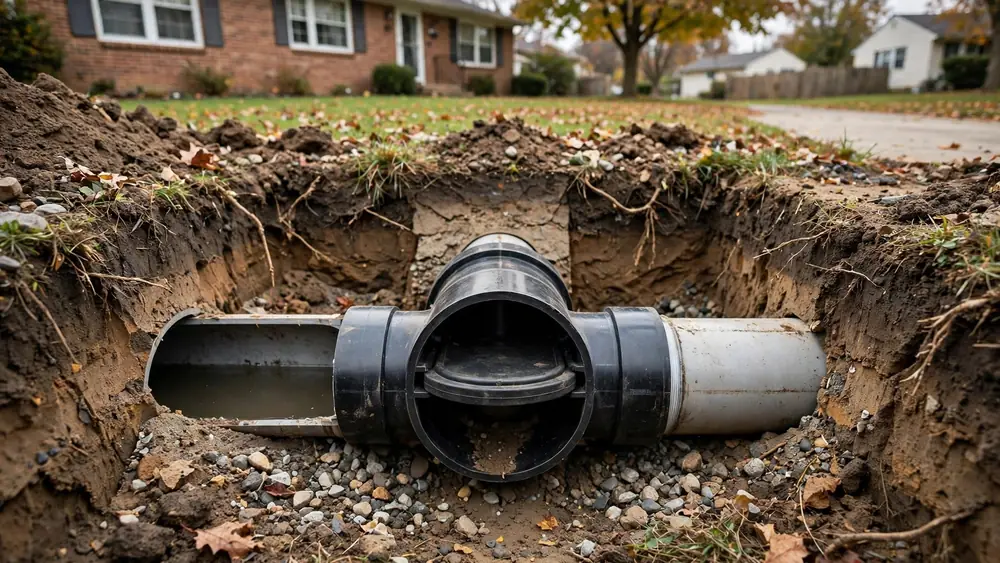
| Exterior pit-mounted valve | Installed in the lateral outside the foundation | Lateral work: needs a Citizens permit |
DIY vs pro
Homeowner tasks and contractor tasks with a backwater valve
- Installing a valve means cutting into the building drain, which is plumbing work for a licensed contractor [6].
- If the valve is installed outside in the lateral, the work also needs a Citizens Energy Group permit [1].
- You can open the access cover and look at the flap a few times a year to make sure it moves freely.
- You can clean light debris from the flap and seat following the manufacturer's instructions, wearing gloves.
- You should not prop the flap open or remove it; that defeats the valve.
- You should not use water inside the house while the valve is closed during a storm.
- You can disconnect downspouts that discharge into the sanitary sewer, if any, after checking local rules.
- You can keep the access box clear of storage so it can be reached quickly.
The visit
What a valve installation day looks like
Installing an interior backwater valve in an existing basement usually takes most of a day. The noisiest part is cutting and breaking the concrete floor, which produces dust; contractors use water or vacuums to control it, but it is still wise to cover nearby belongings. The drain is out of service while the pipe is cut and the valve set.
Once the valve is in, the contractor tests it by running water from fixtures upstream and checking that the flap opens and closes freely. The floor is then patched around the access box, and the new concrete needs time to cure before it is walked on heavily.
Before the crew leaves, ask them to show you how to open the cover, what the flap should look like, how to clean it and what to do in a storm. A valve only protects you if it is maintained and if household members know not to run water when it is closed.
Local specifics
Backwater valves, combined sewers and DigIndy in Indianapolis
Much of central Indianapolis is served by combined sewers, especially inside the older city limits. Citizens Energy Group's DigIndy program built a 28-mile tunnel system about 250 feet underground, finished in 2025, that stores combined sewage during storms until treatment plants can process it [5]. Its purpose is to keep raw sewage out of the White River and local streams.
DigIndy reduces overflows at the outfalls, but neighborhood-level pipes can still fill up quickly in intense storms, and some basements sit low enough that even a brief surcharge reaches the floor drain. A backwater valve is a private, property-level protection that works regardless of what the public system is doing.
Work inside the house on the building drain is plumbing; work outside on the lateral is regulated by Citizens, which requires a permit for repairs, cleanouts and replacements of the lateral [1]. If the valve is installed in an exterior pit, or combined with a lateral repair, the permit applies. Ask the contractor which approach they propose and whether it needs the Citizens permit.
Maintenance
Keeping a backwater valve working
- Open the cover and check the flap at least a couple of times a year and after big storms.
- Remove grease, paper or debris that could stop the flap seating.
- Check that the gasket on the cover is intact so sewer gas does not escape.
- Keep wipes and grease out of the drains; they foul the flap.
- Have the valve checked when the lateral is cleaned or filmed.
- Replace worn flaps or seals with parts specified by the manufacturer.
Valve or repair
When a valve is the answer and when it isn't
A backwater valve is the right tool when the threat comes from the street side: a surcharging main pushing sewage back into your lateral. It does nothing for a blockage in your own lateral, because your own wastewater still cannot get past that blockage and will still back up at the lowest drain.
That is why the order matters. First, put a camera in the line and fix any roots, cracks or sags with trenchless repair or replacement. Then, if storm-related backups are part of the history, add a valve. When a lateral is being replaced anyway, installing the valve at the same time is often simpler than cutting the basement floor later.
Basement fixtures
Protecting a basement bathroom or laundry
Basement bathrooms, laundry tubs and bar sinks are the fixtures most at risk in a surcharge because they sit lowest. When a contractor plans a valve, they look at where each basement fixture joins the building drain. The valve has to be downstream of all of them, between them and the street, or the unprotected fixture becomes the overflow point.
In some houses that is simple: everything joins one pipe before the foundation wall. In others, especially houses with additions or basement bathrooms added later, fixtures connect at different points. The contractor may need to locate those connections with a camera before choosing where to cut the floor. In a few cases, a separate valve on a basement fixture branch is used, which keeps upstairs fixtures draining normally while protecting the basement.
Insurance
Backwater valves and insurance questions
Some homeowners insurance policies offer sewer backup coverage only as an endorsement, and some insurers ask whether a backflow device is installed. If you add a valve, keep the installation record and photos, and let your agent know. It may matter for coverage questions after a future storm.
Older basements
Fitting a valve into a century-old Indianapolis basement
Basements in houses from the 1900s to the 1930s were not built with backflow protection in mind. The floor slab may be thin or patched, the building drain under it is usually cast iron, and the front cleanout may sit just inside the foundation wall where the drain exits. Some basements were dug deeper or lowered years after the house was built, which can leave the floor drain closer to the level of the main than the original builders intended.
These details shape the installation. Cast iron has to be cut cleanly and joined to the valve with couplings rated for the transition, and the floor has to be opened wide enough to set the valve body perfectly level. Where the drain runs very shallow under the slab, the valve and its access box need careful placement so the cover sits flush. Where a front wall cleanout is the only access to the line, the contractor will plan so the cleanout remains usable after the valve goes in.
If the cast iron proves badly corroded when the floor is opened, it is sensible to replace a short section at the same time. That is easier than coming back later, and it means the valve is set into sound pipe on both sides.
Storm routine
What to do in the house when a big storm is forecast
- 1
Check the valve beforehand
Open the cover and make sure the flap swings freely and the seat is clean.
- 2
Close the manual gate if you have one
Some valves have a hand-operated gate for extra protection during severe weather.
- 3
Limit water use during the heaviest rain
Hold off on laundry, baths and dishwashers until the rain eases.
- 4
Watch the floor drain
Any water rising at the drain while the valve is closed is coming from inside the house; stop using water.
- 5
Reopen and inspect afterwards
Open the manual gate, check the flap for debris and make sure it is not stuck closed.
Rentals and doubles
Valves in buildings with more than one household
In doubles and small apartment buildings, every household needs to know the valve exists and what it means during a storm, because water used upstairs collects behind a closed flap just as surely as water used in the basement. Owners should post a short note near the valve and tell tenants when severe rain is forecast. Keeping the access cover clear of tenant storage matters too, since a valve no one can reach cannot be checked or cleaned.
Venting
Why valve type and venting matter
Plumbing drains need air to flow properly; vents let air in so water can run without siphoning traps dry. A valve that rests closed can interfere with how the system breathes if it is placed in the wrong spot. Normally open designs avoid that, which is one reason they are widely used in house drains. Your contractor should choose a valve and location that keep the system venting correctly and meet the plumbing code that applies in Indiana.
Records
Keeping track of the valve
Write the installation date, valve model and contractor on a tag near the access cover, and note each time you check or clean it. A future owner will thank you.
FAQ
Backwater valve questions for Indianapolis homeowners
What does a backwater valve do?
A backwater valve lets wastewater leave the house and automatically closes when flow reverses, so sewage pushed back from a full public sewer cannot come up through basement drains.
Will a backwater valve stop all basement backups?
No. It stops backflow from the main. A blockage in your own lateral will still back up into the basement, so the lateral should be inspected and repaired first.
Where is a backwater valve installed?
Usually in the main building drain just inside the foundation, under the basement floor, with an access cover at floor level. Some are installed outside in a pit on the lateral.
Do I need a permit for a backwater valve in Indianapolis?
Interior plumbing work is done by a licensed plumber. Work on the lateral outside the building, including an exterior valve or cleanout, requires a Citizens Energy Group permit.
Can I use my plumbing when the backwater valve is closed?
Limit it. While the valve is closed, water you use cannot leave the house and will collect behind the flap, which can overflow the lowest drain.
How often should a backwater valve be cleaned?
Check it a few times a year and after big storms, and clean debris from the flap and seat whenever you see it. A stuck flap provides no protection.
Does DigIndy mean I don't need a backwater valve?
DigIndy reduces combined sewer overflows into streams but does not guarantee local sewers never surcharge. A valve protects your basement regardless of the public system.
Is a backwater valve the same as a sump pump?
No. A sump pump removes groundwater from around the foundation. A backwater valve blocks sewage from flowing back into the house through the drain.