Key facts: Garfield Park
- The park opened in 1876 as the city's first municipal park and was renamed for President Garfield in 1881 [3].
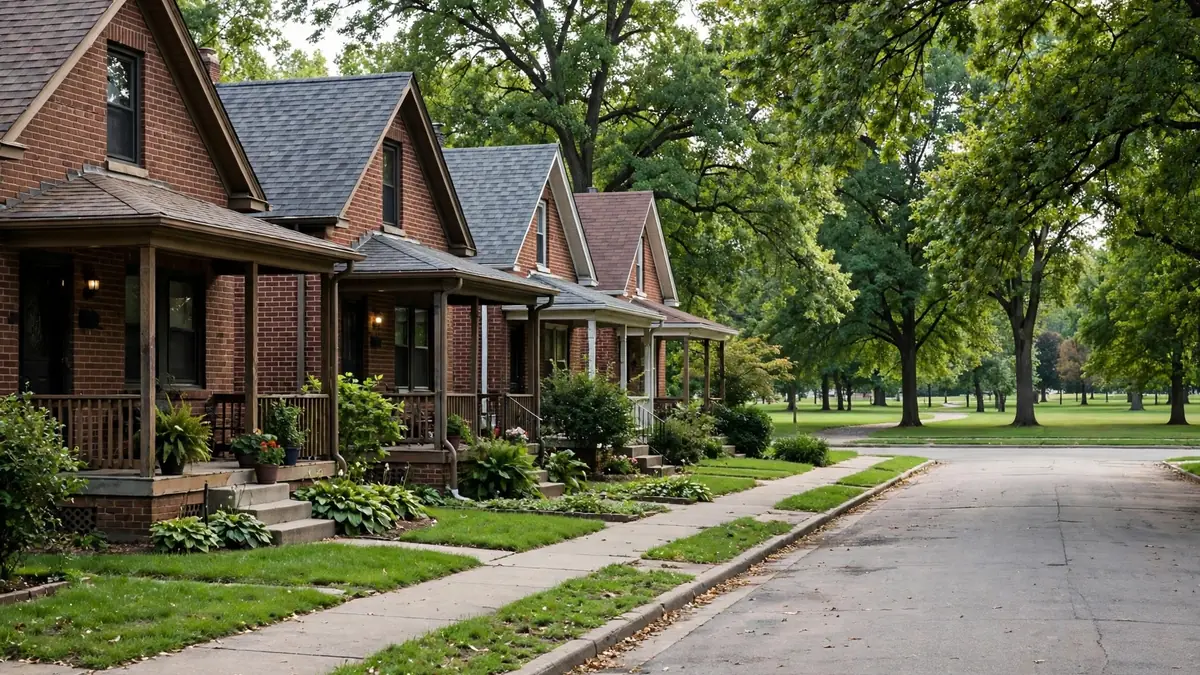
- A neighborhood had grown up east of the park by 1916, with housing from bungalows and foursquares to duplexes [4].
- Pleasant Run and Bean Creek meet inside the park [3].
- Owners maintain their lateral to the main; repairs, lining and replacement need a Citizens Energy Group permit [1].
Covered area
The Garfield Park area this page covers
This page covers the Garfield Park neighborhood on the south side of Indianapolis, around the park itself, in ZIP code 46203, with nearby south-side ZIP codes such as 46225 and 46227 also covered. Calls from these addresses are connected with an independent contractor who works on sewer laterals in this part of the city.
Covered neighborhoods are listed on the areas page. If your address is outside the covered ZIP codes, the call may not connect you with a contractor, and a local plumber is the better choice.
History
How Garfield Park grew around the park
The park came first. The city opened it in 1876 as Southern Park, its first city-owned park, and renamed it in 1881 after the assassination of President James Garfield [3]. It later became part of George Kessler's citywide plan of parks and parkways, which now has National Register status [3].
Houses were slower to follow. Little building happened nearby until Pleasant Run was bridged and streetcar service arrived at the park in 1895. Elevated railroad crossings eased access further, and by 1916 a neighborhood had grown up east of the park [4]. Its housing ranges from an 1840s farmhouse to twentieth-century bungalows, foursquares, Tudor Revival houses and duplexes [4].
Like other neighborhoods built in that period, those houses were usually connected to the sewer with vitrified clay pipe in short lengths [6]. Many are still on that original pipe, now a century old or close to it.
Common calls
What Garfield Park homeowners call about
Roots from mature trees
Big trees along streets and yards near the park push roots into old joints; see root intrusion removal.
Doubles sharing one lateral
Duplexes and converted houses where one blockage affects both sides.
Floor drains overflowing in park-side basements
Bungalows and foursquares with basements see water at the floor drain first.
Original clay under porches
Laterals that pass beneath front porches and walks owners want to keep.
Storm backups in low spots
Lower streets near the creeks can feel storm surcharging.
Rehab and resale
Renovated houses changing hands with an unknown original lateral.
Houses and laterals
Bungalows, foursquares and doubles on old laterals
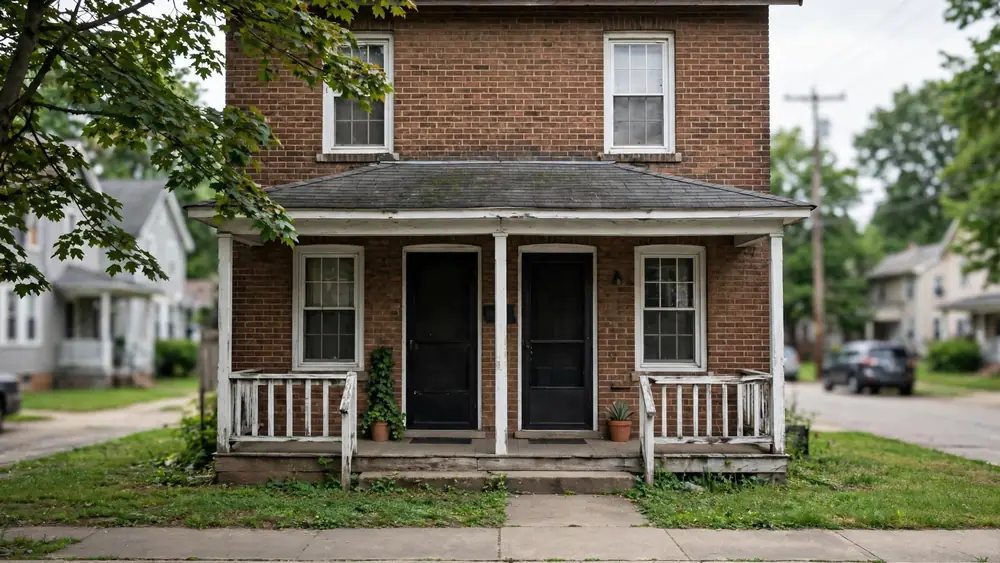
Garfield Park's typical house is a brick or frame bungalow or a foursquare on a modest city lot, often with a full basement and a front porch [4]. The main cleanout is usually near the front basement wall, and the lateral leaves the foundation, passes under the front yard and walk, crosses the tree lawn and reaches the main under the street.
Duplexes are common here too [4]. In a double, both units may drain into one lateral, or each may have its own that joins the other before the street. When a shared lateral blocks, the water appears at the lowest drain, which is usually in a basement shared by or belonging to one side. Knowing how your double is plumbed saves confusion when something goes wrong.
Because so many houses were built in the same period, the pattern of problems is consistent: roots at clay joints, cracked or offset joints from a century of soil movement, and the occasional sag where the old trench settled.
Creeks and storms
Pleasant Run, Bean Creek and Garfield Park basements
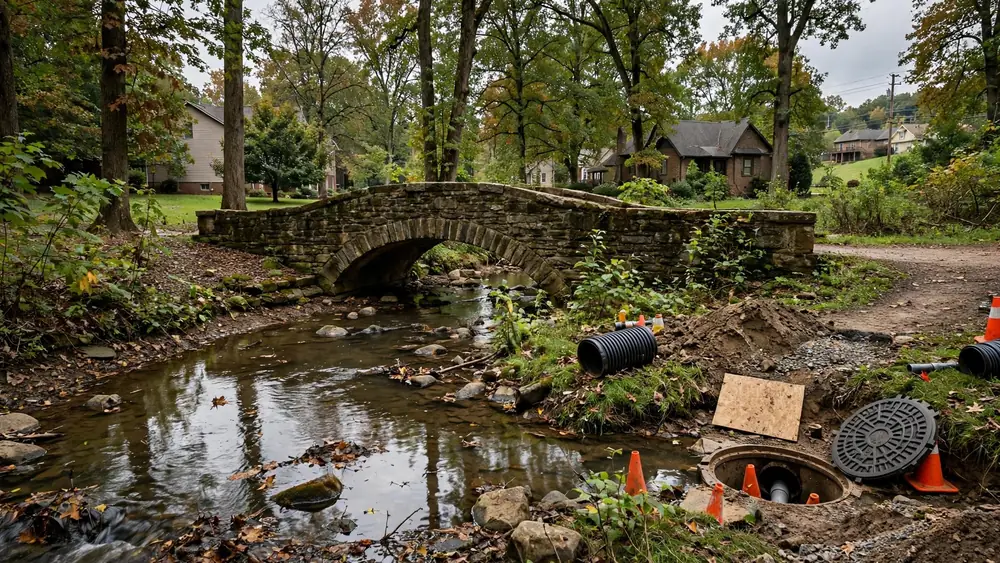
Pleasant Run crosses the park from north to southwest and is joined there by Bean Creek [3]. Like other streams in the older city, Pleasant Run historically received combined sewer overflow in heavy rain [7]. Citizens Energy Group's DigIndy tunnel system, completed in 2025, was built to store much of that overflow underground until it can be treated [2].
For homes in lower spots near the creeks, intense storms can still fill local sewers enough to push water back up connected laterals. If your basement backs up only during big storms, and neighbors see the same, report it to Citizens and consider a backwater valve. If it backs up on dry days, the cause is in your own lateral.
Soils near streams can also be moister, which supports shallow roots and can let old pipe sections settle into sags.
A typical job
How sewer work usually unfolds in Garfield Park
- 1
Open the basement cleanout
Carefully, with buckets and a wet vac ready if the line is full.
- 2
Restore flow first
Roots are cut or jetted to restore flow.
- 3
Film to the main
The camera shows roots, joints, cracks, sags and any shared connections.
- 4
Mark defects
Problem spots and depths are marked on the yard.
- 5
Pick the repair
Lining, bursting or a dug repair based on the video and what sits above.
- 6
Citizens paperwork and sign-off
Citizens permit, Indiana 811 locates and inspection before backfill [1][5].
Property types
Garfield Park homes and their sewer patterns
| Property | Usual setup | Watch for |
|---|---|---|
| Brick or frame bungalow | Basement, short lateral to the street | Roots at joints, floor drain backups |
| Foursquare | Full basement, more fixtures | Old lateral under heavier load |
| Duplex | One or two laterals, shared basement | One blockage affecting two households |
| Tudor Revival house | Basement, mature landscaping | Roots and preserving the yard |
| House near the creeks | Lower ground, moister soil | Storm backflow and sags |
Before the visit
Getting ready for a Garfield Park sewer call
- Find the basement cleanout and clear the space around it.
- In a double, tell the other household about the visit and ask them not to run water.
- Note whether backups happen on dry days or in storms.
- Point out trees and porches over the line.
- Share any earlier videos or invoices.
- Mention if the house was recently rehabbed and what plumbing was changed.
- Clear a parking spot near the front of the house if possible.
Permits
Citizens Energy Group rules for Garfield Park laterals
Garfield Park follows the citywide rules. Citizens Energy Group makes the property owner responsible for the lateral from the home to the main, requires licensed contractors for the work, and requires a permit for repairs, replacements, cleanouts and lining but not for routine cleaning or root removal [1]. Contractors working in Indianapolis must also be registered with the City, with insurance and a bond in place [1].
Before any digging, the contractor requests a locate through Indiana 811 so buried utilities are marked [5].
Choosing a repair
Repair options suited to Garfield Park lots
On short bungalow lots with porches and walks over the line, trenchless repair is often attractive. CIPP lining can seal a round clay lateral from the basement cleanout, and pipe bursting can replace a badly cracked or deformed one from two pits.
Where a sag holds water, often on softer ground near the creeks, that section usually needs to be dug and relaid. Many jobs combine methods.
For doubles, a repair is a good time to check whether the units should have separate connections, and to add an outside cleanout so future service does not depend on access to one side's basement.
Prevention
Keeping Garfield Park laterals clear
- Film the lateral every few years if it is original clay.
- Clear roots before spring growth if the line has a history.
- Keep grease and wipes out of the drains.
- In doubles, share basic flushing rules with both households.
- Plant new trees away from the sewer route.
- Consider a backwater valve if storms have caused backups.
Nearby
Neighborhoods near Garfield Park
Just north, Fountain Square shares Pleasant Run and has some of the city's oldest housing. On the east side, Irvington also sits along Pleasant Run's course.
Expressways
Madison Avenue, I-65 and the neighborhood's edges
Two big roads reshaped Garfield Park: the Madison Avenue Expressway, built in 1958, and Interstate 65, completed through the area in 1975 [4]. They cut neighbors on either side of the park off from each other, and the decades that followed saw many residents leave for the suburbs before a slower renewal began [4].
For sewer purposes, those years matter because many houses passed through periods of rental use, vacancy or minimal maintenance before being renovated. A house that sat empty, or was lightly maintained for years, may have a lateral that has quietly filled with roots with no one using enough water to notice. When it is occupied and used normally again, the backup can arrive quickly.
Houses on streets that were altered by the road projects can also have laterals that run in unexpected directions, toward a main in a side street rather than in front. As in other older neighborhoods, a camera with a locator is the reliable way to find out.
Renovations
Renovated Garfield Park houses and the lines beneath them
The neighborhood's renewal has brought a steady stream of rehabs. New kitchens, bathrooms and basement finishes are common, and interior drain lines are often replaced along the way. The lateral outside, under the yard and walk, is the part that renovators are most likely to leave untouched because it is out of sight and the house drained during the work.
Then the house is occupied by a full household, with laundry, dishwashers and more showers, and the original clay lateral is asked to carry far more than it did while the house was empty. Roots that had been tolerated become a blockage. Buyers of rehabbed houses here should ask specifically whether the lateral was filmed, lined or replaced during the rehab, and request a video if it was.
If you are renovating a Garfield Park house yourself, film the lateral before closing up walls and floors. Fixing it while the house is empty is much easier than after the new basement floor and finishes are in.
Park-edge trees
Trees on the streets around the park
Streets that radiate from Garfield Park are lined with mature trees, and the park itself is full of them [4]. Trees in the tree lawns between sidewalk and curb sit almost directly over the lateral's path to the main. Their roots spread far and concentrate near the surface, where a leaking clay joint is an easy target.
Because those trees give the streets much of their character, the goal is usually to fix the pipe without damaging them. Lining and bursting both avoid trenching through the root zone. Where a dig is needed near a large tree, ask how the crew will limit root cutting, and consider advice from an arborist.
Doubles
Practical steps for Garfield Park duplex owners
- Map the plumbingFind out with a camera whether the two units share a lateral or each has its own.
- Know the cleanoutsConfirm where each cleanout is and which unit's basement it is in.
- Settle basement access between unitsTenants or co-owners need to know a contractor may need their basement during a backup.
- Post simple rulesOnly toilet paper in toilets, and no grease in sinks, for both units.
- Coordinate repairsBoth households must stop water use during lining or replacement.
- Consider separationDuring a major repair, ask whether separate connections make sense for the future.
Buying
Sewer questions when buying in Garfield Park
Ask the seller about backups, past root clearing and any sewer work, request any video, and ask whether the house is a double on a shared line. Then consider a sewer scope during the inspection period, recorded to the main. For a renovated house, ask exactly what plumbing was replaced. The answers tell you whether the lateral is a solved problem or one you will inherit.
Basements
Floor drains in Garfield Park bungalows and foursquares
Bungalows and foursquares here usually have full basements with a floor drain near the laundry or the center of the floor. It is the lowest opening in the house, so it is where a blocked lateral shows itself. Many of these basements are unfinished, which makes cleanup simpler, but more owners are finishing them as the neighborhood is renovated. Keep storage up on shelves near the drain, refill the drain's trap with water now and then so sewer gas stays out, and keep the main cleanout reachable. If water rises at the drain, stop all water use in the house, including the other side of a double, and call to have the line cleared before anything else.
Telling causes apart
Dry-day backups versus storm backups in Garfield Park
Write down every backup with the date and the weather. If the floor drain overflows on a dry afternoon while the washer is draining, the lateral is blocked and needs clearing and a camera. If it only overflows in the middle of a thunderstorm, and especially if neighbors near the creek report the same, the public sewer may be pushing water back. Both can happen to the same house. The log helps the contractor recommend the right fix rather than guessing.
Cleanouts
Adding an outside cleanout to a Garfield Park house
Most houses here have only the original cleanout in the basement, and in a double it may be in one unit's space. An outside two-way cleanout near the foundation, usually added during a repair, gives a contractor direct access without entering either unit, speeds up every future clearing and camera visit, and makes it easier to separate or service a shared line. It counts as lateral work, so it is included in the Citizens permit [1].
Timing
When to plan sewer work near the park
If your line still drains, aim for late summer or fall: soils near the creeks are drier than in spring, trees are past their spring root push, and lawns recover before winter. Avoid waiting for the first spring backup, when every contractor in the city is busy with the same problem.
Old farmhouse to infill
The oldest and newest houses around the park
Garfield Park's housing runs from an 1840s farmhouse to recent infill [4]. The oldest houses predate the neighborhood's sewers entirely and were connected later, sometimes by a route that reflects how the lot was arranged at the time rather than how it looks today. Newer infill houses usually have modern pipe to the property line but may connect to an older tap at the main. In both cases, the camera is the only reliable guide to what is underground and where it goes.
On the call
Details that help with a Garfield Park sewer call
- Single or doubleAnd if a double, whether you own both sides.
- Cleanout location in the houseBasement front wall, outside, or unknown.
- When backups happenDry days, storms, or when the washer drains.
- Trees and porches over the lineWhat you want protected from digging.
- Recent renovationWhat plumbing was replaced and whether the lateral was filmed.
Records
Keeping a sewer file for a Garfield Park home
Keep invoices, permit numbers, route photos and camera videos together. For doubles, note which unit each cleanout serves. That file is the first thing the next contractor, or the next buyer, will want to see.
Vacant periods
Bringing a long-empty Garfield Park house back into use
If you have bought a house that sat empty for a while, run plenty of water through every fixture before moving in and watch the basement floor drain. Traps dry out when unused, letting sewer gas in, and a lateral that filled with roots during the vacancy may only reveal itself once a household starts using it. A camera inspection before move-in is a sensible precaution against a first-week backup.
FAQ
Garfield Park sewer questions
Why do Garfield Park sewer lines back up?
Many houses were built in the early 1900s and still have original clay laterals. Roots from mature trees enter the joints, and a century of soil movement opens cracks and offsets.
Who pays to fix a shared lateral in a Garfield Park double?
The owner of the property is responsible for the lateral under Citizens Energy Group's rules. If the two sides are owned separately, the owners need to agree how to handle a shared line.
Does Pleasant Run cause basement backups?
Not directly, but heavy storms can fill older sewers in the area. Backups only in big storms suggest the public sewer is surcharging, and a backwater valve may help.
Can my Garfield Park sewer be fixed without removing the porch steps?
Often yes. Lining from the basement cleanout or bursting from two pits can avoid disturbing steps and walks, if the camera shows the pipe is suitable.
Do I need a permit for sewer repair in Garfield Park?
Yes for repairs, lining, cleanouts and replacement, through Citizens Energy Group. Cleaning and root removal do not need a permit.
Is Garfield Park's ZIP code covered?
Yes, 46203 is covered, along with nearby south-side ZIP codes. Calling is the quickest way to confirm your address.
How do I know if my double has one lateral or two?
A camera inspection can show whether both units drain into one pipe or each has its own. Knowing this helps plan repairs and handle backups.
Should I scope the sewer before buying in Garfield Park?
For most older homes here, yes. The lateral may be original, and general home inspections do not usually include it.
Sources and citations
- [1]Citizens Energy Group — Connecting a sewer service line
- [2]Citizens Energy Group — What is DigIndy?
- [3]Wikipedia — Garfield Park (Indianapolis)
- [4]Encyclopedia of Indianapolis — Garfield Park neighborhood
- [5]Indiana 811 — Call before you dig
- [6]Wikipedia — Vitrified clay pipe
- [7]U.S. EPA — Combined sewer overflows