Key facts: Signs of a broken sewer line
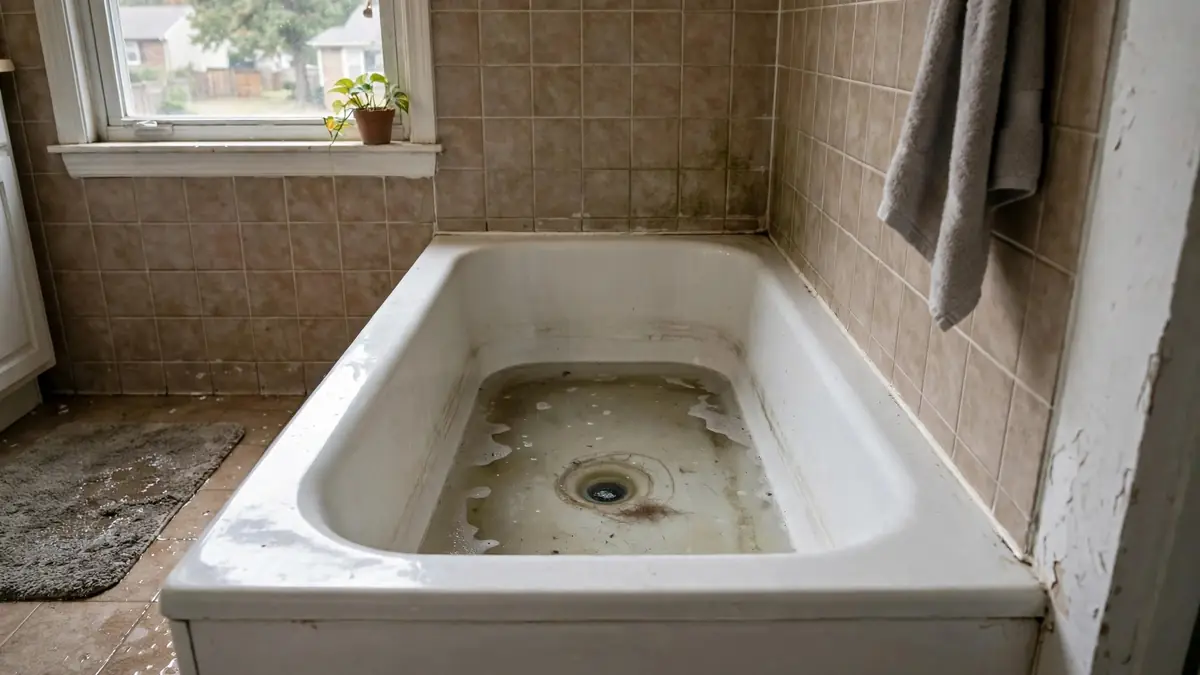
- Several fixtures draining slowly at the same time usually means the problem is in the main line, not one branch.
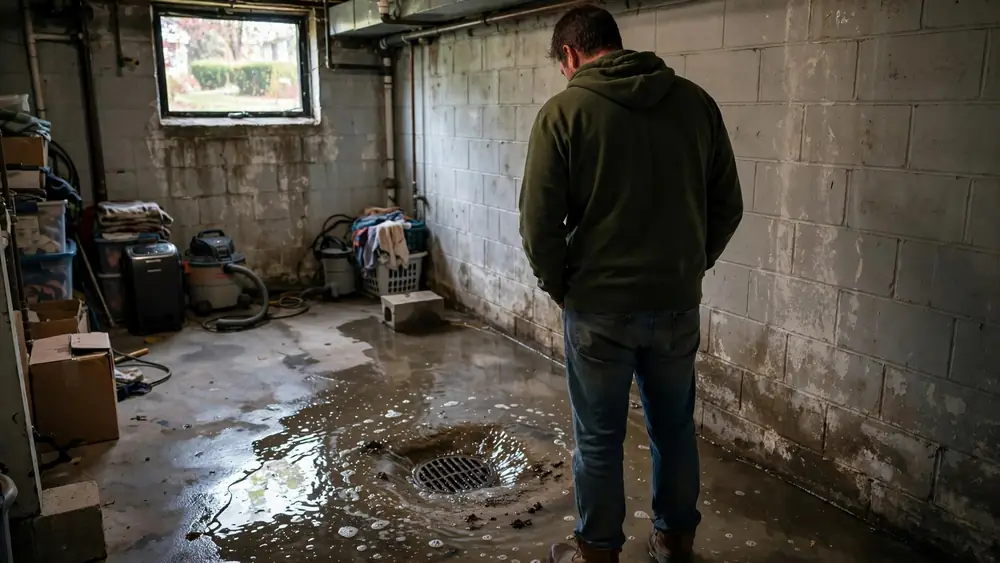
- Water rising at a basement floor drain when other fixtures run is a classic sign of a blocked or broken lateral.
- In Indianapolis the homeowner is responsible for the lateral from the house to the main [1].
- A camera inspection confirms whether the pipe is cracked, root-filled, sagging or collapsed.
The short answer
The pattern that points to the main line
Think about where the trouble shows up. A single slow bathroom sink is almost always hair and soap in that sink's trap. When the tub, the toilet and the kitchen sink all slow down in the same week, or when water appears at the lowest drain in the house while you run water upstairs, the restriction is downstream of every fixture. That means the building drain or the lateral to the street.
Broken laterals add a second set of clues outside the house: odors, wet ground and settling over the pipe route. Put the inside and outside signs together and you can usually tell whether to reach for a plunger or call for a sewer camera inspection.
Sign by sign
Warning signs and what each one suggests
| What you notice | Likely meaning | How urgent |
|---|---|---|
| Several drains slow at once | Partial blockage in the main line | Book a visit soon |
| Toilet gurgles when the tub drains | Air pushed back by a downstream blockage | Book a visit soon |
| Water at the basement floor drain | Lateral blocked or broken | Stop water use; call |
| Sewage smell outside near the foundation or yard | Crack or open joint leaking | Call for inspection |
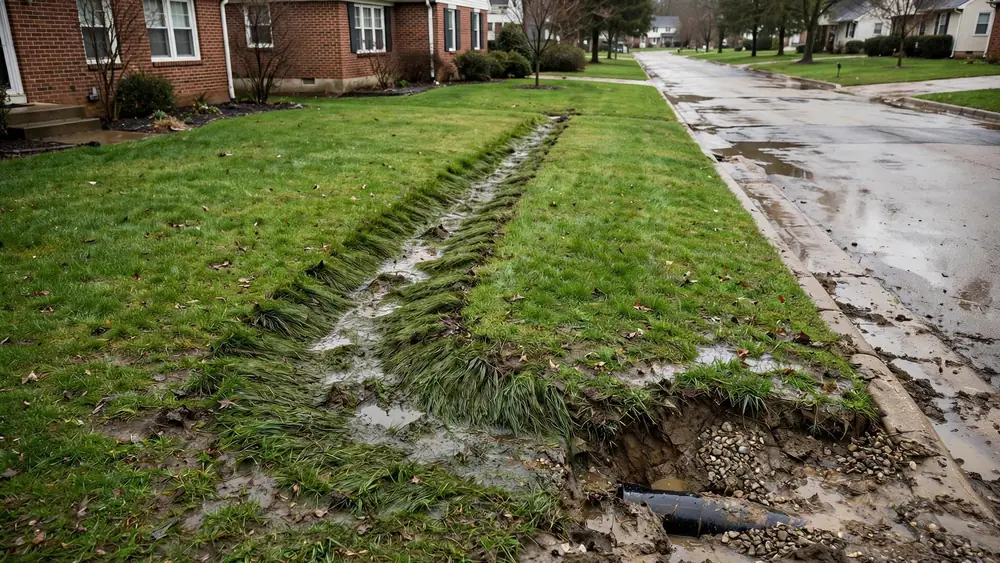
| Soft, soggy or extra-green strip in the lawn | Leak feeding the soil above the pipe | Call for inspection |
| Dip or sinkhole over the pipe route | Soil washing into a break | Keep people off it; call |
| Clogs return weeks after clearing | Roots or structural damage | Camera before more clearing |
Inside the house
Indoor clues to a failing lateral
- Slow drains everywhereSinks, tubs and showers that all drain slowly point past the individual traps to the main line.
- Gurgling and bubblingAir trapped behind a partial blockage escapes through the nearest water seal, often a toilet.
- Floor drain waterThe basement backup guide explains why the lowest drain overflows first.
- Sewer odor in the basementCan be a dry trap, a loose cleanout cap or a cracked drain under the floor.
- Toilet water level changingA bowl that rises then slowly drops after flushing is struggling to push water through.
Outside the house
Outdoor signs along the pipe's route
A lateral that is cracked or separated at a joint leaks wastewater into the surrounding soil. Nutrients feed the grass above it, so in a dry spell you may see a stripe of greener growth heading from the house toward the street. In wetter weather the same spot can feel spongy underfoot. Our sewer smell in the yard guide covers odors in more detail.
Soil can also wash into a broken pipe, leaving a void. Over time the ground above settles into a dip, and in severe cases a hole opens. Keep people and pets off any sinking area until it has been checked, and do not drive over it.
Why it happens
What breaks older Indianapolis laterals
Much of the older city was connected with vitrified clay pipe laid in short lengths [2]. The clay itself is durable, but the joints between lengths weaken over decades. Roots find them; soil movement shifts them. Houses from roughly the 1940s to the early 1970s may have bituminized fiber pipe, which can soften and deform as it ages [3]. Later homes typically have plastic pipe, which can still sag or crack under a driveway.
Because the lateral from the house to the main is the owner's to maintain in Indianapolis [1], recognizing these signs early is worth it. A problem caught as a few roots at one joint is a much smaller job than one caught as a collapsed pipe and a flooded basement.
What to do
Steps to take when you notice the signs
- 1
Test one fixture at a time
Run water in an upstairs sink, then the tub, then flush. Note which drains are slow and where water appears.
- 2
Check the floor drain
Watch the basement floor drain while upstairs fixtures run. Rising water means the main line.
- 3
Look outside
Walk the route from the house to the street looking for wet spots, dips or odors.
- 4
Cut back water use
If drains are slow everywhere, avoid laundry and long showers until the line is checked.
- 5
Call for clearing and a camera
Ask for the line to be cleared and filmed, with defects marked on the ground.
- 6
Decide on a repair
Use the video to choose between cleaning, trenchless repair and replacement.
Avoid
Mistakes that make a broken line worse
- Pouring caustic drain cleaner into a main line; it rarely reaches the problem and is hazardous if the line has to be opened.
- Renting a powerful drain machine for a line you suspect is broken; cables can lodge or worsen damage.
- Clearing the same line repeatedly without ever filming it.
- Ignoring a soft spot or dip in the yard over the pipe route.
- Continuing to do laundry while the floor drain is backing up.
Next step
Getting a clear answer
A camera inspection turns guesses into facts. It shows the material, the defects and their locations, and gives you a recording you can keep. Any repair, lining or replacement that follows needs a Citizens Energy Group permit and is inspected before backfill [1].
FAQ
Broken sewer line questions
What is the first sign of a broken sewer line?
Often it is several drains slowing down together, or a toilet that gurgles when another fixture drains. Those point to the main line rather than a single clogged fixture.
Can a broken sewer line make my yard wet?
Yes. A cracked or separated lateral leaks wastewater into the soil, which can leave a soggy or unusually green strip along the pipe route.
Is a sewer smell outside always a broken pipe?
Not always. A missing cleanout cap or a vent can also release odor. A persistent smell near the ground over the pipe route, especially with wet soil, is worth inspecting.
How do I confirm my sewer line is broken?
Have the line cleared if needed and filmed with a sewer camera. The video shows cracks, roots, sags and collapses and where each one is.
Will homeowners insurance cover a broken sewer line?
Policies vary widely. Many exclude wear and tear on the pipe itself but may offer backup coverage by endorsement. Check your policy and ask your agent.