Key facts: Sewer backup in the basement
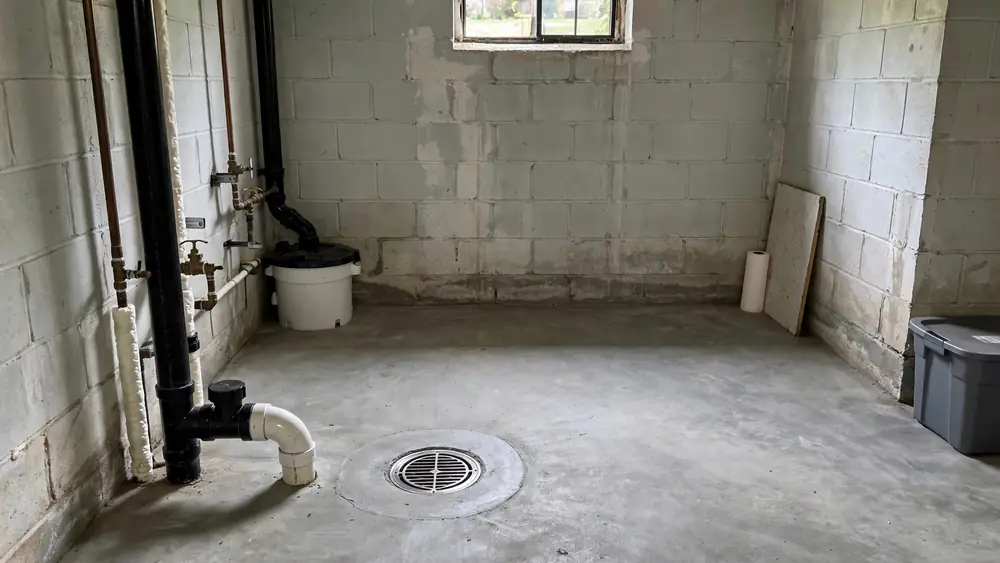
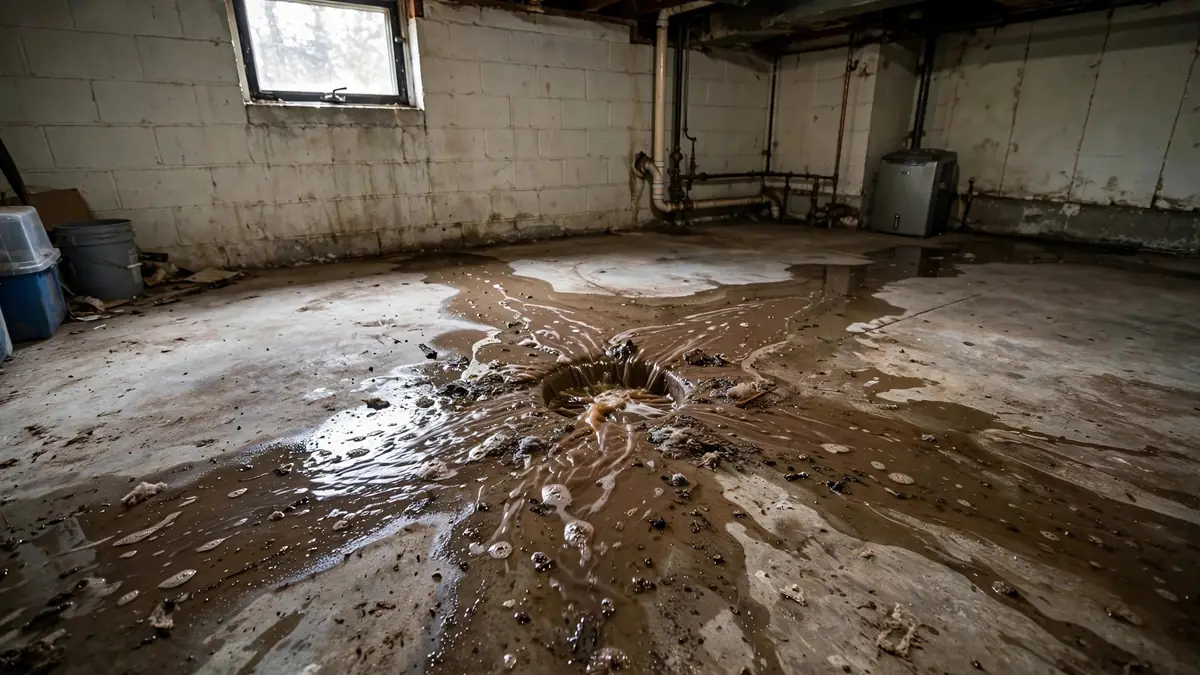
- The basement floor drain is usually the lowest opening in the plumbing, so a blocked lateral overflows there first.
- Sewage contains germs that can cause illness; keep people and pets away and wear protective gear [2].
- Backups on dry days point to the private lateral; backups only in heavy rain can come from a surcharged public sewer [2].
- Carpet, padding and drywall soaked by sewage generally have to be removed [3].
First ten minutes
Immediate steps when the floor drain overflows
- 1
Stop every source of water
No flushing, showers, dishwasher or laundry. Shut off a running washer mid-cycle if needed.
- 2
Tell everyone on the line
In a double or small building, other units drain into the same lateral and must stop too.
- 3
Keep people and pets out
Sewage carries bacteria and viruses [2]. Close the basement door.
- 4
Mind the electricity
Do not wade near outlets, cords or appliances. Shut the basement circuit only from a dry spot.
- 5
Photograph it
Pictures of the water level and damaged items help with insurance later.
- 6
Call to have the line cleared
Nothing drains until the blockage is opened.
Why the floor drain
Why the water comes out of the lowest drain
Every fixture in the house drains into one pipe that leaves through the foundation. If that pipe is blocked anywhere between the house and the main, wastewater backs up inside the system until it reaches the lowest opening. In most Indianapolis houses with basements, that is the floor drain, followed by a basement toilet, shower or laundry tub.
That is why the water often arrives right after the washer empties or someone showers upstairs. The basement is not the source; it is simply the lowest point where the system can overflow.
Find the cause
Clues that separate a lateral clog from storm backflow
| Circumstance | Points to | Usual response |
|---|---|---|
| Dry weather, after laundry or showers | Blockage in your lateral | Clear, then camera inspect |
| Only during intense storms | Public sewer surcharging | Report to Citizens; consider a valve |
| Neighbors flooded at the same time | Public sewer involved | Report with dates and photos |
| Happens every few months | Roots or structural defect | Camera and lasting repair |
| Clear water, not sewage, in rain | Groundwater or footing drains | Drainage and waterproofing advice |
Indianapolis context
Storms, combined sewers and your lateral
Parts of Indianapolis rely on combined sewers that carry rain and wastewater together, and Citizens Energy Group's DigIndy tunnels now store much of the storm overflow that once spilled into streams [4]. Even so, neighborhood pipes can fill in a cloudburst and push water back up laterals. If that is your pattern, a backwater valve is designed for it.
Most backups, though, happen on ordinary days and come from the private lateral: roots, grease, wipes, a crack or a sag. The owner is responsible for that pipe from the house to the main [1], so the next step after clearing is a camera inspection to see what caused it.
Cleanup
Cleaning up safely after the line is open
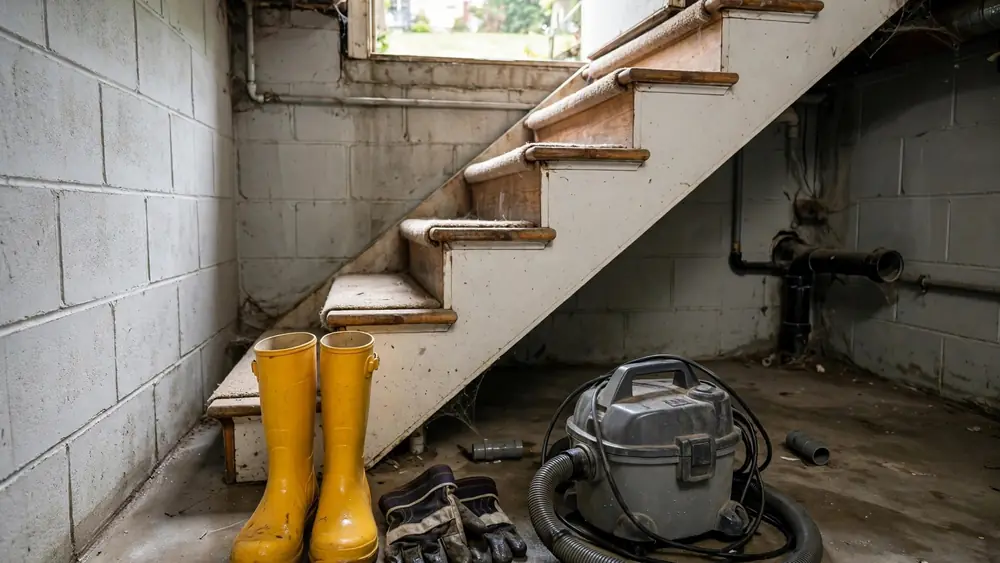
- Wear waterproof gloves, boots and eye protection, and ventilate the space.
- Remove standing water with a wet vac or pump once the drain is flowing.
- Bag and discard soaked carpet, padding, cardboard and upholstered items [3].
- Scrub hard surfaces with detergent and water, then disinfect following product labels.
- Run fans and dehumidifiers until everything is thoroughly dry to limit mold [3].
- Never run gasoline engines indoors, and never mix bleach with ammonia products.
- For large backups or finished basements, a restoration company is the safer route.
Afterwards
Stopping the next basement backup
Fix the cause the camera finds. Roots at clay joints point to root intrusion removal followed by lining; a broken or sagging line points to repair or replacement. Keep grease and wipes out of the drains, keep the cleanout reachable, and store valuables off the basement floor.
The sewer backup cleanup page goes deeper into cleanup, insurance documentation and what can be saved.
Who to call
Plumber, restoration company or the utility?
Three different kinds of help may be involved, and it saves time to know which does what. A sewer contractor or plumber clears the blocked line, films it and repairs the lateral; in Indianapolis that pipe from the house to the main is the owner's responsibility [1]. A restoration company handles extraction, cleaning, drying and rebuilding when the backup is large or reached finished space. Citizens Energy Group operates the public sewer and is the one to tell when you suspect the main, such as several neighbors flooding during the same storm.
For most dry-day backups you need only the first, and perhaps the second. Call the utility as well when the pattern points to the public system, and keep a short record of dates, weather and photos either way.
Keeping records
Keep a backup log
Write down each backup with the date, the weather, what was running at the time and how high the water came. Note who cleared the line and what the camera showed. A log of two or three events shows a contractor at a glance whether you are dealing with a lateral that blocks on its own or a public sewer that surcharges in storms, and it helps your insurer understand the claim. Keep it with photos and invoices in one folder.
Appliances
Appliances that sat in sewage
A furnace, water heater, washer or dryer that stood in sewage should be checked by a qualified technician before it is used again, since controls and burners can be damaged by water.
FAQ
Basement sewer backup questions
Should I plunge the floor drain?
No. The blockage is usually far down the lateral, beyond a plunger's reach, and plunging can splash sewage around. Stop using water and have the line cleared.
Can I flush the toilet during a basement backup?
No. Every flush sends more water toward the blockage, and it will come out of the basement drain.
Is it safe to stay in the house?
Usually yes, if you keep out of the affected area, avoid electrical hazards and ventilate. Leave if there is a strong gas or sewer odor that makes anyone feel unwell.
How fast should the backup be cleared?
As soon as practical. Until the line is open, the house cannot use its plumbing, and sewage sitting in the basement increases the cleanup.
Does insurance cover a basement sewer backup?
Only if the policy includes sewer and drain backup coverage, which is often an add-on. Photograph everything and call your agent before discarding items.