Key facts: Sewer smell in the yard
- Sewer odor's rotten-egg smell comes largely from hydrogen sulfide, which is toxic at high concentrations [2].
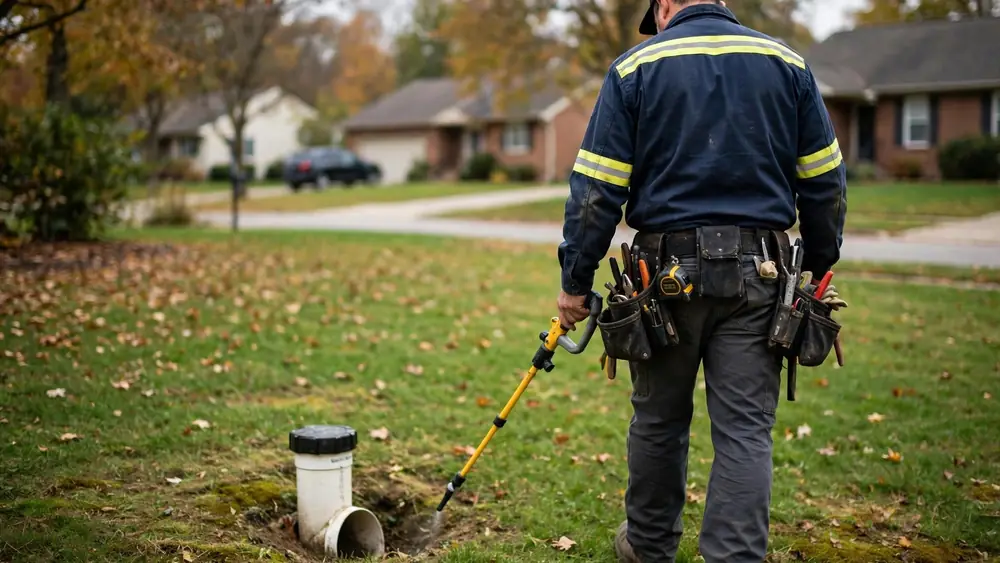
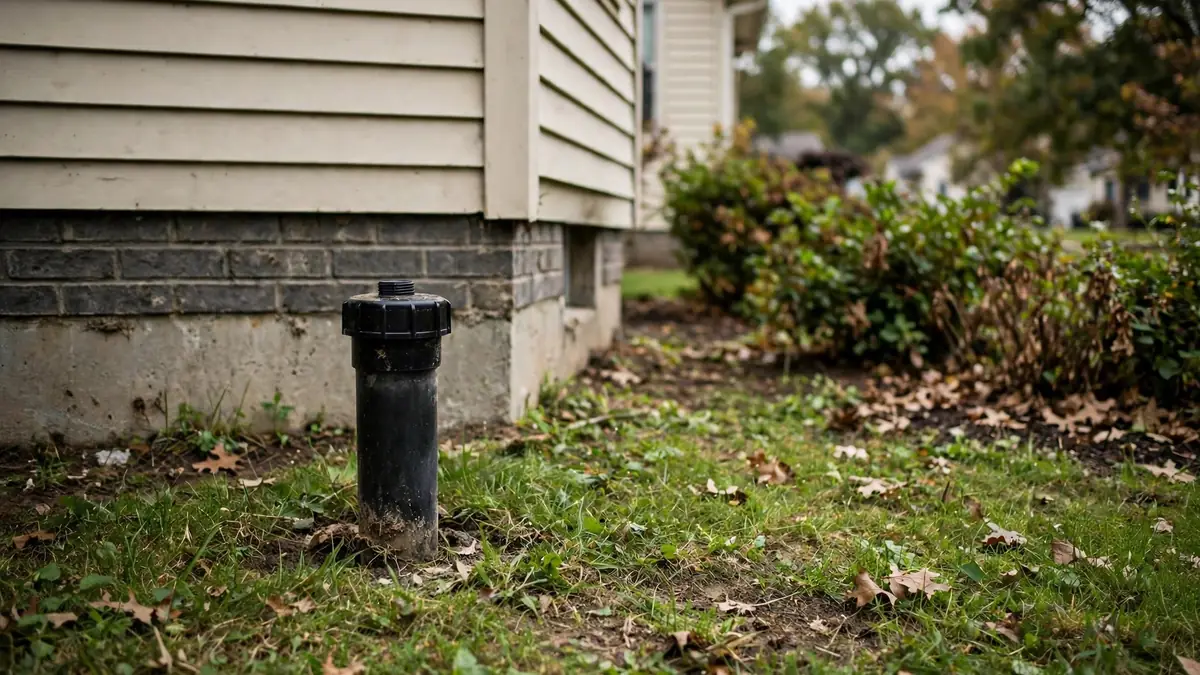
- A missing or cracked cleanout cap is one of the most common and easiest-to-fix sources of outdoor sewer smell.
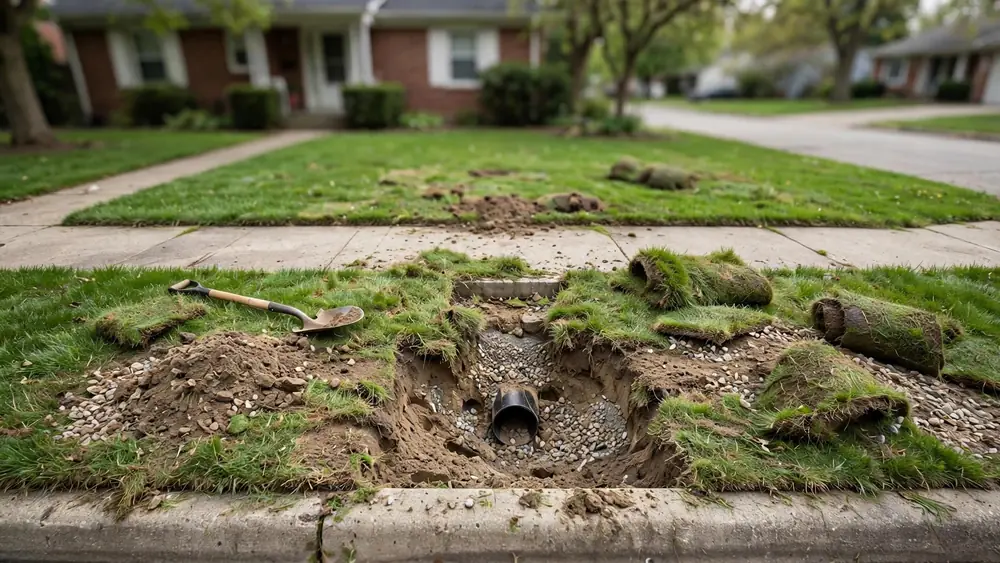
- A smell combined with soggy or sinking ground along the pipe route usually means a leaking lateral.
- The homeowner is responsible for the lateral in Indianapolis; repairs need a Citizens Energy Group permit [1].
What the smell is
Where outdoor sewer odor comes from
The rotten-egg smell of sewage is mostly hydrogen sulfide, produced as organic material breaks down without oxygen. People can smell it at very low levels, and at high concentrations it is toxic [2]. Outdoors it usually disperses quickly, so a smell you notice repeatedly in the same spot is telling you something.
There are four common sources: an open or cracked cleanout, a plumbing vent on the roof releasing gas that drifts down, a leaking lateral underground, or the public sewer itself through a nearby manhole or storm inlet. Each has a different fix, from a new cap to a lateral repair.
Narrow it down
Matching where you smell it to the likely source
| Where it's strongest | Likely source | First step |
|---|---|---|
| Right by the outside cleanout | Missing, loose or cracked cap | Replace or tighten the cap |
| Near the house on still days | Roof vent gas drifting down | Check vent height and nearby windows |
| Over a strip of lawn toward the street | Leaking or broken lateral | Camera inspection |
| At a soft or sunken spot | Break with soil washing in | Keep off it; call |
| At the curb or street | Public sewer manhole or inlet | Report to Citizens Energy Group |
Check it yourself
A safe walk-around to find the source
- 1
Check the cleanout
Find any outside cleanout and make sure the cap is present, intact and tight.
- 2
Look at the roof vents
Note whether the smell is worst near a vent on calm days or near a low roof.
- 3
Walk the pipe route
From the foundation toward the street, look for soggy, extra-green or sunken spots.
- 4
Check the curb
If the smell is strongest at the street, it may be the public sewer.
- 5
Check inside too
Dry floor drain traps can make the basement smell and the odor may carry outside through windows.
When it's the lateral
Signs the smell means a broken pipe
A smell combined with physical signs on the ground is the strongest indicator of a leaking lateral: a patch that stays damp in dry weather, grass noticeably greener in a line, or a depression forming. Inside, you may also notice slow drains or gurgling.
The next step is a sewer camera inspection, which shows the crack or separation and marks its location and depth. Because the lateral is the owner's responsibility from the house to the main, any repair is arranged through a licensed contractor with a Citizens Energy Group permit [1]. If the camera shows the defect is in the public main, report it to Citizens.
Safety
Staying safe around sewer odors
- Do not put your face into a cleanout or manhole to sniff for the source.
- Never enter a manhole, pit or trench; gases can accumulate in low spaces.
- Keep children and pets away from sunken or soggy areas.
- If anyone feels dizzy, nauseated or develops a headache near a strong odor, move to fresh air.
- If you smell natural gas rather than sewage, leave and call the gas utility and 911 from a safe place.
Inside vs outside
When the smell is really coming from the house
Sometimes an odor noticed in the yard actually starts indoors and drifts out through basement windows or dryer vents. The usual indoor culprits are dry traps in floor drains, unused basement showers and laundry tubs, a loose cleanout plug in the basement, or a cracked drain under the floor. Pouring a few quarts of water into each little-used drain refills its trap and often cures the problem the same day.
If the basement itself smells strongly and the traps are full, the cleanout plug and the floor around the floor drain are the next places to check. A persistent indoor odor with no obvious source can point to a cracked cast iron drain beneath the slab, which a camera inspection from the cleanout can usually confirm.
Indianapolis note
Odors near streets with combined sewers
In older parts of Indianapolis served by combined sewers, storm inlets at the curb connect to the same system as household wastewater. In warm, dry spells, odor can rise from those inlets and from manholes. That smell belongs to the public system, not your lateral, and Citizens Energy Group is the right place to report it. If the odor is on your side of the sidewalk and stronger near the house, focus on your cleanout, vents and lateral instead.
After the fix
Confirming the odor is gone
After a cap is replaced, a trap refilled or a lateral repaired, give it a few days of normal use and varied weather before judging. Odor trapped in soil around a former leak can linger briefly. If the smell returns in the same spot after a week or two, ask the contractor to recheck the cleanout seal and film the line again, since a second defect may be nearby.
Vents
A note on roof vents and low roofs
Plumbing vents release sewer gas above the roofline by design. On houses with a low roof, a nearby deck or a window close to a vent, that gas can drift down on calm, humid days. A plumber can sometimes extend the vent or fit a carbon filter cap where the smell is a nuisance, but a vent smell alone does not mean anything is broken.
FAQ
Yard sewer smell questions
Why does my yard smell like sewage after rain?
Rain can push sewer gas up through cleanouts, vents and leaks, and saturated soil around a broken lateral can release odor. Persistent smells after rain are worth an inspection.
Can a missing cleanout cap cause a sewer smell?
Yes, and it is one of the most common causes. Replacing or tightening the cap often fixes the odor immediately.
Is sewer gas in the yard dangerous?
Outdoors it usually disperses before reaching harmful levels, but it can collect in low, enclosed spaces. Avoid pits and manholes, and move to fresh air if anyone feels unwell.
Who do I call about a sewer smell at the street?
If the odor is strongest at a manhole or inlet in the street, report it to Citizens Energy Group, which operates the public sewer.
Does a sewer smell always mean a broken pipe?
No. Caps, vents and dry traps cause many odors. A smell together with wet or sinking ground over the pipe route is the stronger sign of a break.