
Key facts: Root Intrusion Removal in Butler-Tarkington
Why roots
A century of trees over clay joints
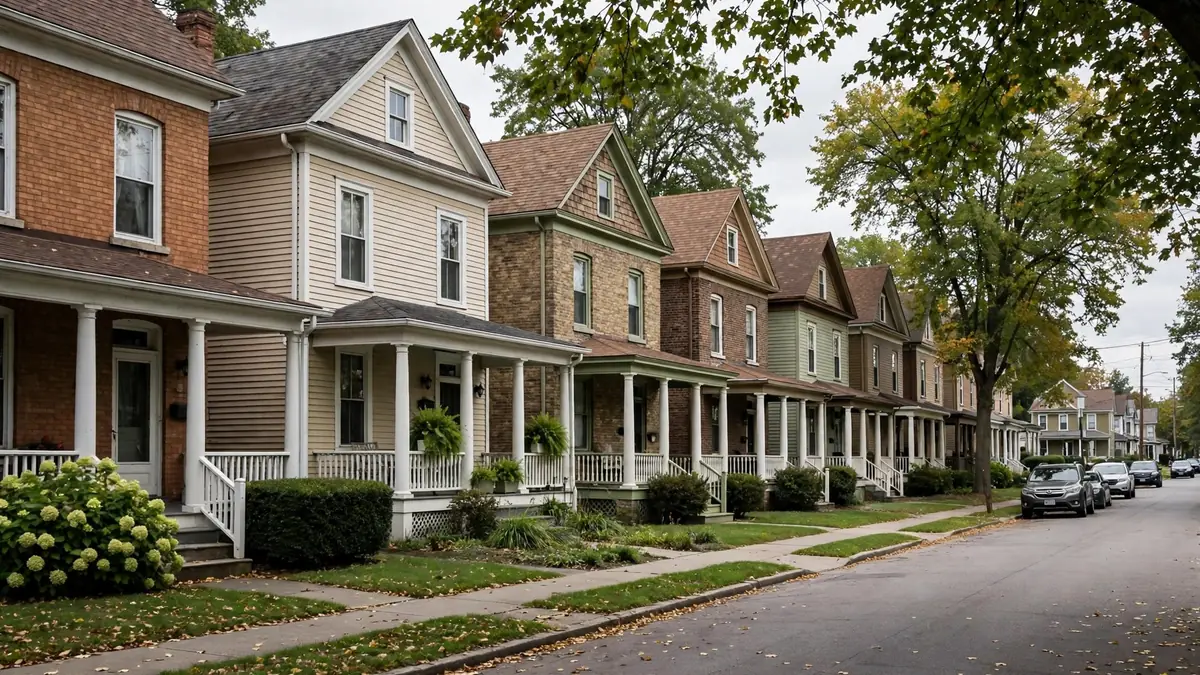
Most Butler-Tarkington houses were connected with clay pipe in short lengths [3], and the mortar at each joint has had a century to crack. Trees in the tree lawns and front yards, many as old as the houses, send feeder roots toward the moisture escaping at those joints. Inside the pipe the roots form a mat that catches paper, grease and, in rentals, wipes.
The signs are the familiar ones: slow drains over weeks, a gurgling toilet, and finally the basement floor drain overflowing after laundry, often in spring.
Clearing
Clearing roots from a Butler-Tarkington lateral
The contractor opens the basement cleanout and works a cutter or jetter with a root nozzle toward the main, flushing the cut roots away. A camera run afterwards shows how many joints let roots in and where. With that footage, root intrusion removal becomes a decision about maintenance or sealing rather than a yearly surprise.
Rentals
Roots in rental houses near Butler
Rentals see heavy use and more wipes and paper towels, which snag on roots and turn a slow drain into a blockage. Landlords can clear lines between tenancies, post simple flushing rules and keep a log of each property's clearings. Tenants should report slow drains early and in writing.
Permits
Permits and root work
Citizens Energy Group does not require a permit for routine cleaning or root removal [1]. Sealing the joints with a liner or replacing the line needs the permit and an inspection.
Seal it
When to seal a Butler-Tarkington line
If roots return yearly or appear at most joints, seal the line with a CIPP liner, which protects walks and tree roots. Broken or deformed pipe suits pipe bursting. See the Butler-Tarkington area page.
A typical case
A Butler-Tarkington root story
Students renting a house near campus report a slow tub in September, then a gurgling toilet, then water at the basement floor drain after a weekend of laundry. The landlord's contractor clears a mat of roots and wipes and films the line, finding roots at nearly every clay joint under a large tree in the tree lawn. The landlord decides to line the lateral over winter break rather than face the same call every fall.
Seasons
How the year affects root clogs here
- SpringNew roots push out as soil warms.
- Late summerDry spells send roots toward leaking joints.
- Start of the school yearHeavy use in rentals turns small root mats into blockages.
- Winter breakA good window for repairs in student rentals.
Same-age blocks
When the whole block has roots
Laterals on a Butler-Tarkington block are often the same age, so if your neighbors have had roots cleared or lines lined, yours is likely in a similar state. That is a good reason to film before the next backup.
Records
Keeping a root log
Record each clearing date, what came out on the cable and what the camera showed. Lines that return faster each year are the ones to seal.
Trees and neighbors
When the tree belongs to someone else
The tree sending roots into your lateral may stand in a neighbor's yard or in the public tree lawn. The lateral is still the owner's to maintain, so clearing and sealing are the same either way. Avoid cutting major roots of a large tree yourself to protect a pipe; severing big roots near the trunk can destabilize the tree. The camera locate often shows exactly which tree is involved, which helps in a conversation with a neighbor.
Planting
Keeping new trees away from the line
Butler-Tarkington residents keep replanting to sustain the canopy. Use the camera's route marks to keep new trees well away from the lateral, and ask a nursery about species with less aggressive roots for spots near the line.
Finished basements
Why clearing on schedule matters with a finished basement
In a house where the basement has been finished, one root-related overflow can mean replacing carpet and drywall. Scheduling clearing a few weeks before your line's usual trouble season, or sealing the joints for good, avoids that risk.
Selling
Roots and home sales
Buyers increasingly scope the sewer. A line with roots at every joint can become a negotiating point; a sealed line with a final video usually does not.
Clearing between tenants
Timing root work in rentals
For landlords, the gap between tenancies is the ideal time to clear roots and film the line. The house is empty, nobody is inconvenienced, and a camera run shows whether clearing is enough or the line needs sealing before the next group arrives.
Records
Keeping a root log
Write down each clearing date, what came out on the cable and what the camera showed. For landlords with several houses, a simple spreadsheet shows which line keeps clogging and should be sealed next.
Seasons
Booking ahead
Contractors are busiest in spring, when root clogs peak across the older north side. Booking a planned clearing or camera run for late winter avoids the rush.
FAQ
Root Intrusion Removal questions in Butler-Tarkington
Why do roots keep returning in Butler-Tarkington?
The joints stay open after clearing, so roots regrow through them.
Do rentals get more root clogs in Butler-Tarkington?
Not more roots, but wipes and heavy use turn root mats into blockages faster.
Is a permit needed for root removal in Butler-Tarkington?
No. Butler-Tarkington is no exception. Ask about it on the call for your Butler-Tarkington home.
Should I cut the tree's roots in Butler-Tarkington?
No; it can destabilize the tree. Seal the pipe instead.
Can root killer fix it in Butler-Tarkington?
It may slow regrowth but does not seal joints.
How often should roots be cleared in Butler-Tarkington?
Often every one to two years in root-prone clay; more often suggests sealing.
Will lining stop roots in Butler-Tarkington?
Along the lined length, yes. Ask about it on the call for your Butler-Tarkington home.
Is jetting or cutting better for roots in Butler-Tarkington?
Both work; jetting cleans the wall more thoroughly, a cutter opens a blocked line quickly.
Should I remove the tree in Butler-Tarkington?
Usually not; sealing the pipe is generally better than losing a mature tree.
How do I know roots are the cause in Butler-Tarkington?
Roots on the cable after clearing, or seen at joints on camera, confirm it.
Do roots come back faster after cutting in Butler-Tarkington?
Not faster, but through the same open joints.
Can root killer help in Butler-Tarkington?
It may slow regrowth if used as directed, but it does not seal joints.
Is a permit needed in Butler-Tarkington?
No, not for routine root removal. Ask about it on the call for your Butler-Tarkington home.
Can roots be cleared from outside in Butler-Tarkington?
Yes, if the house has an outside cleanout.
Should the whole line be lined in Butler-Tarkington?
If roots are at most joints, yes; for one joint, a sectional liner may do.
Do I need to be home for root removal in Butler-Tarkington?
Usually, for access to the basement cleanout. Ask about it on the call for your Butler-Tarkington home.