
Key facts: Sewer Camera Inspection in Butler-Tarkington
Same-age blocks
What a camera finds on Butler-Tarkington's same-age blocks
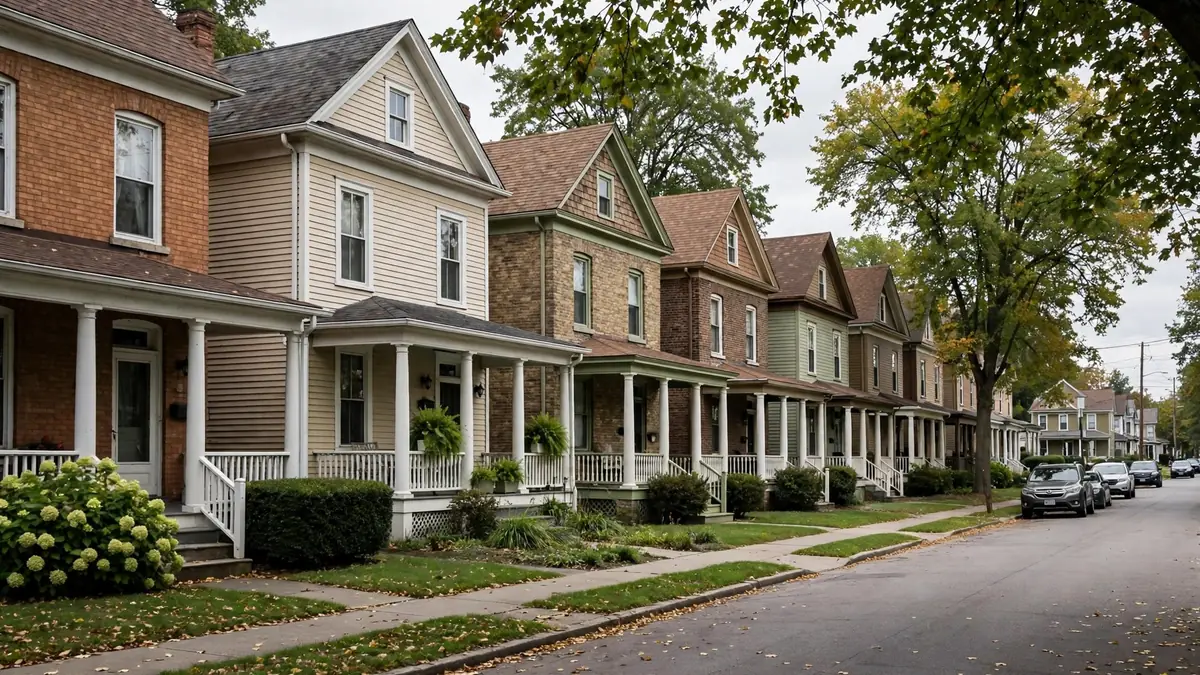
Because so much of the neighborhood went up in the same couple of decades [2], houses on a block were often connected to the sewer within a few years of each other, probably by the same contractors with the same pipe. A camera inspection usually shows clay laterals with joints every few feet [3], many with roots, some offset by decades of soil movement, and the occasional replaced section from an earlier repair.
That shared history makes one neighbor's video unusually informative for the rest of the block. If the house next door had roots at most joints, yours probably faces similar conditions. It is still worth filming your own line, since route, depth, trees and use all differ.
Rentals
Scoping rental houses near Butler University
Butler University moved to the neighborhood's western side in 1928 [2], and many houses nearby are rented, some to students. Rentals see heavy use and more wipes, which catch on roots at old joints. Filming the lateral between tenancies, especially before the academic year, shows whether a blockage is building while the house is empty and a repair is easy to schedule.
Canal edge
Footage from streets near the Central Canal
The Central Canal forms part of the neighborhood's northern boundary [2]. On nearby streets, the camera sometimes shows sections that have settled into sags or joints where groundwater weeps in. Sags matter because they cannot be lined; they need digging. Ask the contractor to note any standing water and its length on the video.
Big houses
Long laterals under the Meridian and Illinois Street homes
The largest homes stand along the western side of Meridian Street and parts of Illinois Street north of 40th [2]. Their deeper lots mean longer laterals with more joints, often under large trees. Mention the lot depth when booking so the contractor brings enough cable to film all the way to the main.
Next steps
Turning Butler-Tarkington footage into a plan
Light roots may only need clearing. Roots at most joints point to CIPP lining; broken or deformed pipe suits pipe bursting; sags need digging. Repairs need a Citizens Energy Group permit and inspection [1]. See the Butler-Tarkington area page and the camera inspection page.
A typical case
A Butler-Tarkington scope between tenancies
A landlord who owns a 1920s house a few blocks from campus books a camera run in early August, after one tenant group moves out and before the next arrives. The contractor opens the basement cleanout, films out through the clay lateral to the main and finds roots at most joints under a large tree in the tree lawn, plus a wad of wipes caught on one root mat. The pipe is still round, and the tap is sound.
With the house empty, the landlord schedules lining the following week. The new tenants move into a house whose sewer will not back up on the first busy weekend, and the landlord adds bins and a flushing sign to each bathroom.
What to ask
Questions after a Butler-Tarkington sewer scope
- How many joints have roots?A few versus most decides clearing or sealing.
- Is there standing water anywhere?That points to a sag that needs digging.
- Is the main connection sound?A damaged tap changes the plan.
- Are wipes or grease caught on the roots?Common in rentals; signs and bins help.
- Which defects are urgent?Collapses and sags usually are.
Buying
Scoping before buying in Butler-Tarkington
Whether you are buying a family home or a rental near campus, book a scope during the inspection period, filmed to the main. Ask the seller for any maintenance history; frequent root clearing is a strong hint that sealing the line is due. Keep the video either way.
Basements
The cast iron under the basement
Most houses here have basements with a cast iron building drain under the floor. The camera films it on the way out, and corrosion or cracks there matter as much as the clay outside, particularly if the basement is finished.
Seasons
When to film a Butler-Tarkington line
If roots have caused trouble, late winter is a good time to film, ahead of spring growth. For rentals, film between tenancies. Buyers should book early in the inspection period so there is time for a second opinion or a repair discussion.
Records
Keeping the footage
Store the video with your house papers along with a photo of the route marks. If you repair the line later, keep the final video too; together they form a history of your lateral.
Same-age blocks
Using a neighbor's video
If a neighbor has filmed their lateral recently, ask what it showed. It is not a substitute for filming your own, but it tells you what to expect and which contractor already knows the street.
Big houses
Long runs need long cables
On the deeper lots along Meridian and Illinois Streets, mention the length of your front yard when booking so the contractor brings enough cable to reach the main.
FAQ
Sewer Camera Inspection questions in Butler-Tarkington
Why do Butler-Tarkington houses on one block have similar sewer problems?
Many were built and connected within a few years of each other using the same materials, so their laterals have aged together.
When should a landlord near Butler scope a rental's sewer in Butler-Tarkington?
Between tenancies, ideally before the academic year, when the house is empty.
Does a camera inspection need a permit in Butler-Tarkington?
No. Repairs that follow do. Ask about it on the call for your Butler-Tarkington home.
Can a camera show a sag near the canal in Butler-Tarkington?
Yes, as standing water over a stretch of pipe.
Will I get a copy of the video in Butler-Tarkington?
In Butler-Tarkington, ask before the visit; most systems record to a file or link.
How long does a scope take in Butler-Tarkington?
Often under an hour for a clear line.
Do I need to be home for a camera inspection in Butler-Tarkington?
Usually, so the crew can reach the basement cleanout.
Can a camera tell which tree is causing roots in Butler-Tarkington?
Short answer: it shows where roots enter, and the locator marks the spot, often near a particular tree.
Is the camera visit messy in Butler-Tarkington?
Usually not; opening a backed-up cleanout is the main risk.
What if the camera can't reach the main in Butler-Tarkington?
The line may need clearing or have a collapse; another access point may help.