
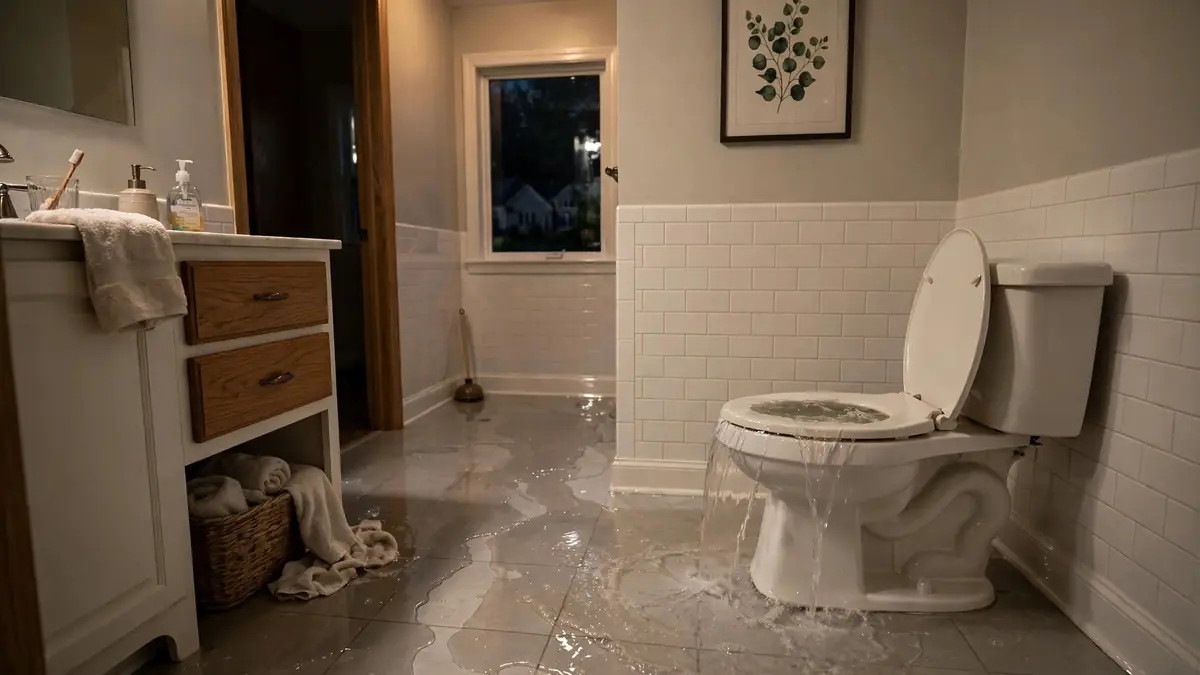
Key facts: Emergency Sewer Backup Cleanup
- Cleanup inside the home and on private property falls to the resident, not to Citizens Energy Group.
- Sewage that has sat in finished living space for more than 24 hours is a reason to bring in a professional.
- Calls reach an independent contractor at every hour, on holidays as well.
Electricity and gas
Why the stairs come before the mop
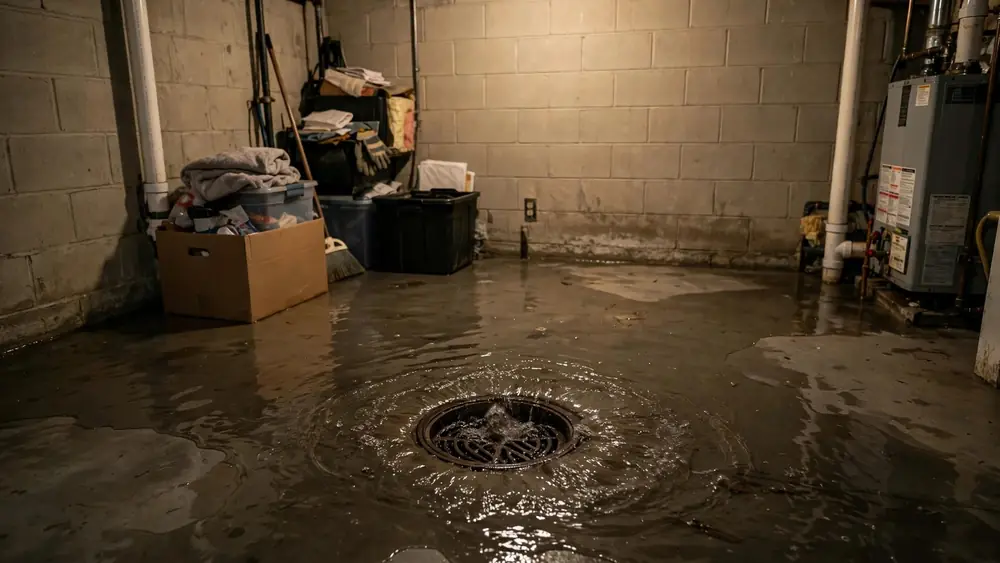
Citizens Energy Group's first instruction for a backup is about the breakers: turn off circuits serving the affected area, and stay out of the water until electrical hazards are dealt with [1]. Water on a basement floor can reach power strips, a freezer cord or the base of a furnace, and you cannot tell by looking whether any of them are live. If the panel itself stands in the wet part of the room, leave it alone and wait for an electrician or the power company.
Gas is the other reason to pause. If you smell it, get everyone out and shut off the supply only if you can do so safely [1]. Pilot lights on a water heater or furnace can go out when water rises around them, so tell the contractor if either appliance is standing in the water. Do not relight anything yourself.
People and pets
Who should stay out of the basement
Treat the room as off limits for anyone who does not have a reason to be there. Children and pets should go first, because they touch floors and then their faces [1]. People who are pregnant, recovering from surgery or managing a long illness should keep well away, and may prefer to spend the night somewhere else. A dog that has walked through the water needs a bath before it goes on the furniture, and wet shoes should stay on a tray by the basement door instead of crossing the kitchen.
If you have to go down, wear rubber boots, waterproof gloves and something to keep splashes off your eyes [4]. Wash any cut or scrape that gets wet right away, and call a doctor if it becomes red or sore, or if anyone in the house develops a fever or stomach illness in the days afterward.
Before anything moves
Pictures to take from a safe spot
- The high-water mark on walls, stairs and appliances
- The floor drain, toilet or tub where it came up
- Labels and serial numbers on the furnace and water heater
- Boxes, rugs and furniture standing in the water
- A note of the time, the weather and what was running
Sorting belongings
What usually goes, and what can stay
The hard part of the first evening is often deciding about belongings, and most of that decision can wait until morning. Citizens lists carpet, upholstered furniture, mattresses and paper goods among the things to discard once sewage has reached them, along with wet drywall [1]. Glass, metal and hard plastic can usually be washed and disinfected. Family photos and important papers deserve a separate conversation, so set those aside, and ask the contractor or your insurer before writing them off.
Avoid carrying wet items up through the house. Every trip across a clean floor spreads the problem, and a soaked cardboard box tends to give way on the stairs. If something has to come out tonight, bag it where it sits and take it out through a basement door or window well if you have one. Otherwise leave it for the crew, and keep your photos and a simple list of what is thrown out.
After you call
How the indoor work usually runs
- 1
Check
Power, gas and the water level are looked at before anyone starts.
- 2
Extract
Standing water is pumped or vacuumed out once the drain can take it.
- 3
Strip
Soaked carpet, pad and drywall come out in bags.
- 4
Disinfect
Hard surfaces are washed with detergent first, then disinfected.
- 5
Dry
Fans and dehumidifiers run, with moisture checked as they go.
Air and drying
Fans, furnaces and the smell upstairs
It is natural to reach for a box fan, but blowing air across a contaminated floor before it has been cleaned can carry droplets and odor around the house. Hold off until the water is gone and surfaces have been washed. If the furnace blower or return ducts sit near the water, keep the system switched off, since it can pull basement air into every room. Citizens treats contaminated ductwork as one of the signs that a cleanup company is needed [1].
Once the sewage is out, drying matters. The EPA advises drying wet materials within 24 to 48 hours to limit mold growth [2], and a closed basement in humid weather rarely manages that alone. Open windows if the air outside is drier than the air inside. Never run a gasoline generator or pump indoors or in an attached garage, because of the carbon monoxide risk [3].
Do it yourself?
A small mess or a job for a crew
Citizens gives owners a basic method for smaller messes: remove the standing water, wash surfaces with detergent, then disinfect with a solution of one cup of bleach per gallon of water while bringing in outside air [1]. Bleach goes on after washing, because it does little on a dirty surface, and it must never be mixed with ammonia cleaners. That can be a reasonable job for a healthy adult on bare concrete, with a shallow puddle and a drain that is flowing again.
Citizens also names situations where a professional cleanup makes sense: contaminated ductwork, sewage that has sat for more than 24 hours in a finished living space, or simply a job too big to handle [1]. Add a household member with a health condition to that list, along with anything involving plaster, built-in cabinets or a stairway you cannot get past safely. On the call, describe the room and how long the water has been there, so the conversation starts from what is really on the floor.
Whose job
What Citizens does and does not clean
Citizens cleans public areas, and the resident is responsible for basements and other private property [1]. Even when a crew has been out to clear the public sewer, the room downstairs remains yours to deal with. Citizens and the Marion County Public Health Department do not recommend specific cleanup companies [1], so a service calling on their behalf deserves a second look. If you believe the public system caused the damage, Citizens describes an email claims process, and one of its insurance agents reviews the claim [1]. Report it to your own agent too, because Citizens says most homeowners policies do not cover sewer backups unless that coverage was added [1].
Going back in
Signs the room is ready again
A basement can look finished a long time before it is. Before putting anything back, ask how the crew confirmed that materials were dry, and ask for notes on what was removed. Run taps and flush toilets upstairs only after whoever cleared the line says it is open, and watch the floor drain while you do. Keep shelving and storage off the floor until you are sure the source has been found, and ask a qualified technician to look over any furnace, water heater or washer that stood in the water before it runs again.
FAQ
First-hours sewer backup questions
Is it safe to sleep in the house tonight?
Often, if the water stays below the main floor, the power is safe and nobody is vulnerable. Stay elsewhere if sewage reached living areas or there is a smell of gas.
Is the kitchen safe to use?
Only if it is upstairs from the affected area and no drains are used. Bottled water and paper plates avoid sending more down the line.
What about food stored in the basement?
Throw away anything that sewage touched, unless it is in a sealed metal can you can clean. When in doubt, discard it.
Is someone available on holidays?
Yes. Calls reach an independent contractor at every hour, including holidays. Ask about timing when you speak with them.