
Key facts: Root Intrusion Removal in Irvington
Why here
Old trees, old clay and Irvington's annual clog
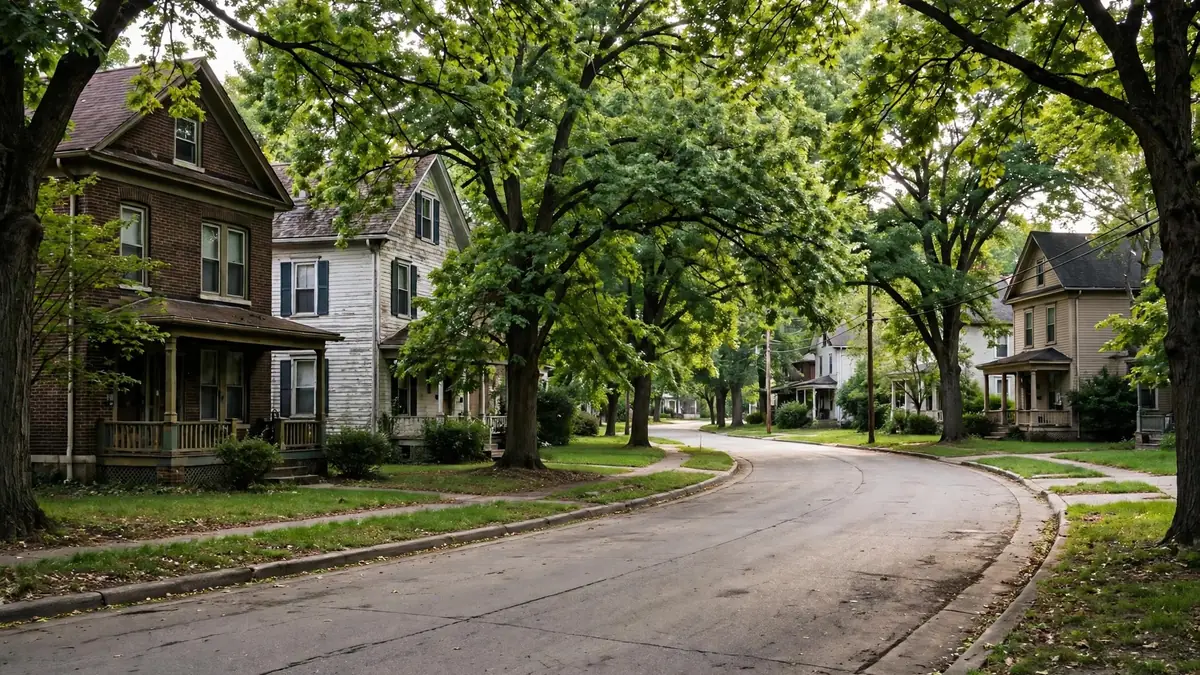
Many Irvington houses were connected to the sewer with vitrified clay pipe, which is durable between joints but relies on mortar or packing at each seam [3]. After a century of soil movement those seals crack. Large maples, oaks and sycamores in the tree lawns and front yards send feeder roots toward the moisture, and a mat forms inside the pipe.
Owners often notice a pattern: the basement floor drain slows each spring, backs up after laundry, and clears after a visit with a root cutter, only to return the next year. That pattern is the signature of root intrusion at the joints, and it rarely stops on its own.
Clearing
How roots are cleared from an Irvington lateral
The visit usually starts at the basement cleanout. A cable machine with a root-cutting head, or a jetter with a root nozzle, works through the mat toward the street, and the cut roots are flushed downstream. In an old clay line the operator advances slowly; forcing a cutter can loosen joints that are already marginal.
A camera pass after clearing is what makes the visit worthwhile. It shows how many joints are letting roots in, whether any are cracked or offset, and where they are, often right under a particular tree. That footage turns a recurring chore into a decision you can actually make.
Irvington tips
Living with roots in an Irvington sewer
- Schedule clearing in late winter if spring backups are your pattern.
- Keep wipes and grease out of the drains so a small root mat has less to catch.
- Do not cut big roots of a street or yard tree to protect the pipe; it can destabilize the tree.
- Plant new trees away from the route the camera marks.
- Keep a dated log of each clearing and what came out on the cable.
Permits
What needs a permit and what doesn't
Stop or seal
When to stop cutting and seal an Irvington line
If the line clogs only every few years and the video shows light roots at a couple of joints, periodic clearing may be reasonable. If it clogs every year, or roots appear at most joints, sealing them is the lasting answer. A full-length CIPP liner is the usual choice for a round clay line, and it fits Irvington well because it needs no trench through historic walks or tree roots.
Deformed or broken sections point to pipe bursting instead. For more on Irvington's housing and trees, see the Irvington area page.
A typical case
A familiar Irvington root story
An owner on a shaded Irvington street notices the tub draining slowly in March. By April the basement floor drain gurgles whenever the washer empties, and one Saturday it overflows. A contractor opens the basement cleanout, runs a cutter toward the street, and pulls back a cable wrapped in fine pale roots. The water drains, and the owner is relieved until the same thing happens the following spring.
The difference a camera makes is that the second visit does not have to be a repeat of the first. Footage taken after clearing shows exactly which joints are letting roots in, often clustered near one tree, and whether any are cracked. With that, the owner can decide between scheduled clearing and sealing the line, rather than waiting for the next overflow.
Seasons
How the Indianapolis calendar affects Irvington root clogs
- SpringNew feeder roots push out as soil warms, and old clay lines often block in April or May.
- Late summerDrought sends roots looking for water, and a leaking joint is an easy target.
- WinterGrowth slows, but frost can shift shallow joints near the street.
- Before trouble seasonA clearing scheduled a few weeks early avoids the overflow.
Trees and neighbors
When the problem tree is a neighbor's or the city's
Roots do not respect property lines. The tree sending roots into your Irvington lateral may stand in a neighbor's yard or in the public tree lawn. The lateral is still yours to maintain, so the practical response is the same: clear it, film it, and decide whether to seal the joints. Avoid cutting major roots of a large tree yourself to protect a pipe; severing big roots near the trunk can destabilize the tree and create a bigger hazard than the clog. An arborist can advise if a repair must pass close to a significant tree.
Records
Keeping a root log for an Irvington lateral
Write down the date of every clearing, what came out on the cable and what the camera showed. After two or three entries the log tells you whether the roots are returning faster, which is the clearest sign the joints need sealing rather than cutting.
FAQ
Root Intrusion Removal questions in Irvington
How often do Irvington sewer lines need root clearing?
Root-prone clay laterals often need it every one to two years. More often than that is a sign the joints should be sealed.
Is it my tree or the city's tree causing the roots in Irvington?
It can be either. The lateral is still the owner's to maintain, so clearing and sealing are the same either way. The camera locate can show which tree is involved.
Will cutting roots damage my old clay pipe in Irvington?
Careful cutting is routine. Repeated aggressive cutting can loosen weak joints over time, which is one reason to film the line and consider sealing it.
Do I need a permit to have roots removed in Irvington?
No. Citizens Energy Group lists root removal as work without a permit requirement. Lining or replacement needs one.
Can root killer fix an Irvington sewer?
Used as directed after clearing, it can slow regrowth, but it does not seal the joints roots use to get in.
Should I remove the tree to stop roots in Irvington?
Usually not. Sealing or replacing the pipe is generally a better answer than losing a mature tree that adds so much to the street.
Which trees cause the most root trouble on Irvington streets?
Large, water-seeking trees such as silver maples and sycamores have a reputation for it, but almost any big tree near a leaking clay joint can send roots in.
Do roots come back faster after cutting in Irvington?
Not faster, but they return through the same open joints, usually within one or two growing seasons.