
Key facts: Sewer Camera Inspection in Broad Ripple
Three kinds of property
What a camera finds under Broad Ripple's different properties
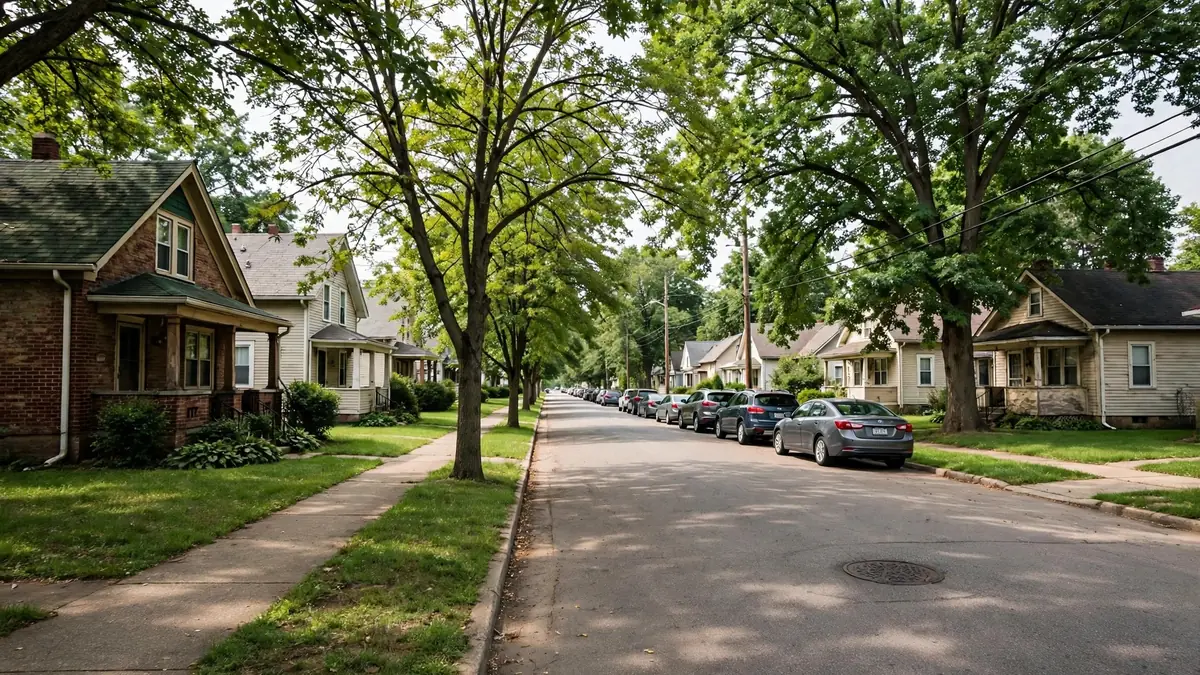
On the residential streets away from the village center, the typical finding is an older clay lateral with roots at the joints, often under the shade trees that line the narrow lots. Some of these cottages and bungalows have crawlspaces or shallow basements, so the camera may enter through an outside cleanout or a pulled toilet rather than a basement fitting. The video records each joint, the material and any transition to newer pipe.
On redeveloped lots the story is different. A townhouse or small apartment building may have brand-new plumbing to the property line and then an older stub or tap at the main. The camera often shows the trouble exactly at that transition: a lip where new PVC meets old clay, or a settled joint. Along the commercial strip, the camera's job is usually to see through grease. The wall of a restaurant lateral can be coated thick enough to hide cracks, which is why those lines are often jetted before filming.
Water nearby
Canal and river soils on Broad Ripple camera footage
Broad Ripple sits between the Central Canal and the White River [2]. Neither connects to your sewer, but the ground near water tends to be moister and softer in places, and the camera shows the effect: groundwater weeping in at joints, sediment along the bottom of the pipe, or a stretch where water stands because a section has settled. Those findings matter, because a sag cannot be lined and has to be dug and relaid.
Ask the contractor to note any infiltration they see, and where. Clear water entering a lateral is a sign of open joints, and it adds load to the public sewer during storms. It is also evidence that roots and soil can get in the same way.
Locating
Mapping a lateral on a narrow Broad Ripple lot
Lots here are often narrow, with houses close together and fences, garages and driveways tight against property lines. Before anyone suggests a repair method, the route and depth need to be on the ground. The transmitter in the camera head lets the contractor follow the line from above and mark it with paint, so you can see whether it runs under a driveway, a neighbor's fence or a garden bed. That map is what tells you whether trenchless repair is practical, and where any pit could go without blocking access between houses.
Buying here
Scoping a Broad Ripple house, condo or building before you buy
Buyers are drawn to Broad Ripple for its walkability and character, and the lateral rarely comes up in a listing. For an older cottage, a scope tells you whether you are inheriting an original clay line under a large tree. For a newer townhouse, it shows whether the connection to the main was replaced during construction. For a mixed-use building, it reveals how much grease has built up and whether the line has structural defects behind it. In each case, ask for the video file and a written note of the footage and depth of every defect.
What next
From Broad Ripple footage to a plan
Light roots in a round line may be a maintenance item. Roots at many joints, cracks and offsets usually point to trenchless sewer repair, which suits narrow lots well. Sags and collapses need digging. Grease-coated commercial lines need hydro jetting and a maintenance plan, then a second look. Any repair, lining or replacement needs a Citizens Energy Group permit and inspection [1]. For more on the neighborhood see the Broad Ripple area page, and for the process the camera inspection page.
What to ask
Questions to ask after a Broad Ripple sewer scope
- What is the pipe made of?And where any transition from new to old pipe sits.
- Is groundwater entering?Infiltration points to open joints.
- Is the main connection sound?Especially on redeveloped lots.
- Which defects are urgent?Collapses and sags usually are.
Seasons
When to scope a Broad Ripple line
If roots have caused trouble before, late winter is a good time for a camera run, before spring growth. For commercial lines, film after a scheduled jetting so the wall is clean. Buyers should book the scope early in their inspection period, so there is time to get a second opinion or negotiate if the video shows serious defects.
FAQ
Sewer Camera Inspection questions in Broad Ripple
Where is the cleanout in a Broad Ripple cottage without a basement?
Check outside near the foundation and in any crawlspace. If there is none, a contractor can film through a toilet and may recommend adding a cleanout.
Should I scope a newer Broad Ripple townhouse?
It is worth considering. New buildings sometimes reuse an older connection at the main, and problems often show up right at that transition.
Why jet a restaurant line before filming it in Broad Ripple?
Grease coats the pipe wall and hides cracks and offsets. A clean wall gives the camera a true picture.
Can a camera show groundwater getting into my lateral in Broad Ripple?
Yes. Water weeping in at joints is visible on video and is a sign the joints are open.
Does a camera inspection in Broad Ripple need a permit?
No. It is diagnosis. Repairs, lining and replacement that follow need a Citizens Energy Group permit.
How long does a Broad Ripple sewer scope take?
Often under an hour for a clear house lateral; longer if the line must be cleared first or a commercial line is long and greasy.
Can a camera tell whether my line is shared in Broad Ripple?
Yes. A second line joining partway down the run usually shows up clearly on video.
Will I get a copy of the video in Broad Ripple?
Ask before the visit; most systems record to a file or link.
Can a camera find a broken pipe under my Broad Ripple driveway?
Yes. The locator marks the spot and depth on the surface, even through concrete, so you know exactly what lies beneath.
Do I need to be home for the inspection in Broad Ripple?
Usually, so the crew can reach the cleanout and walk you through the video.