
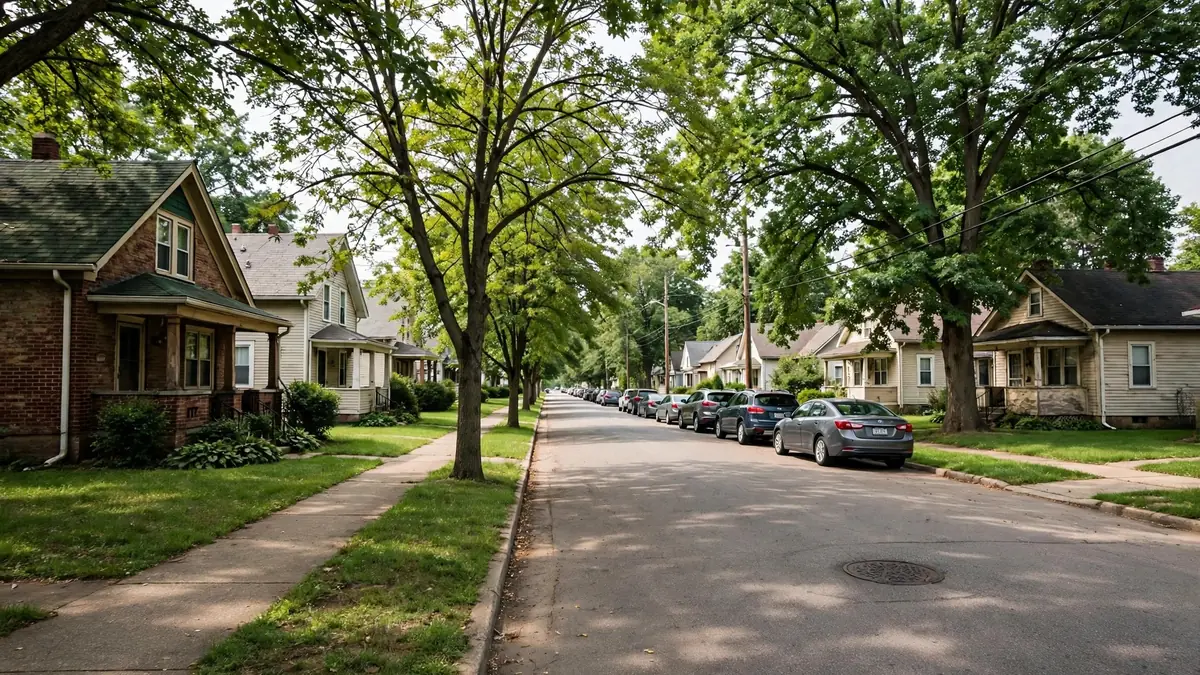
Key facts: Backwater Valve Installation in Broad Ripple
Is it backflow?
Storm backflow or a blocked lateral?
Most Broad Ripple backups come from roots or grease in the private lateral and happen on ordinary days. Storm backflow is different: it happens during intense rain, often while neighbors see the same, and drains away afterward. Older parts of Indianapolis rely on combined sewers that carry rain and wastewater together [3], and in a cloudburst they can surcharge into connected laterals. Lower lots toward the river are where this is most likely.
Keep a log of dates and weather. If the pattern points to storms, a backwater valve is worth discussing, and the event should be reported to Citizens Energy Group. If backups happen on dry days, fix the lateral first.
Where it goes
Fitting a valve in Broad Ripple houses
In houses with basements, the valve usually goes in the building drain under the basement floor, downstream of the floor drain and any basement fixtures. In cottages without basements, the lowest fixture may be a first-floor shower, and the valve may be installed in a pit outside the foundation instead. The valve must sit level for its flap to seat properly [2], and an access cover lets you check and clean it.
Storm routine
Living with a backwater valve in Broad Ripple
- Check the flap moves freely before a big storm is forecast.
- Limit water use during heavy rain; nothing can drain past a closed flap.
- In shared buildings, make sure every household knows the routine.
- Clean debris from the flap after major storms.
- Keep the access cover clear and reachable.
Permits
Permits for Broad Ripple valve work
Interior building drain work is plumbing for a licensed contractor. An exterior valve on the lateral, or a valve installed during a lateral repair, falls under Citizens Energy Group's permit [1].
Context
The river, the canal and DigIndy
Citizens Energy Group's DigIndy tunnels now store much of the city's combined overflow during storms, keeping it out of the river, but neighborhood pipes can still fill briefly in heavy rain. A valve protects your house regardless. See the Broad Ripple area page for more on local conditions.
A storm near the river
How storm backflow plays out on a low Broad Ripple street
Imagine a July cloudburst over the north side. Rain falls faster than the public sewer under a low street near the White River can carry it away, and the water level in the main rises into each connected lateral. In a house whose basement floor drain sits below that level, dirty water starts to appear at the drain even though nobody is using the plumbing. Half an hour after the rain eases, the water slips back down the drain as the main recovers.
That pattern, water arriving with the storm and leaving after it, is the clearest sign that a valve could help. Write down the date and time, ask whether neighbors had the same experience, and photograph the drain. Those notes help the contractor confirm the diagnosis and give Citizens Energy Group a useful record when you report the event. A backup on a dry evening after laundry is a different problem, and clearing and filming your own lateral comes first.
Valve choices
Backwater valve options for Broad Ripple houses
- Normally open flapHangs open so the drain vents freely and swings shut against reverse flow; the usual choice for a house drain.
- Valve with a manual gateAdds a gate you close by hand when severe rain is forecast, for basements that have flooded before.
- Exterior pit valveSet in the lateral outside the foundation, useful for cottages without basements; this is permitted lateral work.
- Branch valveProtects only a basement bathroom or laundry branch, so upstairs fixtures keep draining during a surcharge.
Records
Keeping track of a Broad Ripple valve
Note the installation date, valve model and contractor on a tag beside the access cover, and record each time you check or clean the flap. If an insurer asks whether a backflow device is installed, that record answers it. For landlords and associations, a simple log also shows tenants and residents that the valve is being looked after, which matters in a building where many people depend on one drain.
When the property is sold, a documented valve, together with a filmed and repaired lateral, is a real point in its favor, particularly for buyers who know that lower streets near the river can see storm backflow.
FAQ
Backwater Valve Installation questions in Broad Ripple
Do Broad Ripple homes near the river need backwater valves?
Only if they experience storm backflow. Homes with dry-day backups need the lateral fixed instead.
Where would a valve go in a Broad Ripple cottage without a basement?
Often in an exterior pit on the lateral, which counts as permitted lateral work.
Can I use water while the valve is closed in Broad Ripple?
Limit it. Water you use collects behind the closed flap until it reopens.
Does DigIndy stop storm backups in Broad Ripple?
Short answer: it reduces overflows to waterways but does not guarantee local sewers never surcharge.
Should my lateral be checked first in Broad Ripple?
Yes. A camera inspection confirms whether the problem is backflow or a blockage in your own line.
Will a valve slow my Broad Ripple drains?
A properly sized and installed valve should not noticeably affect normal drainage. Slower drains afterwards usually mean the flap or seat needs cleaning.
How long does installing a valve take in Broad Ripple?
An interior installation usually takes most of a day, including cutting the floor, setting the valve level and patching around the access box.
Can a valve be installed during a lateral repair in Broad Ripple?
Often, and it is simpler then, because the line is already open near the foundation.
Do condo associations handle backwater valves in Broad Ripple?
If the valve protects a shared building drain, it may be a common element; check the governing documents.
Should my Broad Ripple lateral be filmed before adding a valve?
Yes. A camera inspection confirms whether the problem is storm backflow or a blockage in your own line, which a valve cannot fix.