
Key facts: Emergency Sewer Line Repair
- In Indianapolis the property owner maintains the lateral from the house to the public main.
- Stop using all water in the home as soon as a sewer line appears to be failing.
- Phone lines connect you with an independent Indianapolis contractor at every hour, holidays too.
What counts
Signs a sewer line needs help tonight
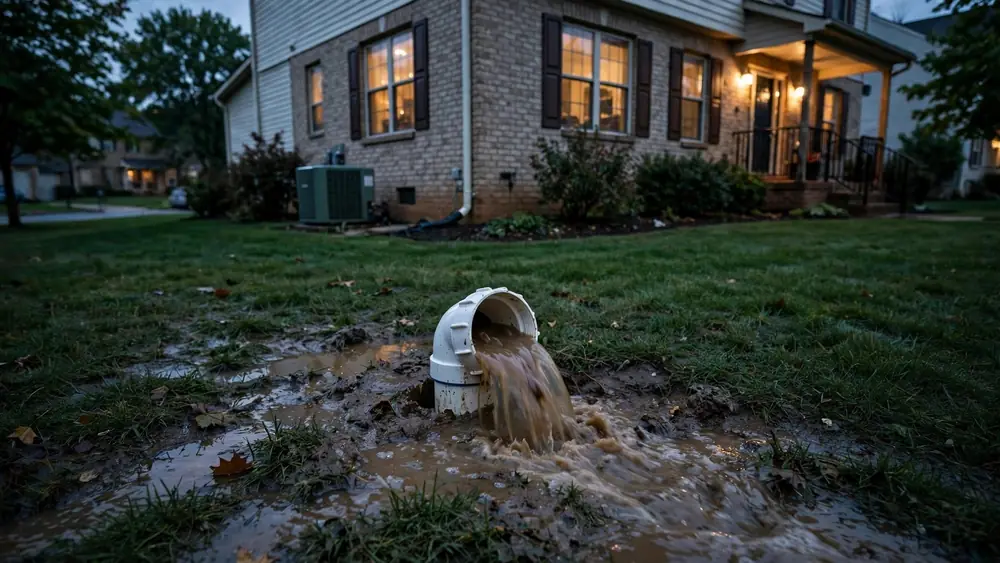
The clear signs are sewage rising in a floor drain or the lowest toilet, several fixtures backing up at once, or sewage appearing outside near the cleanout. Ground that has suddenly sunk over the line, or a strong sewer smell in the yard, also suggests the line has broken and needs prompt attention. Stay well away from sunken ground, because it can hide a void.
Slow drains and an occasional gurgle are warning signs, but they can often wait until the next day, provided you limit water use. If only one sink is slow, the problem is usually in that branch and not in the main line. Describe what you see on the call. The contractor can help you judge how urgent it is.
Whose line
Your lateral or the public main?
In Indianapolis, the property owner maintains the private lateral from the house to its connection at the main [1]. Citizens Energy Group operates the public system. If neighbors have the same problem, or sewage is coming out of a manhole, report it to Citizens at (317) 924-3311. Field staff check the public line; if it is flowing normally, Citizens leaves a door tag saying the blockage appears to be on private property [3]. If it is only your house, the problem is most likely on your side.
An outside cleanout can help tell them apart. If it has a cap you can see, do not remove it while there is pressure, since sewage can spray out. A plumber can check it safely. Indiana law requires notice through 811 at least two full working days before digging, so buried utilities can be marked [4]. Ask the contractor whether that notice has gone in, and how it will be handled if the line has collapsed.
After you call
How an emergency sewer job usually goes
- 1
Relief
The contractor tries to get the line flowing with a cable or a jetter.
- 2
Camera
A camera shows whether roots, a break or a sag caused it.
- 3
Options
You hear the options for that defect before any repair is agreed.
- 4
Repair
The contractor applies for the Citizens lateral permit before permanent work starts.
Tonight vs later
Getting flowing is not the same as being repaired
An emergency visit often has two parts. The first is getting the line moving again, usually by cutting through roots or a blockage. That can be done quickly at many homes. The second is working out why it failed. A line that has just been cleared may still be cracked, offset or sagging. Ask to see the camera footage and ask for a copy, since it is the best evidence of what is really down there.
Do not feel pressured to sign for a complete replacement in the middle of the night. Unless the line has collapsed and nothing can flow, a permanent repair can usually be planned after you have seen the video, and you can get a second opinion. Citizens requires a lateral permit for repairs, replacement, clean-outs and lining outside the building's footprint, but not for routine cleaning, snaking or root removal. A licensed contractor or plumber does the work and applies online [1].
Older homes
Why Indianapolis lines fail
Older Indianapolis homes, especially those from the early 1900s, sit on aging sewer systems [5], and clay pipe with joints that tree roots can enter is a common finding in laterals of that age. Only a camera can confirm what is under a particular yard. Roots find the moisture and grow into a mat that catches waste until the line backs up. Older lines can also have sags where the ground has settled, and heavy rain can push combined sewers past what they can carry [5]. If your home has had a similar backup before, tell the contractor, as it may point directly at the cause.
On the call
What to have ready
- Your address and the age of the home, if you know it
- Which drains are backing up, and whether it is still rising
- Where any outside cleanout is
- Any big trees between the house and the street
- Any previous camera video or repair records
Water indoors
If sewage has already reached the basement
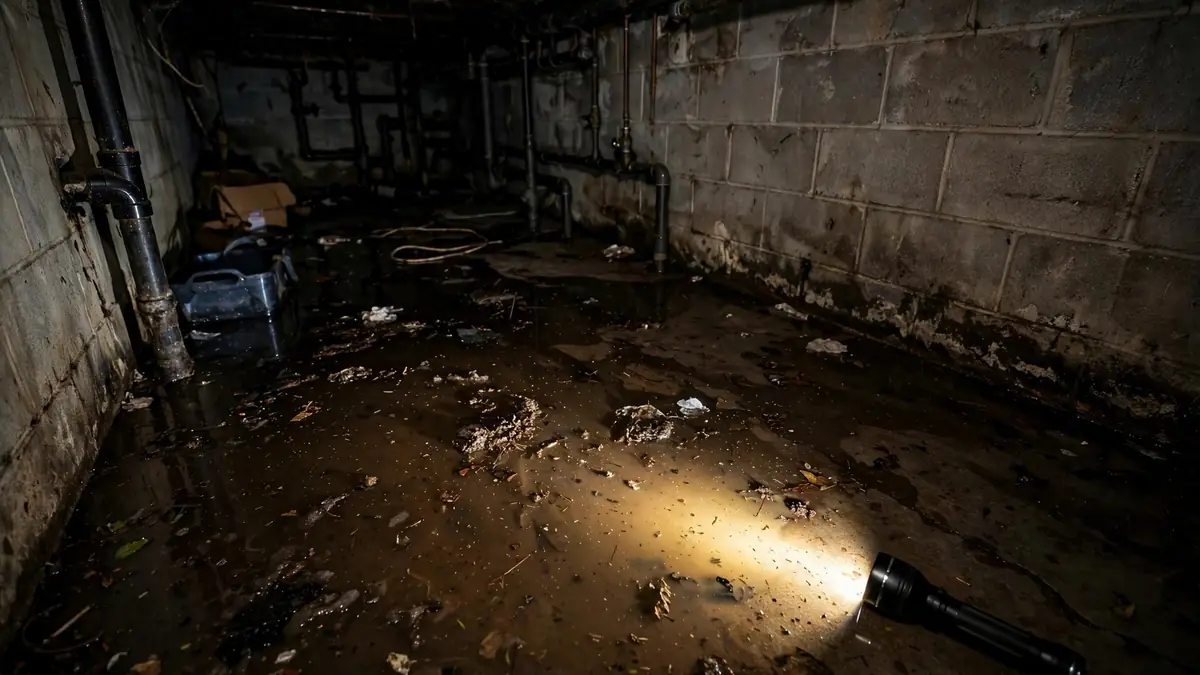
Clearing the line and cleaning the house are separate jobs. Do not walk through sewage without boots and gloves, and do not use the floor as usual until it has been cleaned and disinfected. Turn off power to the affected area only if the panel is dry and safe to reach. Keep the door to the area closed. The page on sewer backup cleanup explains what happens once the line is flowing, and the emergency backup page covers the first hours indoors.
Insurance
A word on insurance
Citizens notes that most homeowners policies do not cover sewer backups unless that coverage was added [3], and line repairs may be treated differently, so check your paperwork when you can. Take photos, keep any invoice, and save the video. If Citizens finds a problem in the public system, write down the date, the time and who you spoke with. Renters should alert the landlord straight away and follow up in writing.
Before work starts
Questions to ask the contractor
A short conversation in the driveway can prevent a lot of confusion later. Citizens says a contractor working on a lateral in Indianapolis must be listed, insured and bonded with the city [1], so ask whether that applies to this company and how you can check it. Ask whether tonight's work is only clearing the line, or whether anything is being dug or replaced. Ask who applies for the permit, and what happens to the driveway, lawn or tree roots along the route. Get the plan in writing before anyone starts on a repair, even if it is only a short description on the work order. Clearing the line tonight does not commit you to the rest.
FAQ
Emergency sewer line questions
Can someone come on a holiday?
Calls connect you with an independent contractor 24 hours a day, including holidays. Ask about timing on the call.
Can I keep using one bathroom?
Not if the main line is the problem. All your drains share it, so stop using water everywhere.
Does the city fix it?
Citizens handles the public main. The private lateral belongs to the property owner.
Should I pour drain cleaner in?
No. It rarely clears a main line and can harm whoever opens the line afterwards.